Dive Brief:
- The IRS on Tuesday announced regulatory guidance for the Clean Fuel Production Tax Credit’s carbon accounting that affirmed many key provisions biogas producers had hoped to see. While the agency still needs to finalize the credit’s language, the announcement provides certainty for the biogas industry.
- The guidance incorporates specific credit pathways for dairy and swine manure, food waste and other organic materials. The IRS also provided assurance that the guidance would cover clean fuels produced in 2025.
- While the credit has been available since 2025, many biogas producers had waited to claim it until they saw this guidance, according to Patrick Serfass, executive director of the American Biogas Council.
Dive Insight:
The credit, known in the tax code as 45Z, has faced a long regulatory road even as other credits introduced by the Inflation Reduction Act have come and gone. Notably, the One Big Beautiful Bill Act of 2025 curtailed some of the IRA’s more expansive support for fuels like hydrogen at the same time that it extended 45Z.
Tuesday's announcement drew praise from the American Biogas Council, which has long urged federal officials to finalize 45Z language. Serfass issued a statement praising the IRS for incorporating many of the ABC's priorities in its new guidance.
“The wait is over. Since Congress created 45Z four years ago, the biogas industry has been waiting for the certainty needed to fully put this tax credit to work," Serfass said.
The credit was initially set to include projects producing fuels through 2027, but it was extended last year through 2029. Biogas project owners have largely held off on claiming 45Z due to uncertainty about its applicability, though there have been some exceptions.
The ABC has long contended that billions of dollars in investment were waiting on the sideline until the final credit language is adopted. Serfass said the new guidance provides enough certainty that biogas developers can incorporate its backing into future project plans for the first time.
“America produces enormous quantities of manure, food waste and other organic materials every day. Instead of wasting those resources, biogas systems can recycle them into domestic renewable energy while supporting farms, rural communities and American jobs,” he said. “Today’s action gives our industry an important new tool to build more of those projects.”
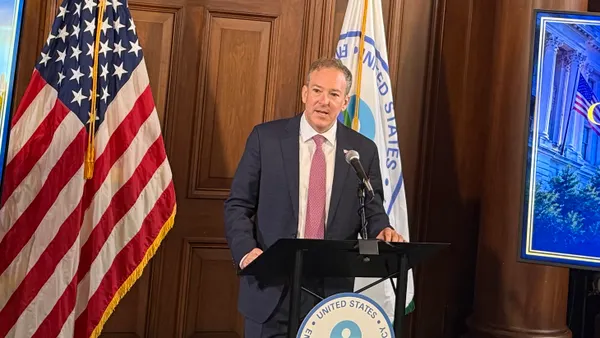
In a statement, IRS CEO Frank Bisignano said he also expects this guidance to unlock new investment, as well as strengthen domestic biofuel production and lower fuel costs.
“Today's guidance helps America’s farmers, ranchers, and fuel producers access growing opportunities in the domestic biofuels market,” he said.
The credit was written to provide support for non-fossil transportation fuels that are below a certain carbon intensity level. The value of the credit is determined by such fuels' carbon intensity, as calculated by a model developed by the U.S. Department of Agriculture.
The credit covers a variety of fuels beyond renewable natural gas, including ethanol, biodiesel, hydrogen and sustainable aviation fuel. The base credit as laid out in the IRA provided 20 cents per gallon multiplied by a fuel's carbon intensity, or 35 cents per gallon if the fuel was for aviation.
In June, the USDA released an update to its model calculating emissions for certain alternative fuels, though it did not separate out manure calculations. The IRS update on Tuesday said the agency will allow the use of separate carbon intensities for different forms of manure, such as poultry or beef. The agency said it expects the USDA to provide those specific rates later this year.
The IRS will also allow transportation fuel derived from animal manure to calculate a negative emissions rate, a policy that has drawn fire from environmental groups when implemented in other clean fuels policies. And the agency will exclude from calculations the emissions attributed to indirect land use change, which has similarly come under scrutiny as the production of fuel crops has grown.
The IRS guidance also allows fuel derived from feedstocks produced in Canada or Mexico to count toward the credit; the OBBBA had limited credits for certain foreign-produced feedstocks or parts.