California's legislative session ends on Monday, and numerous bills that have passed both the Assembly and Senate are now headed to Gov. Gavin Newsom’s desk.
If signed, these bills could change hauler franchise agreements, add medium-format batteries to the state’s EPR program, update vape waste regulations and address issues like elevated temperature events at landfills, among other changes.
Here’s a look at where these bills stand on the last day of the state legislative session. Stay tuned for updates on these bills by following Waste Dive’s state legislation tracker.
Force majeure and labor disputes take center stage in hauler franchise agreement bill
A union-backed bill unpopular with major waste companies could change solid waste labor strike rules and force majeure provisions. It’s on the way to the governor’s desk.
SB 1371 would prohibit a city or county from entering into or updating a solid waste hauling agreement if a labor dispute would excuse the hauler from carrying out its duties.
The bill would also void any existing force majeure provisions from such contracts if that force majeure provision is meant to be used due to a work stoppage from a labor strike. This would take effect Jan. 1, 2027.
Force majeure clauses typically cover “acts of God” that prevent haulers from providing services, such as extreme weather. SB 1371 is meant to clarify that “lawful labor disputes are not ‘acts of God’ and should not automatically relieve companies of their contractual obligations to provide essential services,” according to a bill analysis.
Supporters include Teamsters California and the California Federation of Labor Unions AFL-CIO. These labor groups say the bill holds haulers accountable for providing services and paying workers, instead of placing costs on municipalities.
“Giant waste corporations should not be able to force workers, customers, and communities to pay the price of their greed,” said Marcus Ford, a member of Teamsters Local 396 at Republic Services, in a statement. “The deck is stacked against union workers. SB 1371 would put us on a more level playing field.”
WM, Recology, Republic Services, the Resource Recovery Coalition of California and Waste Connections oppose SB 1371. The groups say the bill does not provide enough flexibility and could raise costs both for local agencies and for customers.
“Flexibility does not in and of itself provide a ‘pass’ or ‘get out of jail free’ card to the obligor. The obligor must still make contractually obligated efforts to perform,” waste groups wrote in a letter included in an Assembly floor analysis.
Some chambers of commerce also opposed the bill, saying it could make trash service less reliable and lead to illegal dumping and sanitation concerns that might impact businesses.
A version of the bill passed the legislature in 2023, but Newsom vetoed the bill, saying local jurisdictions already had the the ability to negotiate amendments to contracts. Waste groups also opposed the 2023 version.
Force majeure clauses have been used during labor strikes in California’s past, including in 2021 during a Republic Services strike in Chula Vista that halted some waste collection services for about a month and shielded the company from liability, according to bill analysis.
Teamsters noted that numerous Republic Services workers in Stockton were among those that went on strike last year. “Next month, over 3,000 Solid Waste Teamsters throughout the Los Angeles region are set to see their contracts expire,” the union said in a statement.
Two bills managing vape sales and disposal are headed to governor
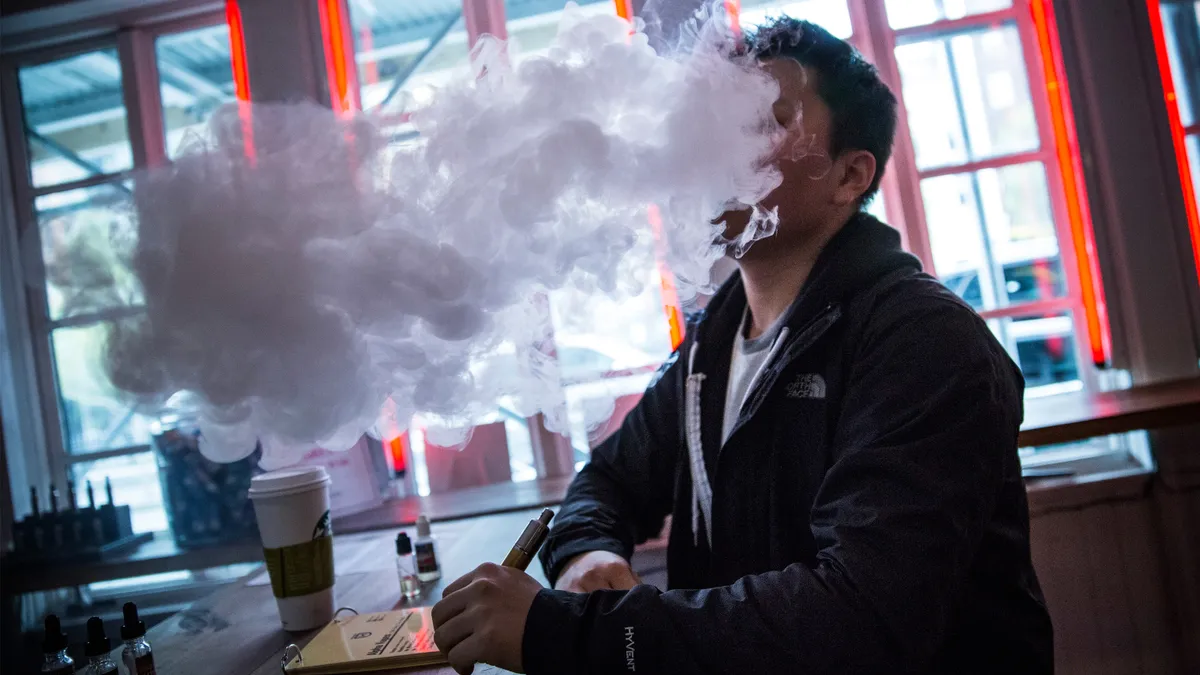
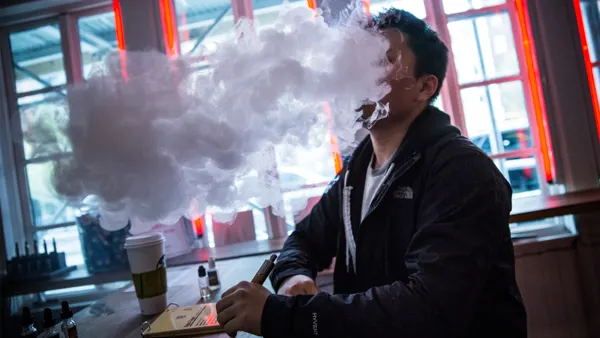
A bill that would ban the import or manufacture of new or refurbished battery-embedded disposable vapes in the state is awaiting the governor’s signature.
AB 762 would prohibit import or manufacturing after Jan. 1, 2027, and their sale by Jan. 1, 2028. Bill authors say the devices can leak toxic substances and cause facility fires with their batteries.
“For years, vape companies have flooded California with lithium-ion batteries they never built a way to safely recycle, and taxpayers and workers at waste and recycling facilities have paid for it with fires,” said Tony Hackett, a policy associate at Californians Against Waste, in an email.
Californians Against Waste co-sponsored the bill with the California Product Stewardship Council, California Public Interest Research Group, and Rethink Waste. It also had broad support from the Resource Recovery Coalition of California, haulers and area sanitation districts.
The California Distributers Association has opposed the bill, saying it’s “unnecessary and duplicative of existing laws” including a law prohibiting the sale of flavored tobacco products and a law creating a state product registry with compliance guidelines.
A separate bill, AB 2667, calls for the state’s Department of Toxic Substances Control to tackle better ways to properly dispose of vape pens, particularly those confiscated from schools. Schools are confiscating vapes but don’t often have safe ways to manage and dispose of the devices, said the bill’s supporters, which also include National Stewardship Action Council, Californians Against Waste, California Product Stewardship Council, Republic Services, Recology, ReThinkWaste and the Resource Recovery Coalition of California.
It also would authorize household hazardous waste facilities to “mechanically disassemble” vapes to process individual components. That bill is also pending delivery to the governor.
Adding medium format batteries to the state EPR program
SB 501 would add rechargeable medium-format batteries to the state’s existing extended producer responsibility program for batteries, known as the Responsible Battery Recycling Act of 2022.
California already has stewardship programs for several kinds of batteries, including small loose batteries and batteries embedded in products. SB 501 would add more types of batteries to the program, such as ones found in e-bikes and outdoor lawn equipment.
Bill sponsors say adding medium-format batteries is a common sense way to close a loophole in the current law, especially as “the number of batteries entering end-of-life each year is rapidly increasing. EPR programs can help address problems with safe collection and shift the cost burden of managing these products from local cities and counties, and ultimately ratepayers, to the producers designing the products,” according to a bill analysis.
Recology, Republic Services, and the National Stewardship Action Council support the bill, along with Californians Against Waste, the California Product Stewardship Council, the Product Stewardship Institute, Resource Recovery Coalition of California and several solid waste authorities and municipalities, among others.
Bill supporters say the program will help prevent fires from improper disposal. “Creating a pathway for responsible end of life management for these mid-sized batteries is especially important as sales of e-bikes and other battery-powered appliances are on the rise,” supporters said in bill analysis.
But the bill has also faced opposition from numerous sources, including Redwood Materials, a battery recycler that said the bill should not include lithium-ion batteries in the bill. In a bill analysis, it argued that bill sponsors did not “fully utilize the expertise of advanced battery recyclers and California’s well-established e-waste and metal recycling infrastructure” and that the bill would funnel battery collection efforts to a single third-party entity “that does not actually recycle the materials they receive.”
Other groups opposed the bill over logistical and compliance issues, including the American Chemistry Council, Can Manufacturers Institute, California Retailers Association and others.
More bills to watch
Listed bills are heading to governor for signature unless otherwise specified.
- AB 28: Subsurface temperatures at solid waste landfills: The bill proposes a new process to respond to and prevent elevated temperatures at landfills. The bill specifically mentions the ongoing elevated temperature event at the now-closed Chiquita Canyon Landfill, operated by Waste Connections. Californians Against Waste, along with numerous environmental groups, support the bill. Resource Recovery Coalition of California, which represents numerous waste haulers, opposes the bill. The bill is still awaiting a concurrence vote before it can head to the governor’s desk.
- SB 936: Nitrous oxide sales: The bill adds new restrictions to the sale or distribution of nitrous oxide. The bill makes it illegal to sell or distribute it in a container that can hold more than eight grams of the substance, or a container that allows a user to directly inhale the substance. SWANA, Recology, Republic Services, NSAC, the California Product Stewardship Council and Californians Against Waste are among the supporters due to safety concerns and the burden on household hazardous waste programs in the state.
- SB 881: Food waste tax credit extensions: The bill would extend a tax credit for qualified agricultural donations, which some farmers use to cover harvesting and donating food that might otherwise go to waste. It also would extend a separate emergency food tax contribution program that allows Californians to donate part of their tax refund to support food banks.
- SB 811: Metal shredder regulations: The bill would require metal shredders to obtain a permit from the Department of Toxic Substances Control and requires other regulatory and reporting requirements. It would also exempt treated metal shredder residue, finished ferrous and nonferrous commodities and some other materials from the definition of hazardous waste.
- SB 955: Bottle bill convenience zone updates: The bill calls for updating definitions of which grocery stores must participate as redemption locations, and updates requirements for reverse vending machines to be considered a certified recycling center, among other changes. The goal is to shift redemption responsibility away from smaller grocers and toward large supermarkets that sell large volumes of CRV-eligible containers, according to bill sponsors. The Glass Packaging Institute, Tomra and dealer cooperative Circular CRV Association support the bill. The Allan Co. and Olyns, a reverse vending machine company, opposes the bill.
- SB 633: postconsumer recycled content in bottle bill containers: The bill would require a beverage manufacturer to include third-party validation of postconsumer recycled content in containers that are eligible for the state’s bottle bill. The state already requires that eligible plastic bottles must contain 50% PCR by 2030, according to bill analysis. The Association of Plastic Recyclers supports the bill. The American Beverage Association initially opposed the bill, saying it unnecessarily required manufacturers to report information they don’t have access to. The group changed its stance to neutral after bill amendments.
Editor’s note: This story has been updated to reflect the American Beverage Association’s latest stance on SB 633.