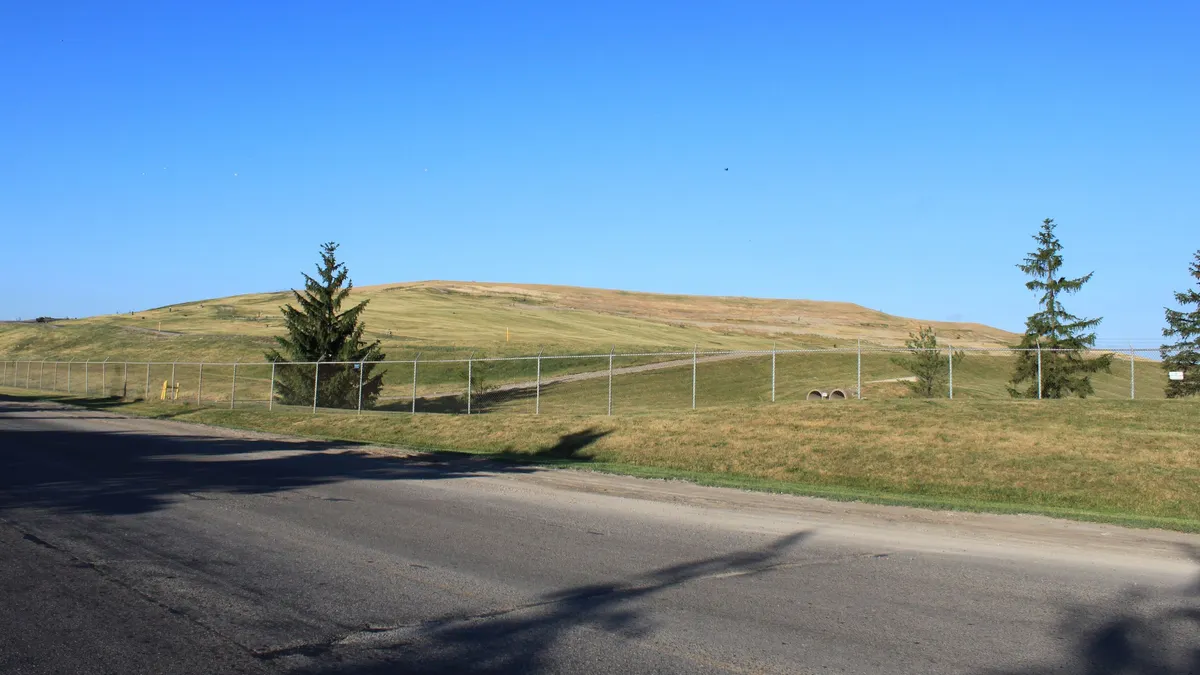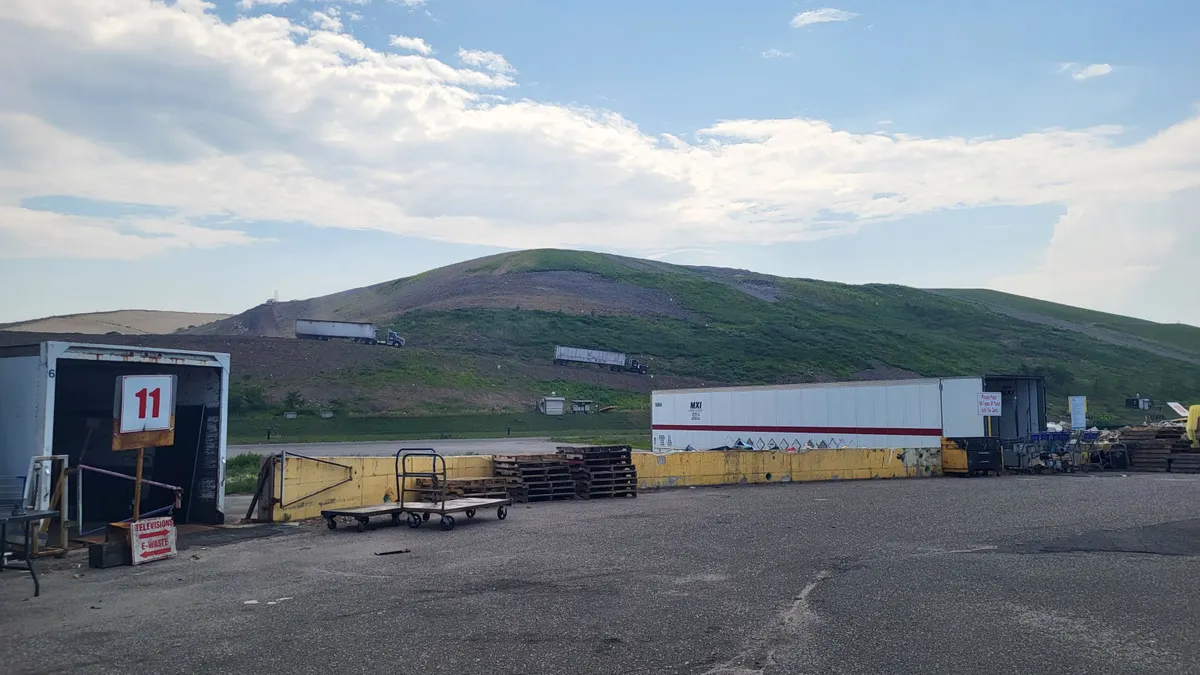
A Waste Connections subsidiary in June sued Los Angeles County authorities over the 2025 closure of the Chiquita Canyon Landfill, which came after permitting issues tied to an ongoing elevated tempearture event.
The company is seeking at least $825 million in compensation and damages through the lawsuit. It names as defendants Los Angeles County and its board of supervisors, the Los Angeles Regional Water Quality Control Board and officials serving on those entities.
The complaint alleges that the landfill should have continued to operate after Jan. 1, 2025, but was forced to close due to “unlawful actions” that prevented the operator from continuing to accept waste. The complaint details permitting discussions with officials amid the elevated temperature event that the company is still working to mitigate.
Waste Connections did not reply to a request for comment.
In the initial complaint, the company’s lawyers alleged that the county refused to update the landfill’s operating permit despite a 2022 settlement agreed to by both sides, while the water board denied necessary permits to operate a new cell due to concerns about stability in light of the elevated temperature event. The operator claimed it had less than a month of capacity left in an existing landfill cell and was facing daily tonnage restrictions that it called uneconomical.
“Chiquita had no lawful, safe, or operationally viable path to continue active disposal operations once the remaining airspace was exhausted,” the company stated in the complaint. “Each course of conduct independently prevented continued operation of the Landfill, and together they operated concurrently to cause the same injury.”
County officials have not yet filed a response to Waste Connections’ lawsuit. In a statement shared on Monday with Waste Dive, Deputy County Counsel Caroline Castillo said officials were weighing a response and would not submit one until after an initial status conference that’s scheduled for Sept. 29.
Los Angeles County filed its own lawsuit against Chiquita Canyon LLC, which operates the landfill, in 2024. That case remains ongoing. In its own complaint, the county has claimed that "the underground reaction there poses a persistent public health concern and creates a public nuisance."
The landfill has received hundreds of notices of violations from regulators since the elevated temperature event began, leading to widespread community pushback and state legislation. Court documents show that the permitting disputes arose as a reaction to the spike in underground temperatures.
Permitting negotiations
South Coast Air Quality Management District officials have been notifying the landfill operator of noxious odors since at least 2023, according to Waste Connections’ complaint. At the time, it was filling up landfill Cell 8A, which the operator said is away from and largely unaffected by the reaction area.
County officials and the operator have discussed Chiquita Canyon's expansion for more than two decades. The landfill last began the expansion permitting process in 2004 under prior ownership, and debate over the application continued until 2017. At that time, officials approved the landfill's conditional use permit with a range of new restrictions that Waste Connections claimed would have added about $300,000 in costs if the landfill continued operating.
The company subsequently challenged the permit in California superior court. After multiple years of litigation, the court largely ruled in the operator's favor. The two sides subsequently went into settlement discussions and reached an agreement in 2022.
Under the agreement, the operator would file a permit modification application to the county with changes to the operating terms. Among them were more favorable terms for the landfill, including a maximum annual capacity of 2.45 million tons of waste through December 2029, followed by subsequent annual tonnage step-downs through 2042. As part of the proposed agreement, the permit's term would expire in 2042, five years earlier than previously planned.
The county continued to discuss the updated permit application through 2024, but late that year it required additional materials to approve the application. After failing to reach an interim agreement on landfill operating conditions, a 1 million-ton-per-year restriction from the 2017 permit automatically kicked in on Jna. 1, 2025. Waste Connections claimed that restriction made it impossible to economically operate the landfill.
By then, efforts to address the elevated temperature event had drawn significant attention. That introduced fresh controversy in Waste Connections' plans to finalize permits for Cell 8B, where it was next planning to place waste.
Permitting discussions for the cell were in final stages in 2024 when the water board denied a key approval for the cell over broader concerns related to the landfill’s stability in light of the elevated temperature event. The water board required the operator to revisit its master development report for the entire landfill due to the event, but when Waste Connections’ subsidiary submitted an updated MDR the water board declined to revisit its denial of an operating permit for Cell 8B.
By the end of 2024, the landfill had about 27 working days of disposal capacity remaining in Cell 8A, according to Waste Connections. The landfill remains closed to additional waste today.
Underground temperature spike
Los Angeles County is also attempting to earn financial relief for residents from Waste Connections’ subsidiary in its own lawsuit. The legal wrangling comes amid ongoing remediation questions at the landfill.
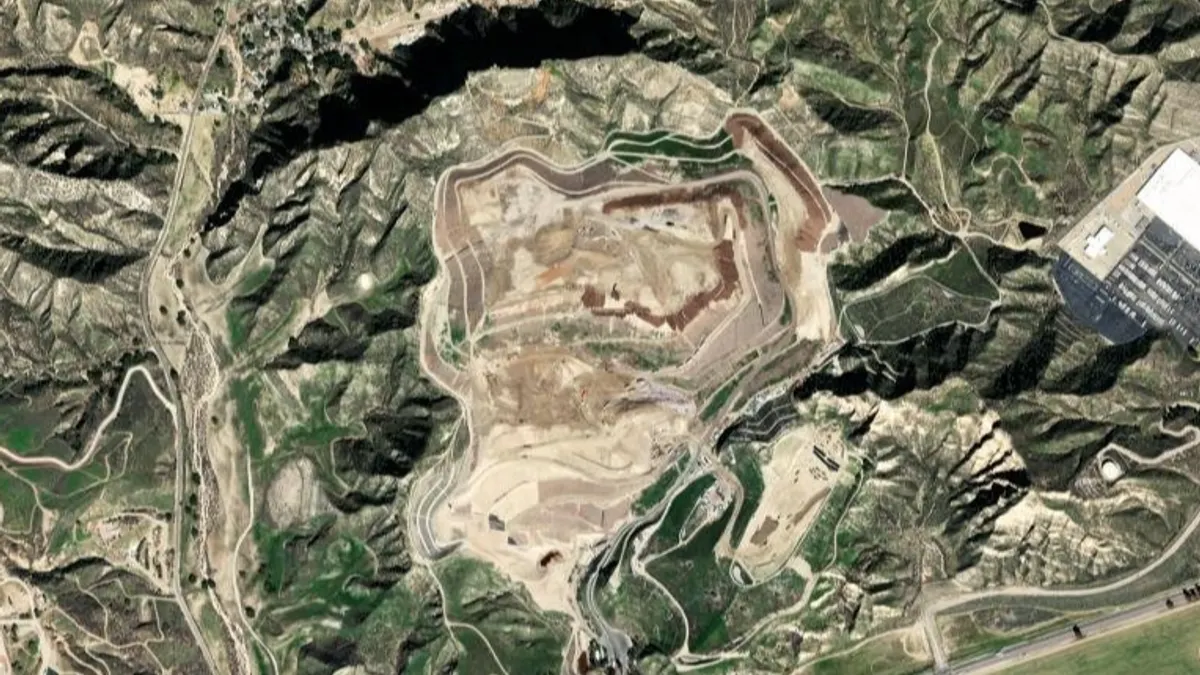
The reaction that led to elevated temperatures began in a roughly 30-acre inactive area of the landfill in May 2022, according to Los Angeles County’s 2024 complaint. The reaction grew, generating excess leachate and foul odors that led to thousands of complaints from residential communities situated as close as 1,000 feet from the affected area.
Temperatures within the affected area peaked at nearly 260 degrees Fahrenheit, according to readings Waste Connections has shared with the community. At those levels, reactions within the landfill can accelerate the generation of gases like hydrogen sulfide, benzene, sulfur, methane and carbon monoxide. At the same time, leachate generation has ballooned, with the reaction leading to an excess 200,000 gallons of liquid per day.
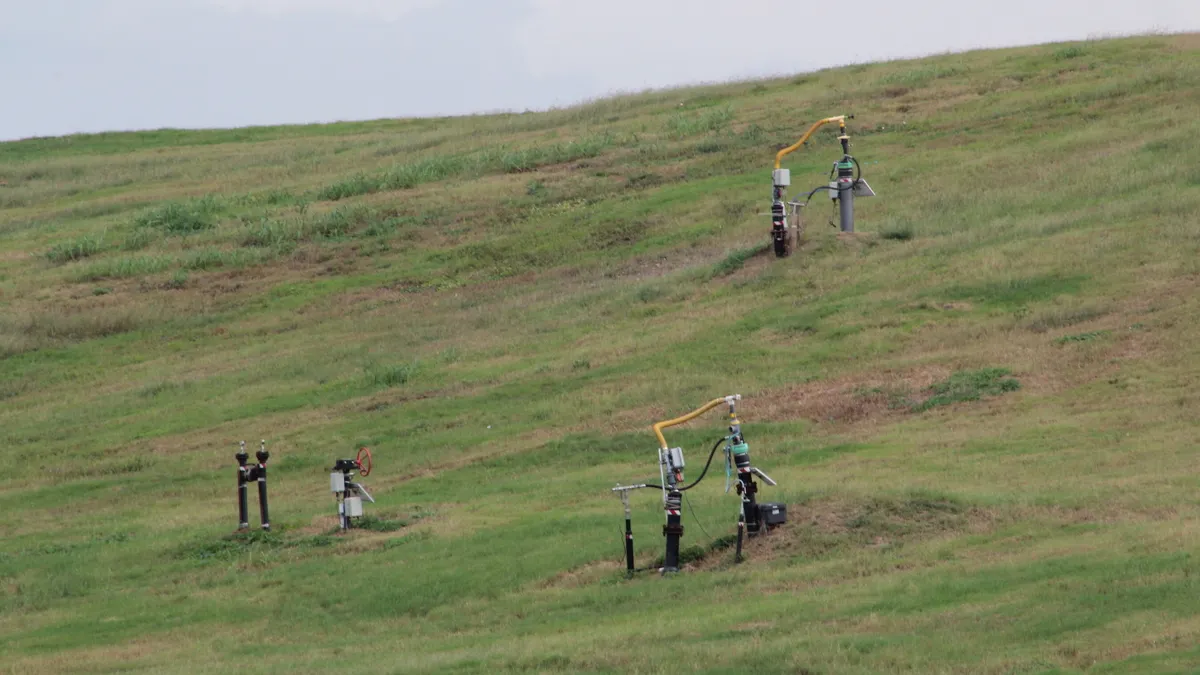
Because of those issues, the operator has installed hundreds of new gas wells and leachate pumps. The landfill shipped out more than 8 million gallons of leachate in June, up from less than 6 million in January. Other ongoing mitigation efforts, including the installation of a membrane covering the affected area and a vertical barrier to prevent one section of the landfill from collapsing, continue.
The issue has prompted attention from local, state and federal officials, all of whom continue to coordinate on procedures and permits the landfill operator must meet to contain the issue. At community meetings surrounding the landfill, residents continue to complain of noxious odors and fear health impacts.
"The owners and operators of the Landfill have failed to contain or halt this noxious reaction; have failed to protect residents from the terrible effects on local life and health; and have failed to develop a plan that actually fixes this problem or adequately mitigates the community impacts from it," the county's lawyers wrote in their initial complaint.
The county pursued a preliminary injunction from the court to provide relocation assistance and other home-hardening financial assistance to residents affected by fumes from the ongoing reaction. In July, the court of appeals denied that request, ruling that the county did not sufficiently respond to a prior ruling requiring officials to narrow the scope of initial relief sought. The county had originally wanted to cover about 900 homes.
The judge dismissed the preliminary injunction without prejudice, meaning the county can try again if it chooses. The underlying lawsuit, which seeks a more permanent remedy, will continue regardless of the results of the preliminary injunction process.
In a statement on Monday, County Supervisor Kathryn Barger’s office said staff were still weighing their options on a path forward. Other litigation brought by residents against the landfill also remains ongoing.
Waste Connections is continuing to coordinate with officials at all levels of government on remediation efforts, though public meetings have at times revealed disputes over the scope of work needed. On the company’s most recent earnings call, CEO Ron Mittelstaedt described the elevated temperature event as “stable, controlled and decelerating.” The company expects to spend between $100 million and $150 million on the landfill this year.