Chemical recycling continues to be a contentious process with established facilities receiving both support from the U.S. EPA and scrutiny from environmental groups. Meanwhile, a new partnership between recyclers and packaging companies involves resins recycled through the dissolution process.
Here’s a look at some recent updates in chemical recycling and its related industries. What news are you tracking? Send us an email at waste.dive.editors@industrydive.com.
EPA officials visit Eastman’s Kingsport facility
EPA officials visited Eastman’s Kingsport, Tennessee site earlier this month. EPA Principal Deputy Assistant Administrator Steven Cook and Regional Administrator Kevin McOmber toured the facility’s methanolysis capabilities, which are used to turn polyester into new polymers.
Eastman touted how the plant can process more than 250 million pounds of plastic waste a year and framed its facility as an important way to boost domestic manufacturing.
“Innovation and collaboration across the public and private sectors are important to advancing practical, scalable solutions that strengthen domestic recycling infrastructure, reduce dependence on foreign sources of raw materials and support American manufacturing,” Cook said in a statement.
The EPA under the Trump administration has said it aims to balance environmental policies with economic growth, and Administrator Lee Zeldin has outwardly promoted chemical recycling in recent months as a way to boost the economy.
Zeldin has also said the chemical recycling industry is being “held back by regulatory uncertainty,” including certain Clean Air Act regulations the agency is currently reviewing. The review aims to update a Clean Air Act provision to say that certain pyrolysis technologies used for chemical recycling purposes “are not forms of incineration.”
In a statement, McOmber highlighted how the facility's “cutting edge American engineering” can keep waste out of landfills while creating manufacturing jobs and increasing demand for recycled products. “The EPA is committed to supporting innovative technologies that protect our environment while boosting the economy,” he said.
This isn’t the first time an EPA official has visited a chemical recycling facility in the past year. Zeldin visited ExxonMobil’s Baytown, Texas, facility in November.
NRDC report raises concerns about required hazard reporting at chemical recycling sites
A new report from the Natural Resources Defense Council says numerous chemical recycling facilities are storing or transporting significant amounts of hazardous chemicals known to cause health problems, which the organization said raises concerns about the potential for exposing communities to hazards.
The report, which NRDC says is based on public records requests from 2023 and 2024, contains data filed by U.S. companies such as Alterra, Braven, Brightmark, Nexus and PureCycle.
The data came from reports the companies must file in compliance with the Emergency Planning and Community Right-to-Know Act, which requires certain companies to inventory and report the storage, use and releases of certain hazardous chemicals to federal, state, tribal or local governments, according to the U.S. EPA. The agency says these reports can help communities “prepare for and protect their communities from potential risks.”
In the EPCRA filings, some of these companies reported using or storing inventories of chemicals such as liquid nitrogen, calcium oxide and sodium hydroxide. NRDC said some reports had “key information [that] was omitted, obscured, or claimed as confidential,” but did not specifically name companies that had appeared to submit incomplete forms. NRDC said the incomplete reporting process makes it difficult to determine the full extent of potential risks to the community if there is a spill or release on site or during transport.
In the NRDC report, the organization further criticized the EPCRA reporting process, saying it “does not require reporting the purpose or function of the chemical, such as if it is an input or output, which makes understanding the data even more difficult.”
NRDC also called for tighter regulations on chemical recycling plants by instituting “accountability and transparency mandates” for such facilities and strengthening EPCRA reporting requirements. It also specifically criticized the U.S. EPA’s recent proposal to update the Clean Air Act to reclassify pyrolysis technologies so they are no longer considered incineration.
PureCycle, WM partner on circular recycled cup project for MLB All Star Game
PureCycle Technologies collaborated with WM, Major League Baseball and a number of packaging companies to produce plastic souvenir cups for the recent MLB All-Star Game in Philadelphia on July 14.
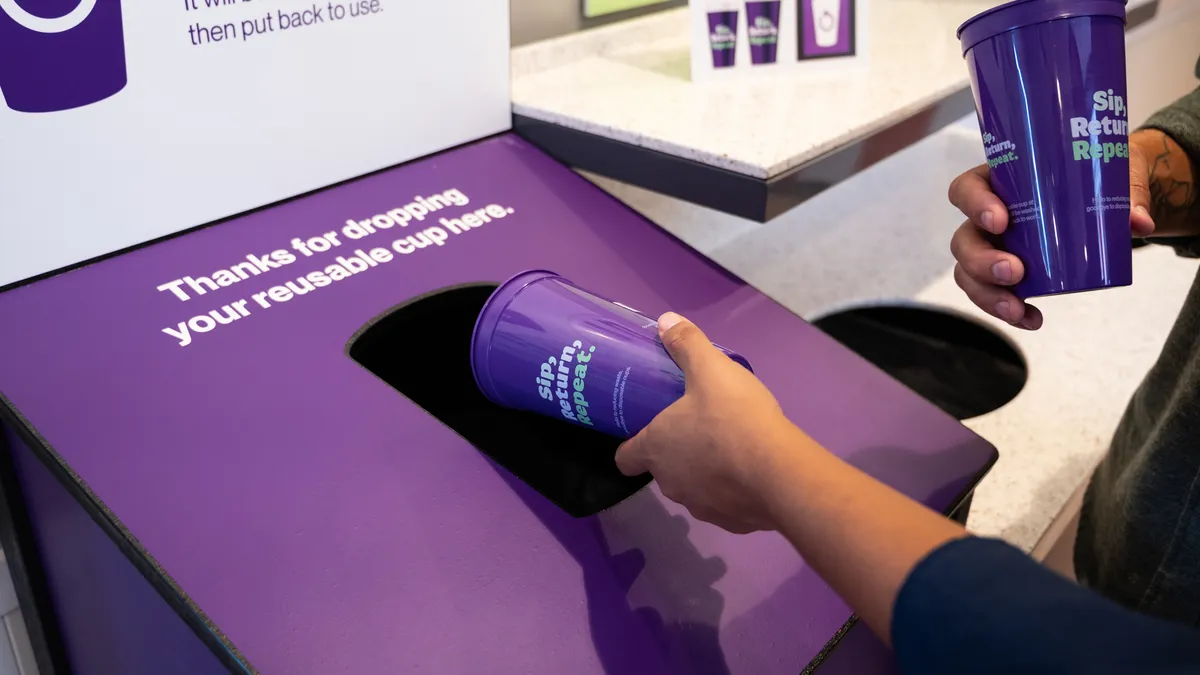
The polypropylene cups, made with recycled resin, were designed to be “recycled and transformed back into souvenir cups,” according to PureCycle.The company uses a dissolution process to convert PP into resin for new products.
Aramark and Churchill Container also collaborated on the cups.
WM, one of the MLB’s sustainability partners, also planned to collect and sort all the PP plastic waste generated at the game, and it will send it to PureCycle’s Ironton, Ohio facility. There, it will be processed and transformed back into resin, the company said.