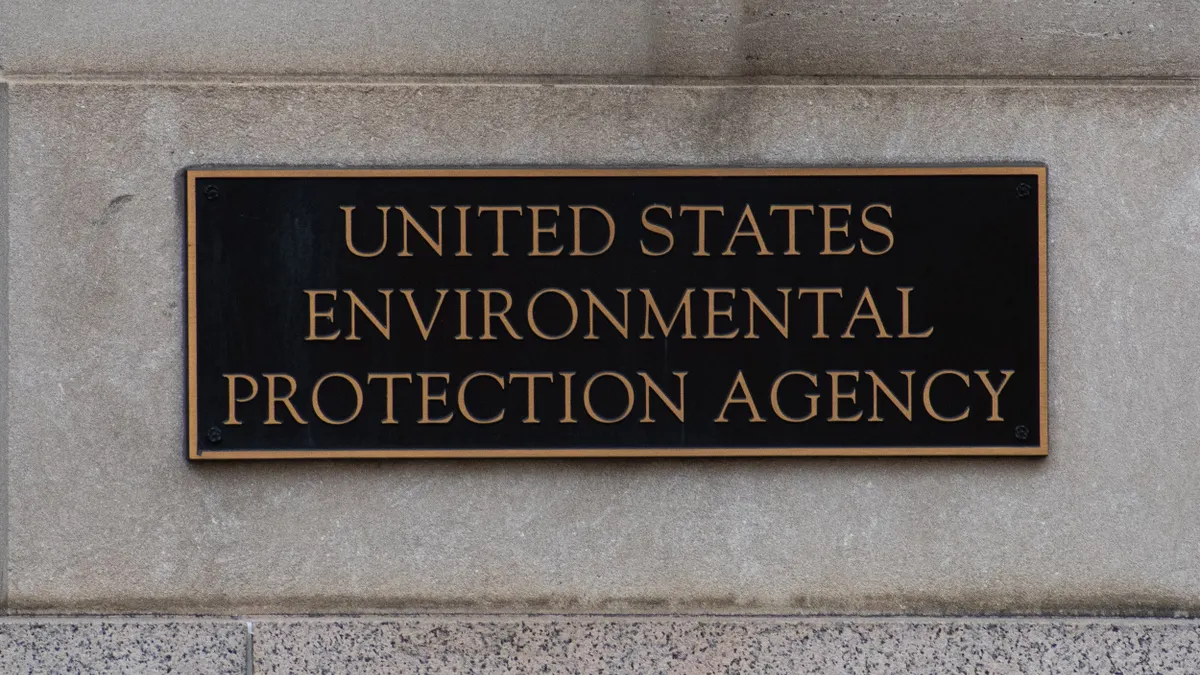
The U.S. EPA’s proposal to remove pyrolysis from a key air emissions rule — and the recent rush of public comments on the proposal — highlights how involved the agency has become in the chemical recycling industry amid longtime tensions over regulating the sector.
The EPA is considering clarifying that certain pyrolysis technologies used for chemical recycling purposes “are not forms of incineration” under the Clean Air Act. The proposed update would remove the reference to “pyrolysis/combustion units” in the EPA’s definition of a municipal waste combustion unit under its Other Solid Waste Incinerators category to clarify that the OSWI rule doesn’t regulate such units.
A public comment period on the proposal, which closed on May 4, drew hundreds of responses reflecting polarizing opinions on the chemical recycling industry in the U.S. The agency says these comments will help EPA develop future chemical recycling regulations, but has not yet announced next steps on the proposal.
Supporters of chemical recycling, including some in the plastic industry, have long pushed to have certain pyrolysis processes to be categorized as manufacturing rather than incineration or waste management. This distinction, they say, will help expand chemical recycling infrastructure and align with the Trump administration's focus on domestic manufacturing. In public comments, these groups said the current regulatory framework is too vague, and that uncertainty is blocking innovation and investment.
But environmental groups are continuing their fight against the reclassification, saying removing pyrolysis from the OSWI rule would allow the industry to bypass important, and more stringent, air regulations. These groups have also said the chemical recycling industry’s scale and potential benefits are overexaggerated.
Some stakeholders have said the 45-day public comment period was rushed in an effort to speed through regulatory changes favorable to the plastics industry. The Ocean Conservancy called the process “misleading,” and joined groups like Global Alliance for Incinerator Alternatives and Beyond Plastics in asking the EPA to extend the public comment period, saying the general public was not given enough time to comment on such complex topics
Beyond Plastics also took issue with the fact that the proposal was “sneakily” included inside a larger rule change proposal concerning regulations for air curtain incinerators and disaster debris.
“There is no other section of the Clean Air Act that adequately regulates these facilities. This change would allow pyrolysis units of all kinds to avoid the stringent safeguards that protect communities, ” said Judith Enck, Beyond Plastics’ president, in an email.
EPA’s chemical recycling pitch
In the time since the public comment period opened in March, the EPA under the Trump administration has been outwardly promoting chemical recycling — also called advanced or molecular recycling — as a way to boost the economy.
EPA Administrator Lee Zeldin presented his case in an April 24 op-ed in The Hill, where he advocated for changing regulations to make it easier for certain chemical recyclers to operate.
Zeldin believes that the chemical recycling industry is being “held back by regulatory uncertainty,” specifically calling out the Clean Air Act regulations currently under review. “One major problem is the outdated classification of pyrolysis as incineration under the Clean Air Act — a designation that was never designed with this technology in mind and does not reflect what it actually does,” he wrote.
Pyrolysis is one of a number of technologies that fall under the chemical recycling umbrella. The industry has long maintained that its work is a manufacturing process, not waste management.
Companies like LyondellBasell, for example, say its pyrolysis technology turns hard-to-recycle plastics into resins used for “high-value applications” such as food and cosmetic packaging and medical devices that need to undergo more product standards.
In Zeldin’s op-ed, he also framed the issue from a global competitiveness perspective, saying the U.S. is at the forefront of advanced recycling innovation but “risks falling dangerously behind in the race to build it out.”
Europe, he said, is on track to “lead the global market in revenue” and is projected to have about 65 chemical recycling facilities by 2030. Meanwhile, the Asia-Pacific region “is emerging as the fastest-growing market for advanced recycling technology, with projected revenues of $7.3 billion by 2030,” he said.
“If America does not invest in scaling this technology now, it stands to lose not just an environmental opportunity, but an enormous economic opportunity as well.”
Zeldin also noted what he called “inconsistent state-level frameworks” as another business hurdle. About 25 states have laws that classify chemical recycling as manufacturing instead of waste management, and the majority of those state laws were led by the American Chemistry Council, a key chemical recycling supporter. Zeldin says the other half of states have no such law, which “default to solid waste classifications that subject the process to unnecessarily burdensome rules.
A separate federal bill in Congress, the Recycling Technology Innovation Act, also aims to classify chemical recycling as a manufacturing process.
In the U.S., there are fewer than 10 chemical recycling facilities, which Zeldin and some industry groups see as being too low a number to stay competitive with other countries.
But critics of chemical recycling say there are other reasons for the number. Numerous chemical recyclers aiming to gain a foothold in the U.S. have experienced a range of permitting problems, challenges with scaling and profitability, bankruptcy proceedings and major pushback from surrounding communities that see the facilities as sources of health and environmental problems.
Other chemical recycling companies are locked in high-profile lawsuits. ExxonMobil and California’s Attorney General Rob Bonta have been fighting in court for several years over allegations that the industry is overstating chemical recycling operations’ effectiveness and environmental benefits.
A matter of ‘regulatory uncertainty’
Deciding on pyrolysis’s regulatory home base — in OSWI or elsewhere — is a key task that will have a direct impact on the industry, commenters said.
In comments to the EPA, stakeholders differed on whether the proposed pyrolysis reclassification would create more regulatory uncertainty or achieve critical clarity.
The chemical recycling industry typically argues that pyrolysis is not a combustion process because it uses high temperatures in an oxygenless environment to process the plastics instead of burning them.
“Treating these technologies the same as combustion-based processes does not reflect how they operate and creates unnecessary barriers to growth and innovation,” LyondellBasell wrote in its comments to the EPA.
But the Ocean Conservancy and other environmental groups say pyrolysis is not a “zero-oxygen” environment, meaning oxidation will still occur. “Because oxidation is a form of combustion, and these units combust solid waste feedstocks, they satisfy the definition of ‘solid waste incineration unit,’” wrote Anja Brandon, director of plastics policy for The Ocean Conservancy, in public comments.
In Kent County, Wisconsin, local officials support removing mention of pyrolysis from the OSWI definition. The county operates a waste-to-energy facility and says the pyrolysis method it uses to create biochar is not incineration.
Director Darwin Baas added that the “high-value” biochar is used locally as a cement replacement or asphalt additive and thus helps divert material from landfills and reduces methane emissions.
“To make it a realistic option for local governments, [pyrolysis] should not be included in the definition of incinerator,” Baas wrote. “The associated prohibitive permitting costs from these manufacturing units will provide the regulatory certainty necessary to allow local governments the option to include biochar production as a local government service as they would recycling and/or wastewater treatment.”
The Ag Container Recycling Council, which also advocates removing pyrolysis from the OSWI, says the reclassification will help the agricultural plastics industry continue to find outlets for its hard-to-recycle materials, including agricultural chemical containers. Further restricting the industry as incineration could restrict new chemical recycling facilities from starting up and could increase landfill disposal, wrote executive director J. Mark Hudson in comments.
“Chemical recycling — including pyrolysis — offers one of the few viable pathways to recover value from these materials when mechanical recycling is not feasible,” he wrote.
In LyondellBasell’s written comments, the company said it would directly benefit from removing pyrolysis from the rule by making it easier to permit future projects under the “appropriate framework” instead of treating pyrolysis as a combustion unit.
It is currently "evaluating" possible plans to build a commercial-scale pyrolysis facility in Houston that could divert “thousands of tons of hard to recycle plastic waste” into new plastics, including plastics for food packaging and medical device applications, the company said. The setup could be similar to a commercial-scale plant using the same technology in Wesseling, Germany, which LyondellBasell hopes to open in 2027.
The company says it’s already getting permits for its Houston project, which it says is necessary to comply with federal air quality laws.
But officials at Oregon’s Department of Environmental Quality disagree with the proposal to remove pyrolysis from the municipal waste combustion unit definition, saying the move would create “a gap in the ability to track and regulate the emissions from these facilities. The removal of pyrolysis has the potential to create a pathway for new facilities to be developed without an adequate permitting process, which would require emission limits and controls, creating the potential for deleterious impacts to the environment and public health.”
DEQ “strongly recommends” not removing these kinds of units from the definition until “separate standards for these units are put in place.”