Dive Brief:
- A Natural Resources Defense Council report examines 10 municipal curbside organics programs across the United States to identify best practices that ensure program success.
- The report's authors highlight the importance of a holistic approach to designing residential waste and recycling systems in order to drive participation and cost efficiency.
- While the authors focus on methods to manage costs, they also note that processing access and market conditions play a major role in determining overall program cost.
Dive Insight:
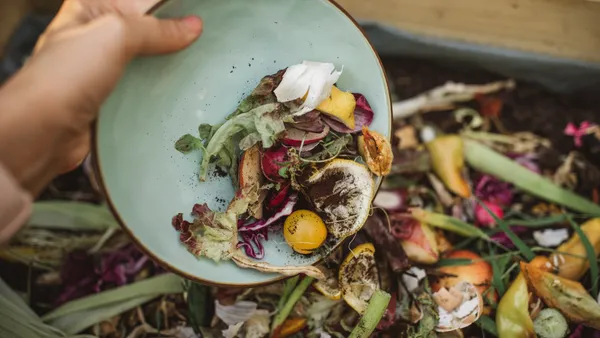
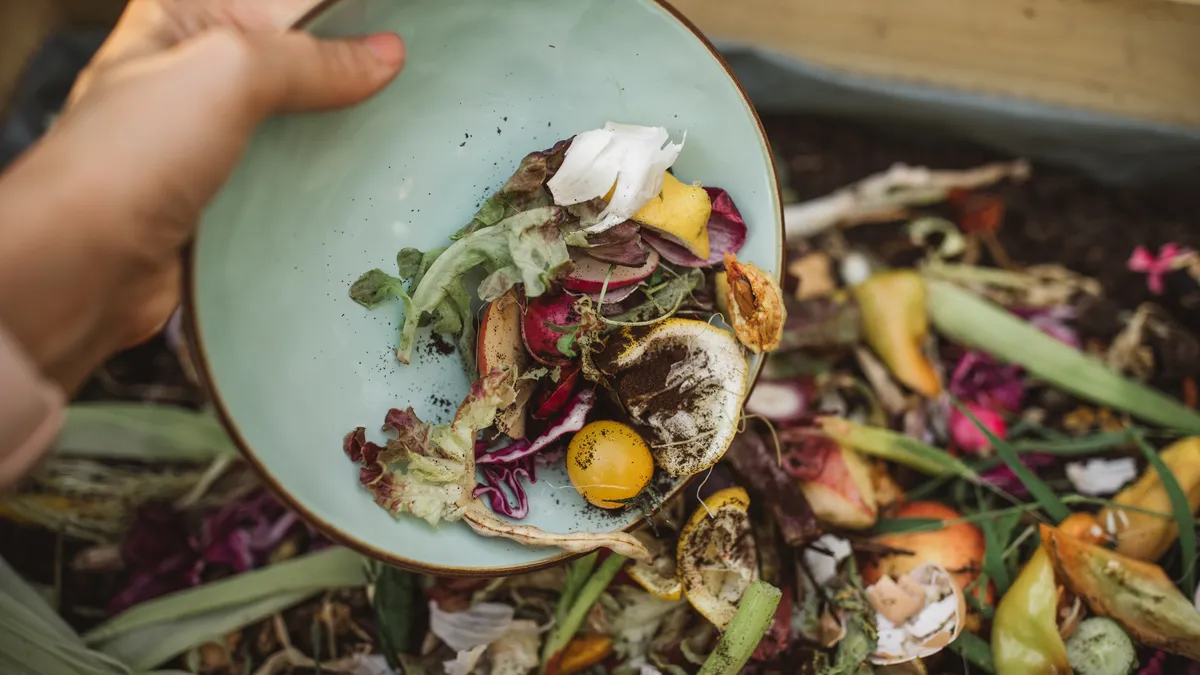
The adoption of curbside organics programs is growing across the country, fueled by rising disposal costs, increased access to processing capacity and other considerations. New York City runs the nation's largest such program, though it has experienced enforcement delays that critics say have hampered growth.
The NRDC report measured 10 curbside organics programs, eight of which were fully established while two were pilots. The established programs included a range of characteristics: mandatory versus opt-in, separate fees versus incorporating the cost directly into residents' overall solid waste fees, and co-collection with existing hauler networks versus a parallel collection program.
The studied pilot programs also took different approaches. Nashville, Tennessee's Food Scraps Pickup Pilot is an opt-in program run with a specialized private hauler for about 750 households. It's funded by the city's general fund and a $27 per household fee.
Durham, North Carolina's pilot uses city vehicles and sends organics to a private contractor. It took a phased approach across neighborhoods and served approximately 500 households during the study period which included winter and summer of 2026. The program has received state funding and outside research support.
The authors found that both pilots achieved similar set-out rates, "demonstrating that there is more than one pathway to viable curbside pilot program design and implementation.”
The report also outlines multiple strategies to manage costs. It especially highlights the importance of municipalities revamping their whole residential waste and recycling program, including through route redesign, renegotiated contracts, trash collection frequency reductions and other administrative efficiencies. Those improvements can offset the added cost from incorporating curbside organics collection into city services.
"The difference between two-stream and three-stream service, when the three-stream program has been designed efficiently, is minor," the authors wrote.
The report's authors also note that higher participation can lower per-household program costs through increased economies of scale. That also applies to opt-in programs, which better capture enthusiastic participants but at a higher cost.
Some program proponents worry that mandatory participation could lead to higher contamination rates from reluctant residents. But the report highlights Boise, Idaho's mandatory program strategy, which achieves a 97% participation rate. In Boise, households can opt out of organics but pay a higher waste disposal fee as a result. The city can also revoke residents’ organics carts if they're found to repeatedly contaminate the stream.
While the business of organic waste processing is growing, municipalities still must consider access to such facilities. Across the report's studied communities, organics tipping fees ranged from $0 through some publicly controlled arrangements to $100 per ton in constrained private markets. The authors therefore recommended setting up public processing capacity or working with private facilities to lock in favorable rates.