Dive Brief:
- The U.S. Department of Commerce has approved a request from American Battery Technology Co. to export and sell up to $100 million of its recycled black mass from batteries. The decision comes a few months after federal export controls went into place, banning most exports of the material.
- American Battery said it sought an exemption from the ban because the United States’ battery collection and shredding infrastructure has developed faster than its domestic downstream refining capacity.
- The Department of Commerce’s Bureau of Industry and Security recently announced temporary export ban until Aug. 27, 2027. It specifies that black mass producers must allocate 100% of monthly sales to domestic buyers unless granted an exception. The rule also applies to exports of tungsten.
Dive Insight:
ABTC has been working to build up its battery recycling and manufacturing infrastructure as the U.S. continues to focus on shoring up domestic supplies of critical minerals to compete more directly in the global market.
The U.S. government sees critical materials as a national security priority, as China currently corners the market on such materials. The black-mass ban rule states that “the inadequate supply of [critical minerals and materials] poses an increasing risk to our national defense and security,” and an export ban would ”take immediate action to secure the supply of recoverable CMMs.”
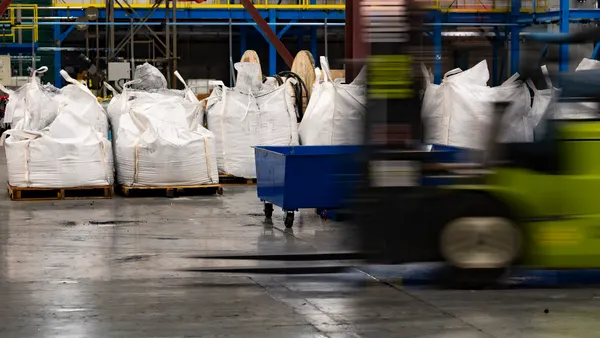
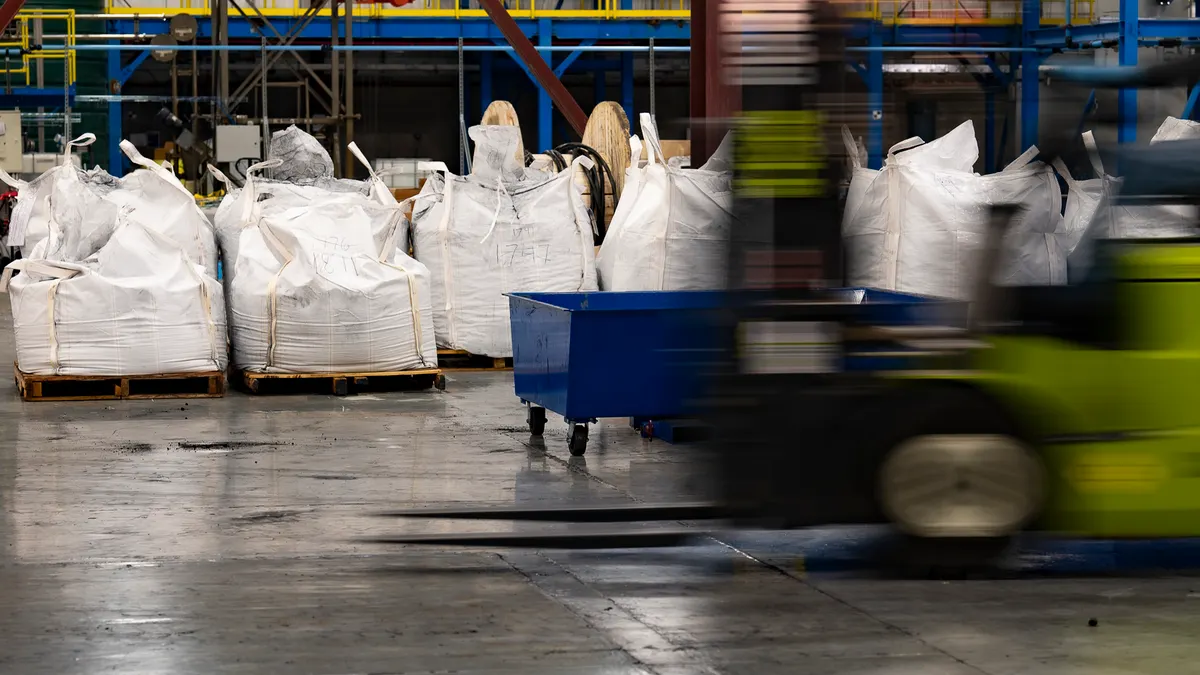
Much of ABTC’s recycling process focuses on black mass, which includes shredded lithium-ion battery scrap that contains cathode material typically made up of lithium, cobalt, nickel and manganese as well as other materials. The company said in a statement that access to “carefully managed export channels” would allow ABTC to continue operations and build up its recycling infrastructure “while that refining gap closes.”
ABTC is among the companies that have sought an exception to the export ban. The rule specifies that companies can apply for an exception if they sends materials outside the country for processing or refining with the intent that the refined materials would be returned to the United States.
Other exceptions could be granted for companies that would experience “undue hardship” if exports were blocked, or for scenarios where a blocked export would somehow lead to a reduced domestic supply of critical minerals, among other reasons.
The company is “grateful for this license and continued support from the U.S. government for the sales of our domestic critical mineral products,” CEO Ryan Melsert said in a statement.
Its operations, which also include work to build a separate commercial-scale lithium hydroxide refinery, are supported by grants from the U.S. Department of Energy. Its lithium refinery in Nevada is funded partly from a $57 million DOE grant.
ABTC continues to ramp up operations at its critical mineral recycling facility in Nevada, which is designed to take shipments of large-scale batteries from OEMs and process the material into black mass and other recovered materials like copper, aluminum and steel.
The company’s feedstock comes partly from battery energy storage systems that once supported data centers and AI facilities, as well as end of life electric vehicle batteries and consumer electronics.
The Department of Commerce’s decision to give ABTC a black mass export license shows that the company has proved its reliability, and strengthens the company’s market position, Melsert said in a statement.