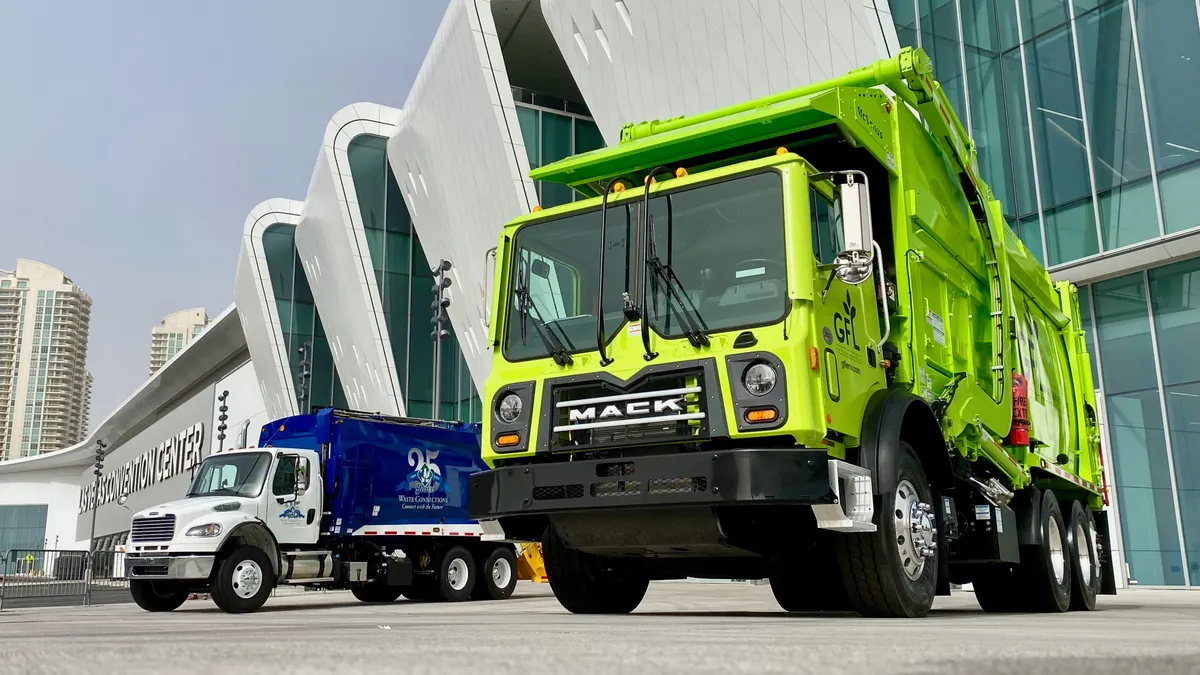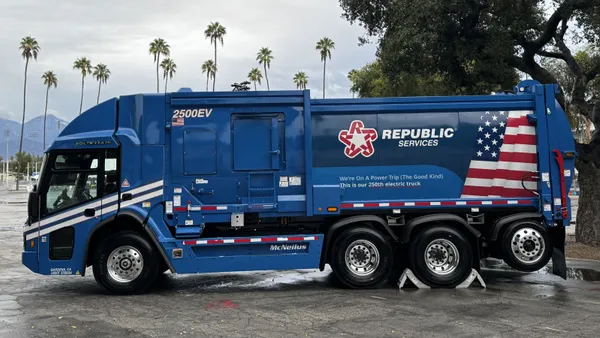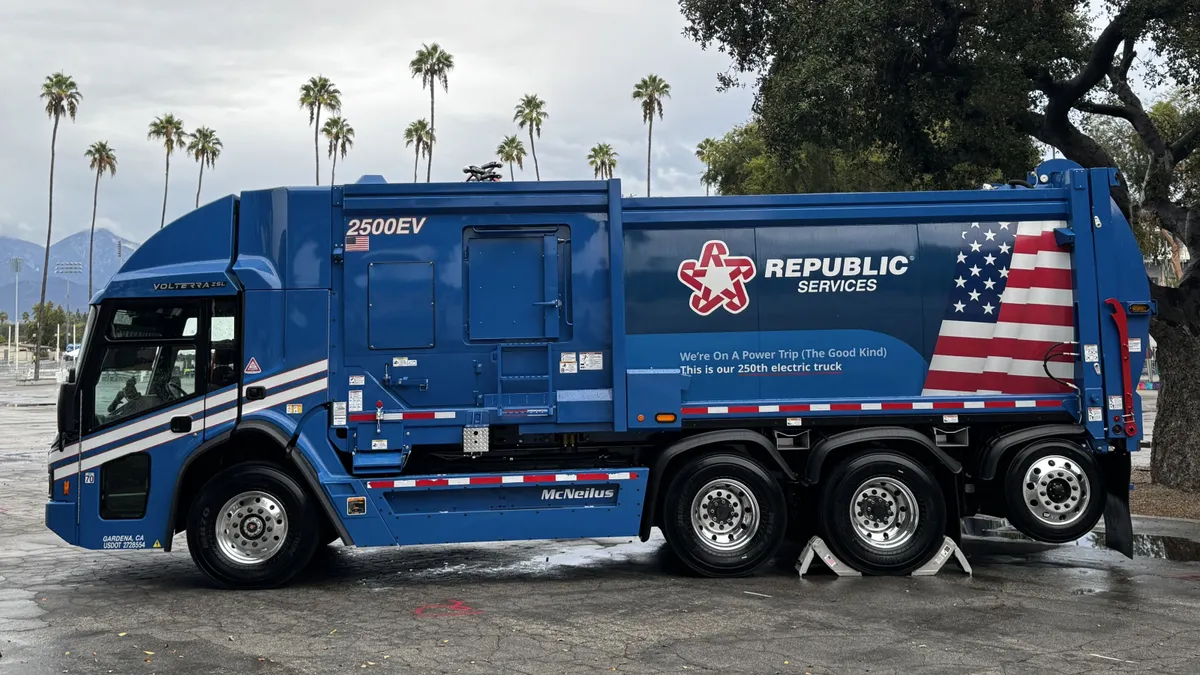
Over the past few years, Republic Services has become one of the waste industry's largest electric vehicle users. It has rolled out more than 250 electric collection vehicles through municipal partnerships coast to coast, most recently with the city of Coconut Creek, Florida.
Brett Rogers, Republic Services’ vice president of operations technology, leads the company’s fleet strategy. He said the vehicles have often performed better than expected, and have ancillary benefits like greater visibility, technology integration and additional torque that drivers love.
The success of the company’s rollout has been predicated on it carefully calling its shots, deploying the vehicles in environments where they’re most likely to succeed, he said. Republic has also been mindful to put the charger before the vehicle, building more than 30 new charging stations so far to support its vehicles.
The company recently surpassed 250 electric collection vehicles in operation, and is ahead of schedule to meet its goal of operating 300 such vehicles by year end, Rogers said. While Republic will likely always remain a “dual-fuel fleet,” he said Republic is learning quickly that electric vehicles are ready for wide deployment, even amid a rapidly shifting regulatory environment.
“You're going to see us being persistent no matter what the outside environment looks like. We'll continuously grow our EV fleet and stay ahead of the game,” Rogers said.
This interview has been edited for length and clarity.
WASTE DIVE: Within the waste industry, the focus on emissions reduction has largely centered on landfill emissions. Within fleets, it's usually swapping diesel-powered trucks with CNG-powered trucks. Why did Republic decide to pursue electric collection vehicles instead?
ROGERS: The bulk of our fleet today is diesel, and we have about 20-25% renewable natural gas trucks as well. To get that next step of emissions reduction, it requires a different type of fuel. That fuel in this situation is electricity.
EV gets us to a point where you have zero tailpipe emissions. When you think about renewable natural gas, you still have an exhaust pipe on those vehicles. If you really want to get to zero, EV is really the only way today. Hydrogen may come down the road at some point, but EV is where we feel we need to get as an industry.
We always expect to be a dual-fuel fleet. Today, our dual fuel is diesel and RNG, and we have EVs ramping in. Maybe in the future we're going to be an RNG and EV fleet. RNG is great. EV is just that next step in emissions reduction.
What situations call for an EV solution versus a diesel or an RNG-powered vehicle?
If you go to a brand new site, it is very easy to run a diesel truck because it doesn't require the infrastructure to go in. Even with RNG, you have RNG infrastructure being rolled out, and with EVs, you have your charging infrastructure being rolled out. Infrastructure is one of the factors there.
But we also look into something called route viability. We have a very deep understanding of EV power draw. We've been running EVs for basically five years now from multiple OEMs. We understand the impacts of terrain, environment as far as temperatures, like hot or cold, and understand what those power draw implications are, which then could shorten or increase your range.
What we've done for initial deployment is that we wanted to go into some conservative areas to make sure these EVs are successful. What we've found is that the EVs work on way more routes than we originally expected. They've been highly successful in being a one-for-one truck swap. So I mean, no midday charge, you run a full route on a single charge, and really get the vehicles out there.
But the main driver, as far as where we go, is that we're looking for customers who want these. We're going to put in the infrastructure and put these EVs where municipalities are asking for it.
The McNeilus Volterra has constituted a significant portion of your EV fleet. Is that the only electric model that you're using for collections?
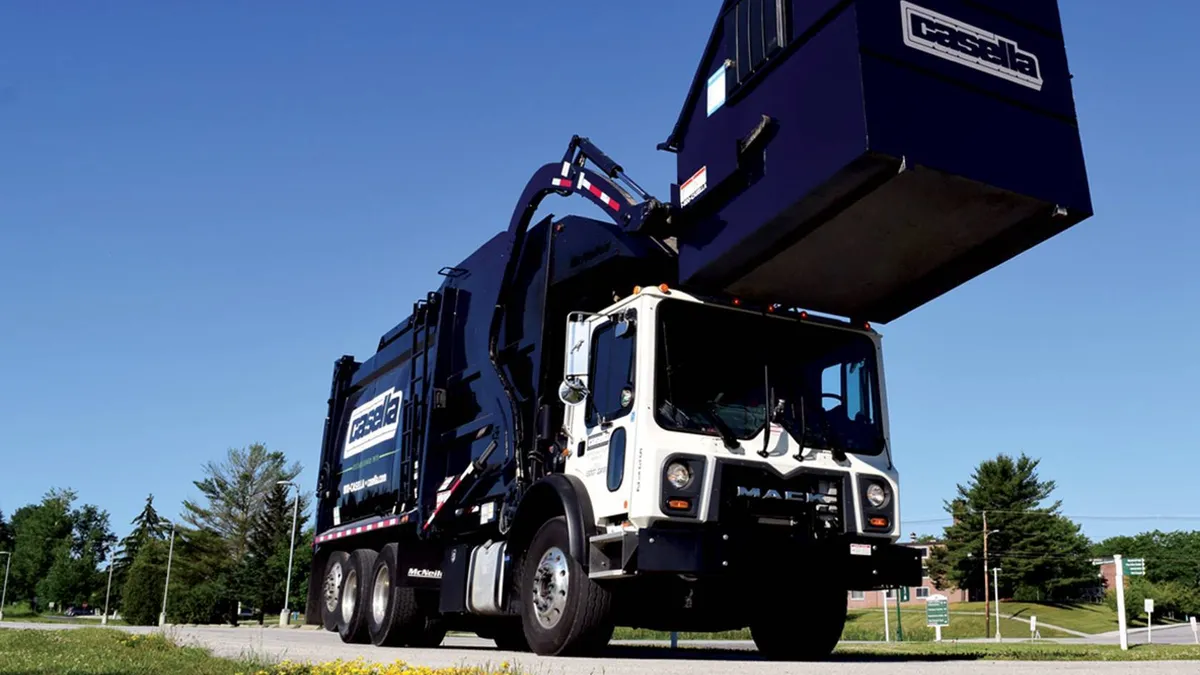
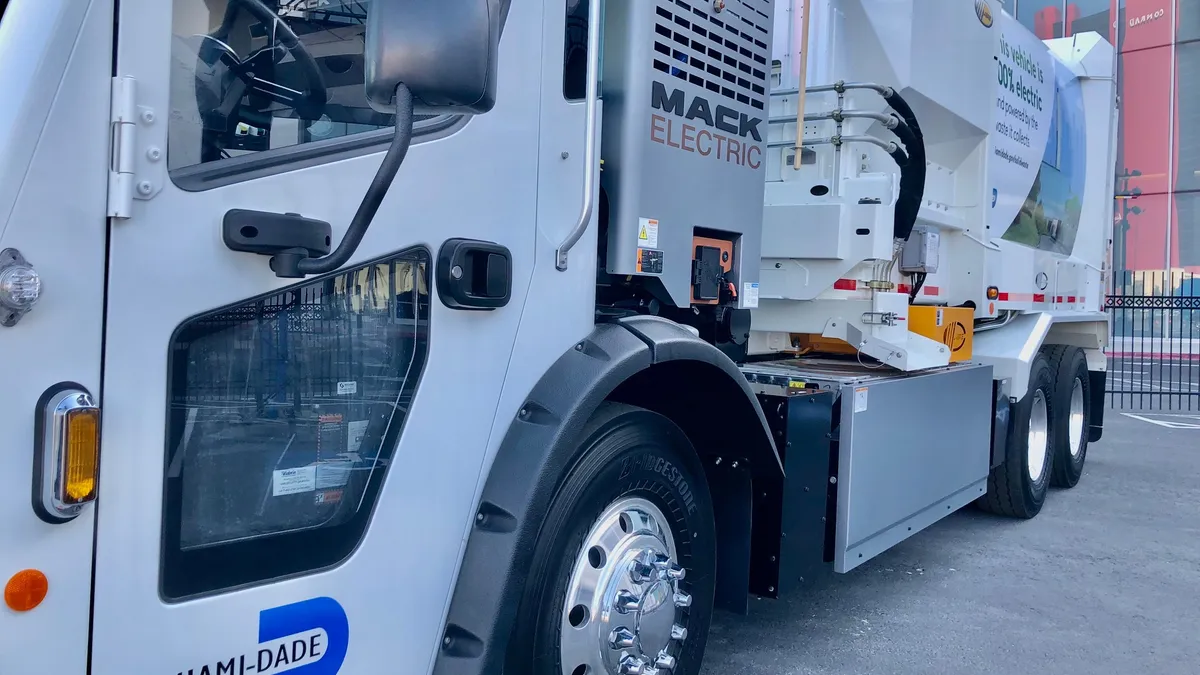
We have multiple vendors. We have Mack LR Electrics, we have Peterbilt 520s, as well as the Volterra ZSLs. We have a few different vendors out there that we're running for different applications.
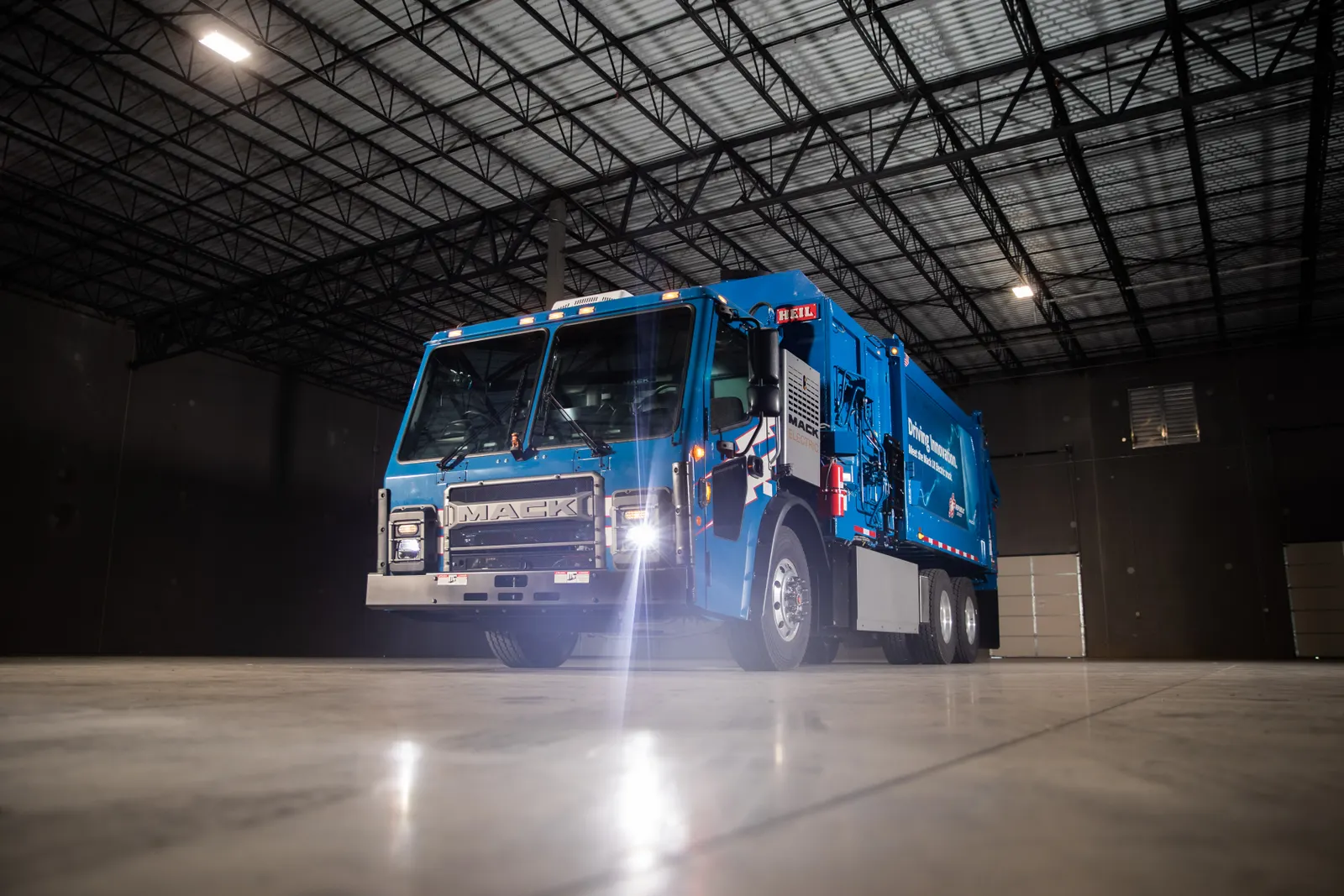
The bulk of our new EVs going out there are the Volterras, but that's really due to cab design. The Volterra has a unique cab design that's really about the driver. We consider the cab the driver's office.
When you look at that truck, by removing that engine and basically having a ground-up design with EV as the main fuel source, you have a 30% bigger cab. You have a quieter cab, less vibrations in the cab, and better AC and better ergonomics overall.
As far as utility goes, each model has their pros and cons. But overall, the Volterra also gives us a fully integrated truck, meaning when we purchase that truck, it has a McNeilus body and McNeilus chassis integrated into each other. Traditionally on vocational vehicles, you'll have a chassis manufacturer, body manufacturer and then they mate. So that full integration gives some opportunities as well in order to improve weight reduction, improve payload and also improve range overall.
Some haulers have had concerns about electric collection vehicles lacking the power to cover a traditional route run by a fossil-powered vehicle. Has that been your experience?
It's been surprisingly good. But again, we know where these work. Before we even deploy one of these, we know it's a one-for-one swap. But the performance has been better than expected, I'll say that. And so far, everywhere we've gone, we haven't had an issue on range.
I think people are going to be very surprised about them. I know our drivers are surprised. They're used to our diesel and conventional vehicle trucks, but once they get in these EVs and drive them for a little bit, they don't want to get out of them. They love them.
I will mention this: If you're in a cold, rural area that has very long routes, EV may not be the best application there. You do have to be intelligent about where you put these things, because moderate climates, flatter terrain are going to be better. But we’ve had high success everywhere we go.
Rolling out these vehicles also means rolling out infrastructure. On its last earnings call, Republic said it had deployed 32 charging stations. How have you been able to deploy that infrastructure so quickly, given the broader permitting and logistical challenges that the market is facing with electrification?
It’s all about timing. What we found, the only barriers to entry are time and cost. If you get in and you have proper planning, you understand the timing involved, you have good utility partnerships, you’re able to get this infrastructure in.
You just have to plan ahead before the trucks go in. What we’ve done a really good job at is standing up that infrastructure, and also knowing where trucks are going to end up. That way, when the trucks get delivered, there are already chargers in place, and we're ready to roll.
Tell me about how Republic pitches a municipality on electric vehicles. How do you overcome sensitivity to costs and potentially raising solid waste fees that a lot of these local officials might struggle with?
The main focus on EVs is really that it helps them achieve their sustainability goals. When you look at the actual cost to electrify, it is really not that expensive to actually hit those goals.
Some of the interesting things we see as well is some municipalities aren't just interested in the sustainability piece; they're also interested in the safety piece. These vehicles, the way they're built, they have a bigger windshield. They have really good visibility compared to the traditional refuse truck. They have additional safety features like 360-degree cameras, blind spot warning, auto braking moving forward, as well as lane keep and assist. They're after those safety features.
Really it's a combination between we can help you achieve your sustainability goals, and all the trucks that we put on the road are safer and have all the latest and greatest technology. That's what people want in their communities.
One other piece is also quiet. What we notice is some traditional trucks are a little noisier, and with these EVs now you have really quiet operation of the EV, so when it goes out, it's less disruptive to the community. That really plays a factor in saying, “Hey, we're one with the community.”
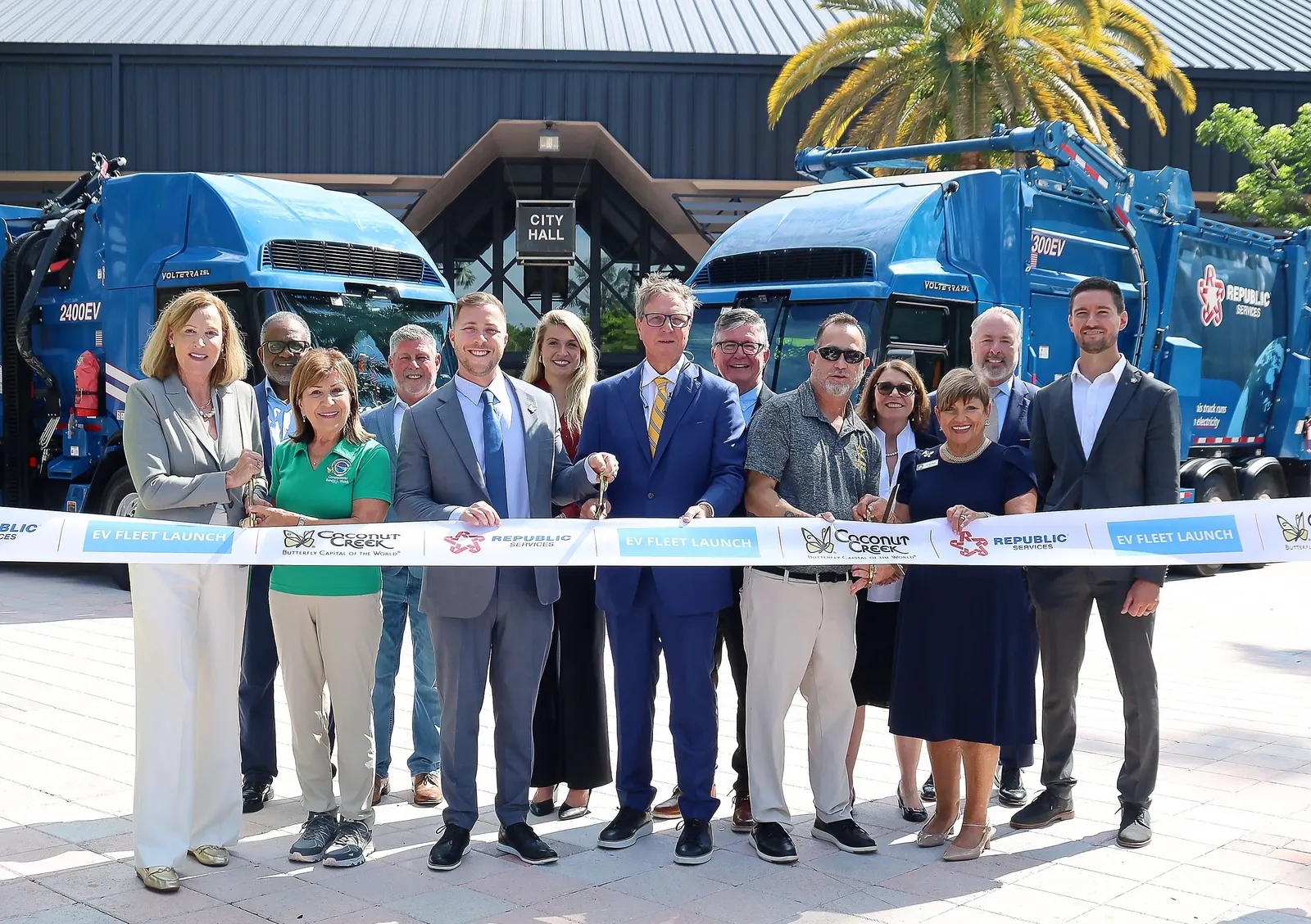
Municipalities are our main focus, and what we do is prioritize those locations that are interested in EVs. We can start the feasibility studies, we can start the infrastructure designs while we're figuring out where are these municipal hotspots. That's the main driver.
Where are the geographies that you think are primed for additional EV adoption?
What you’re going to see is probably the East and West Coast are going to have a lot of EVs going to those locations. Then what's going to be lagging behind will be more of the rural areas in the center. You’re talking about the colder areas, the colder states with the longer routes. Those will be a later adoption to EV. As technology improves and gets better and better, you'll see them go inland.
We saw California’s Advanced Clean Trucks and Advanced Clean Fleets policies get rolled back, and the federal government has also delayed some of the more aggressive goals to transition away from fossil fuel-powered trucks. Do you think it's a mistake to lower that ambition? And do you think that the waste industry could transition quickly if the proper incentives are in place?
Our strategy is a long-term strategy. We realize incentives are going to come and go. Regulations could come and go, but our strategy is to go electric, and you’ll see us being very consistent with our rollout. As far as incentives go, yeah, they help. What you're seeing today is potentially a decrease in federal incentives, but if you look at the state incentives, they’re still there. And they’re not only still there; they’re increasing.
There’s still a lot of opportunities to take advantage of those incentives and actually to expedite the rollout. There's incentives out there that help out with charging infrastructure. There’s incentives out there that help with the cost of the truck. It's all based around the emissions reduction of the vehicle you're replacing.
There’s also a bunch of different variations on how they’re rolled out. There’s [California’s Low Carbon Fuel Standard.] There’s incentives based off of the electricity used in some states. We’re seeing all kinds of things. We’re also seeing incentives based on [nitrogen oxide] reductions and things along those lines. So a wide variation.
We've seen some hydrogen-fueled concept vehicles piloted in the waste collection space. Is that something that Republic is interested in exploring right now? And do you feel that there is a niche that hydrogen-powered vehicles could occupy in the industry in the future?
Yeah, I think hydrogen has a place. We're in the loop and staying in touch with hydrogen development. It always seems like hydrogen is maybe five years out. It seems like every single time we get the same story.
The way I see it, we're always going to be a multi-fuel fleet. Potentially we go diesel and RNG, to RNG, to EV and then maybe EV to hydrogen. Where hydrogen's advantage really comes in is that quick refuel time and potentially longer range. We're keeping an eye on that. It's really helpful for semi trucks and some transfer vehicles.
The thing with EV is it's always going to be more efficient, and really that's because you're basically using electricity as your fuel source to propel the vehicle. When you start going to hydrogen, you're starting to use chemical to electrical conversion, and so your efficiencies are always going to be lower.
I say that because anything that can be electrified, you will electrify because of the upper 90 percentile in efficiencies. That all plays a factor here. The reason why you do hydrogen is because you have a certain route, certain condition where EVs don't meet the mark.
So far, everywhere we’re going, EVs hit the mark. What we’re seeing is technology actually improve at an expedited rate. Right now we have our batteries out there, but in the future we're going to have solid-state batteries. We're going to have more range, reduced amount of mass in the truck, meaning increasing payload. We see that EVs are actually improving over time.
You're going to see EVs take off way faster than the hydrogens, especially with our residential front-load fleets. Those are perfect applications for these vehicles, especially with the stop and go in the region. EVs also have that reduced complexity.
Are you also looking at electrifying support and transfer vehicles in your fleet?
We have electric supervisor trucks. We have Ford Lightnings out there running around, supervisors love those. Our stake trucks and box trucks, we have Mack and Peterbilt variants of those that are completely electric. We don't have those deployed at scale, but we're learning a whole lot by running around, making sure that they can run our operations properly. And so far, really positive feedback from both.