Dive Brief:
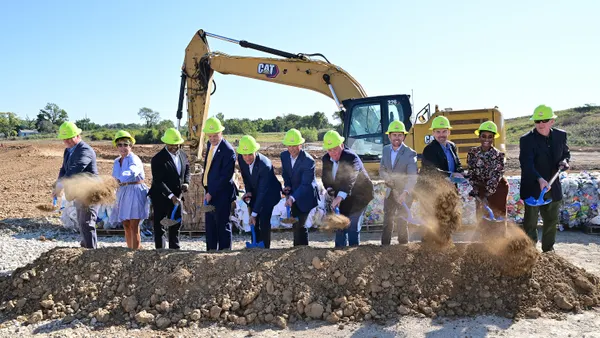
- The U.S. Department of Energy has reinstated American Battery Technology Co.’s canceled $57 million grant meant to help build a lithium refinery in Tonopah Flats, Nevada.
- American Battery announced on Monday it won its appeal process with the agency and will continue with plans to build the $115 million commercial-scale refinery to produce battery-grade lithium hydroxide.
- The facility, expected to have a capacity of 5,000 metric tons a year, is part of a larger lithium mining project meant to operate along with the company’s battery recycling efforts.
Dive Insight:
Last October, DOE canceled $700 million worth of battery and manufacturing projects grants, including American Battery’s grant, saying the projects either didn’t meet certain milestones, were not economically viable or would not “adequately advance the nation’s energy needs.” American Battery says it was one of “hundreds” of grants that were canceled in that process.
In 2022, the DOE had initially selected American Battery for a five-year grant to help build the first phase of the refinery, located on what CEO Ryan Melsert described during a May 11 earnings call as “one of the largest identified lithium deposits in the U.S.”
Before learning of the termination, American Battery had already completed the first two years of the grant and had been selected to participate in a streamlined permitting process under the White House’s National Energy Dominance Council and the FAST-41 Permitting Council, the company said.
The company started an appeal process soon after learning the grant would be terminated and underwent “a series of technical and commercial reviews of the performance of the project” to ultimately prove its merit.
DOE support has been important for American Battery’s growth, and Melsert said the agency is “one of our closest long-term partners.”
A separate DOE grant awarded during the first Trump administration helped support the refinery project’s initial bench-scale development and the construction of a demonstration facility, he said. The recently reinstated grant was awarded during the Biden administration through the Manufacturing Energy Supply Chain office.
During the earnings call, Melsert said the company continues to work closely with other federal agencies, including the Bureau of Land Management and the Department of Interior, because the lithium deposits are located entirely on BLM-managed land.
“Working closely with the federal government and having these fast-track streamlined operations has been extremely meaningful over the past year,” he said.
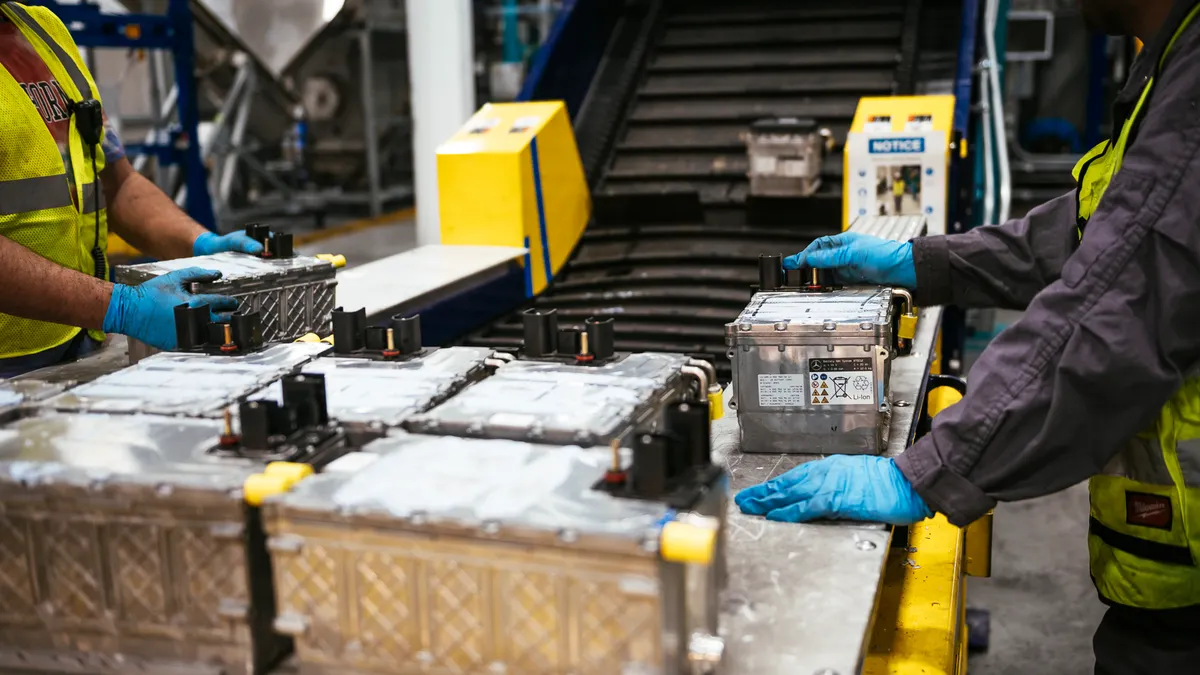
Past DOE grant funding has also helped American Battery launch its large-scale lithium-ion battery recycling facility in McCarran, Nevada. That facility, built in 2023, reached full-time operations last year.
American Battery’s planned lithium mining project will work alongside the company’s lithium-ion battery recycling efforts, said Tiffiany Moehring, the company’s head of communications.
The company sees battery recycling as essential to improving domestic battery metal supplies, but “at the same time, recycling alone cannot solve the full supply challenge,” she wrote in an email. “Demand for battery materials is growing so quickly that, even if every available battery were recycled today, there would still be a significant shortfall in critical materials.”
The McCarran facility, designed to take shipments of large-scale batteries from OEMs and process the material into black mass, continues to ramp up operations, in part due to growth from accepting recycled materials from “battery energy storage systems supporting data centers and AI facilities, end-of-life electric and hybrid vehicles, and consumer electronics,” she said.
The facility is also one of the few recyclers in the western U.S. that can handle CERCLA-classified waste, she added.
American Battery still plans to build a second critical mineral recycling facility, which both Moehring and Melsert described as being located somewhere in the “Southeast U.S.” Melsert said in May that the company would announce further details for the facility “shortly.”
Moehring added that the Southeast recycling facility was expected to “substantially scale capacity compared to our existing recycling plant in Nevada.”