Dive Brief:
- The Flexible Film Recycling Alliance has launched two commercial recycling pilot programs in California to better collect and recycle materials like film and wraps found in warehouses and distribution centers.
- In Sacramento, organizers will partner with 1-800-Got-Junk to target small and medium commercial film generators along its existing commercial service routes. Another pilot in the Ontario and Inland Empire region will focus on warehouse collection for large generators and will evaluate the logistics network of packaging distributor Shorr Packaging, which serves warehouse and distribution center customers.
- The pilots, which will run through Nov. 30, aim to track the two different approaches to collecting and recycling the material. FFRA plans to use the data it generates to build and scale future programs.
Dive Insight:
The pilots come as the recycling industry works through longtime challenges with collection, recycling and end markets for flexible and film plastic.
These materials are recycled at much lower rates than other types of plastic, and plastic film recyclers themselves are facing operational and economic hurdles. WM last year closed its Natura PCR plant in Texas, and Myplas in 2024 closed a major Minnesota plant just months after it opened. Film reclaimer GDB Circular has since bought the facility and restarted operations.
FFRA, an initiative founded by the Plastics Industry Association, has been working on boosting collection, recycling and end market development efforts since it launched in 2024. California is a notable focal point for FFRA, in part because of the state’s layered state laws governing recycled content mandates, extended producer responsibility and recycling labeling.
CalRecycle estimates its recycling rate for flexible and film packaging is less than 5%.
Across the country, FFRA estimates about 5.3 million tons of flexible film and packaging are available to be recycled in the U.S. “using existing technologies and systems,” but estimates only about half a million tons are currently being recycled, according to FFRA’s 2025 impact report.
FFRA wants to boost recycling for flexible plastic found in commercial settings like warehouses because it typically consists of a single-material polyethylene stream and is usually clean when collected, making it easier to sort and recycle, it said in a news release.
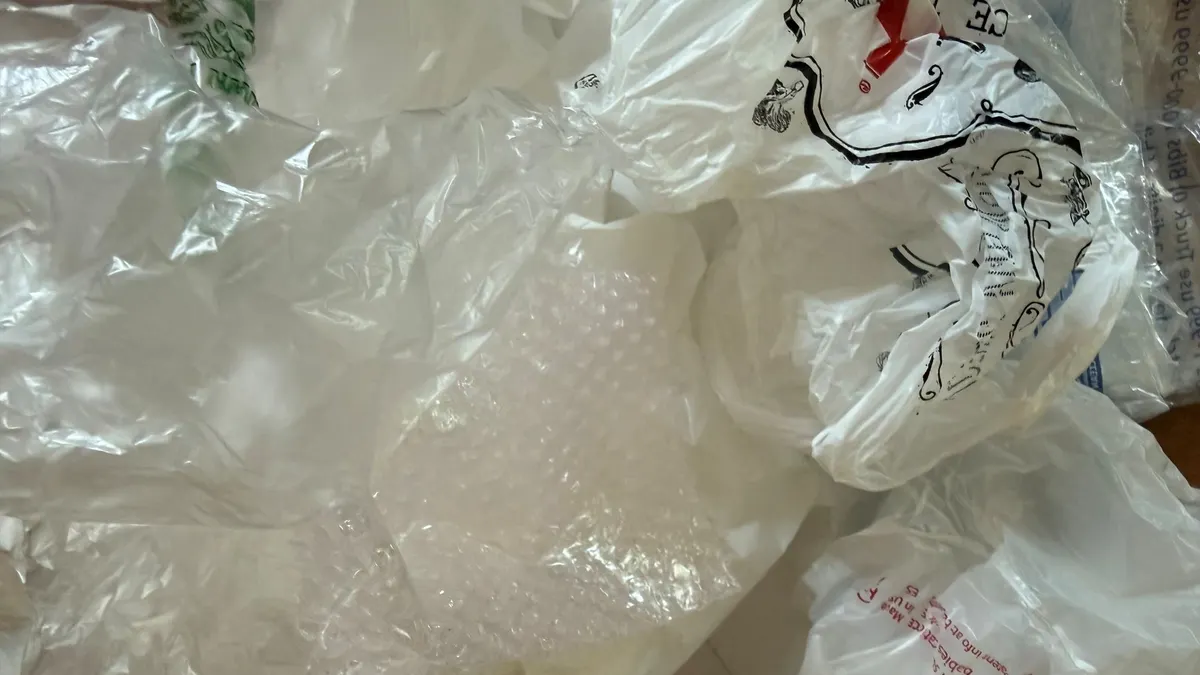
For the Sacramento pilot, several businesses, museums and a food bank are already collecting film like shrink wrap, PE overwrap and bubble wrap as part of the program, according to the Stewardship Action Foundation, a circular economy nonprofit affiliated with the National Stewardship Action Council. SAF is managing the pilots. Participating businesses will receive reports about how much material they collect, SAF said in a news release.
The materials from the two pilots will be transported to regional aggregation facilities to be weighed and baled, then shipped to unspecified recycling markets, FFRA said.
“These pilots reflect the collaborative approach that defines our work, bringing together businesses across the value chain to test new collection models, generate meaningful data and help build a stronger foundation for future film recycling programs,” said Kurt Kurzawa, who leads FFRA, in a statement.
FFRA members include a range of plastic supply chain stakeholders including Dow, ExxonMobil, Niagara, Printpack, Danone, General Mills, Publix, Ridwell, Rubicon, Freepoint Eco-Systems and the Flexible Packaging Association.
The organization sees commercial collection infrastructure as one avenue to improve film recycling circularity. FFRA also focuses its efforts on consumer film recycling by maintaining a plastic film recycling directory of drop-off locations for plastic bags and other materials. FFRA has an ongoing campaign to improve consumer education about where and how to recycle more film.
It’s also in the process of building a standard to verify recycled film collection, monitor contamination and confirm that collected materials are sent to recycling facilities to “be processed into new, credible products,” FFRA’s impact report states.
FFRA is just one of several film recycling organizations and programs that aim to boost recycling rates and infrastructure for the material.
One MRF-focused initiative is the CPG-led US Flexible Film Initiative, which aims to demonstrate that MRFs can effectively recycle film and flexible packaging by promoting the use of operational subsidies for MRFs and reclaimers, starting in California.
Meanwhile, CalFFLex, an initiative of The Recycling Partnership’s Film and Flexibles Recycling Coalition, aims to scale end markets for film and flexible packaging in California to meet the state’s EPR for packaging mandates under SB 54.