Dive Brief:
- A legislative battle over a proposed bottle bill in Washington, D.C., is heating up this month as proponents hope to win council approval by the end of the year. The bill wording may change after an upcoming committee markup.
- The bill would add a 10-cent deposit to certain beverage containers. A container stewardship organization funded by distributors would manage the program, but D.C.’s Department of Energy and the Environment would oversee and enforce the program.
- Proponents say the bill would dramatically reduce litter, especially in neighborhoods where pollution has disproportionately affected communities of color. The bill faces opposition from the beverage industry. National Waste & Recycling Association, which has historically said bottle bill models harm existing recycling programs, also opposes the bill.
Dive Insight:
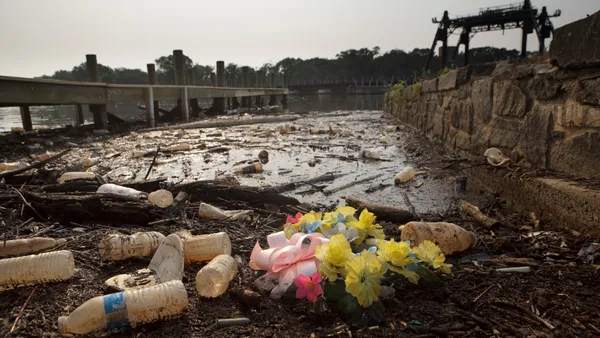
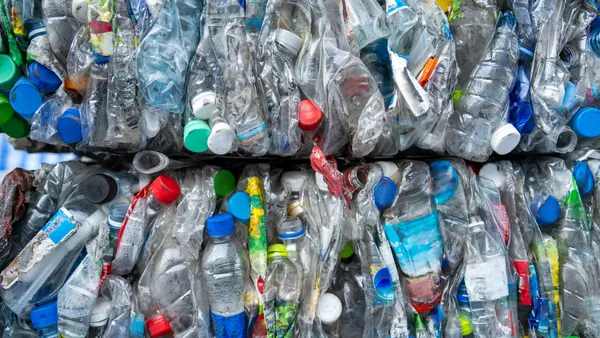
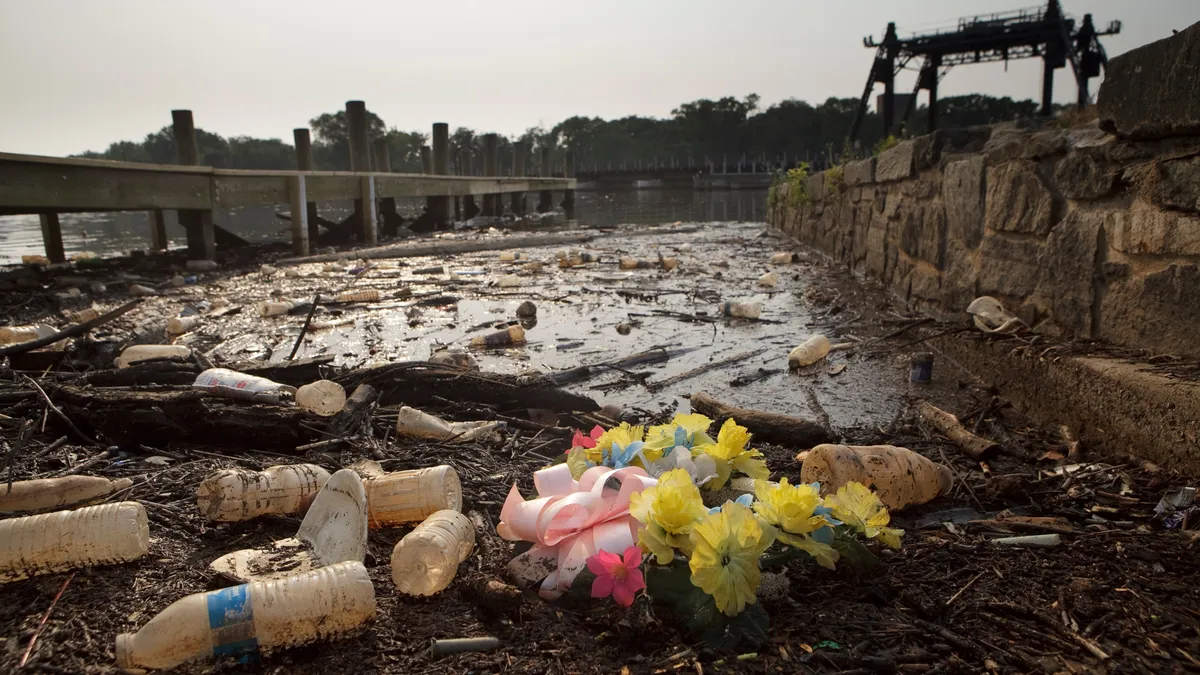
Washington, D.C., aims to follow the 10 states that have their own bottle bills. Local officials say the legislation would help the district make more impactful changes to its recycling system and support longer-term pollution reduction efforts. Of particular concern is pollution in the Anacostia River, where about 60% of the trash pulled from the waterway is made up of plastic bottles.
The council is expected to move the bill through a committee markup process and then a series of votes, which could all happen by the end of the year, said Chris Weiss, executive director of the DC Environmental Network, which supports the bill.
Council member Brianne Nadeau introduced the bill last year with support from numerous other council members. A coalition of environment and social justice groups supports the bill.
Under the proposed program, beverage distributors would be required to join a beverage container stewardship organization and pay fees meant to help fund and administer the program. The bill calls for the program to begin in 2028 and aims to hit a 70% recycling rate that first year, ramping up to an 85% recycling rate by the end of 2034. It also calls for a 75% redemption rate target by the end of 2028 and a 95% rate by 2034.
In addition to alleviating container-related pollution in the Anacostia River, the bill strives to advance work toward D.C.’s goal of diverting 80% of the city’s waste away from landfills and incineration by 2040. The bill also calls for using some unclaimed deposits to help fund parts of the program as well as offer community services such as safe drinking water upgrades for low-income residents and build public water bottle refill stations.
Supporters say a D.C. bottle bill would shift the responsibility for pollution cleanup costs to large beverage producers and create jobs.
Weiss said the process is unique in D.C. because it’s not a state, meaning the bill must gain the approval of the 13-member council instead of a state legislative body made up of a hundred or more. That also means activists can have more one-on-one conversations with council members and other leaders, he said.
Proponents have recently accelerated their outreach, partly in an effort to preserve council member support. Weiss said they need to be able to block a possible veto from Mayor Muriel Bowser, who opposes the bill over what she says are negative business impacts.
Another notable voice of opposition is the American Beverage Association, a trade group representing major beverage brands that has historically opposed a range of bottle bill legislation. In D.C., ABA has criticized the proposed program’s design, which it says would raise beverage costs for consumers. The group has launched a mailer and text message campaign and aired local ads opposing the bill.
Bree Dietly, a container deposit legislation consultant speaking on behalf of the American Beverage Association, said during a July hearing that numerous aspects of the bill’s design would raise beverage costs.
One aspect she highlighted was the potential for return fraud, noting that the city is small in geography and surrounded by states that do not have a return system. When users from outside the area take advantage of redeeming deposits where they do not live, it creates strain on the system and on distributors and leads to higher operations costs, she said in her testimony.
“A regional program would reduce the problem,” she wrote, but added that Maryland may not prioritize a DRS bill now that the state has adopted an EPR for packaging program. Meanwhile, “Virginia has not seriously considered a deposit since the 1970s,” she wrote.
At a recent virtual rally for the D.C. bottle bill, some proponents said they are working closely with activists in Maryland on plans to streamline regional bottle bill efforts. Vanessa Batters-Thompson, executive director of nonprofit advocacy group DC Appleseed, noted that new bottle bill legislation could be introduced in Maryland next year, and a bottle bill success in D.C. could help drive momentum on passage in the neighboring state.
Susan Schorr, a zero waste committee member of Sierra Club D.C., told Waste Dive she disagreed that the D.C. bottle bill would raise costs for consumers. Beverage prices are similar in both bottle bill and non-bottle bill states and tend to be influenced by a wide range of factors like dynamic pricing and supply and demand, she said.
“One of beverage companies’ biggest misrepresentations is that this bottle bill is going to result in higher prices, and they're doing that to scare consumers. Affordability is a major concern for everybody right now,” she said.
Meanwhile, NWRA has also also opposed the bill over concerns both for costs and the program’s impact on existing recycling infrastructure. The organization typically opposes bottle bill policies across the country, saying they impose “mandatory tax deposits” and disrupt existing recycling markets, thus reducing MRF revenue by diverting the highest-value materials from recycling streams.
“Maintaining two parallel collection networks—one for deposit containers and another for all remaining recyclables—creates duplication in transportation, infrastructure, labor, administration, and processing,” NWRA said in a July letter to D.C. Council. “Those costs ultimately work their way back into beverage prices and household budgets.”
NWRA instead calls for D.C. to invest in increased “recycling education, contamination reduction, litter enforcement, public space collection infrastructure, and improving recovery of materials that remain difficult to recycle,” such as flexible packaging and other materials.