The healthcare waste industry is familiar with solving problems in complex and tightly regulated waste streams. But vape waste is stretching the limits of regulators and waste managers' creative problem solving skills, said speakers at the Healthcare Waste Institute Summer Summit last week in Washington, D.C.
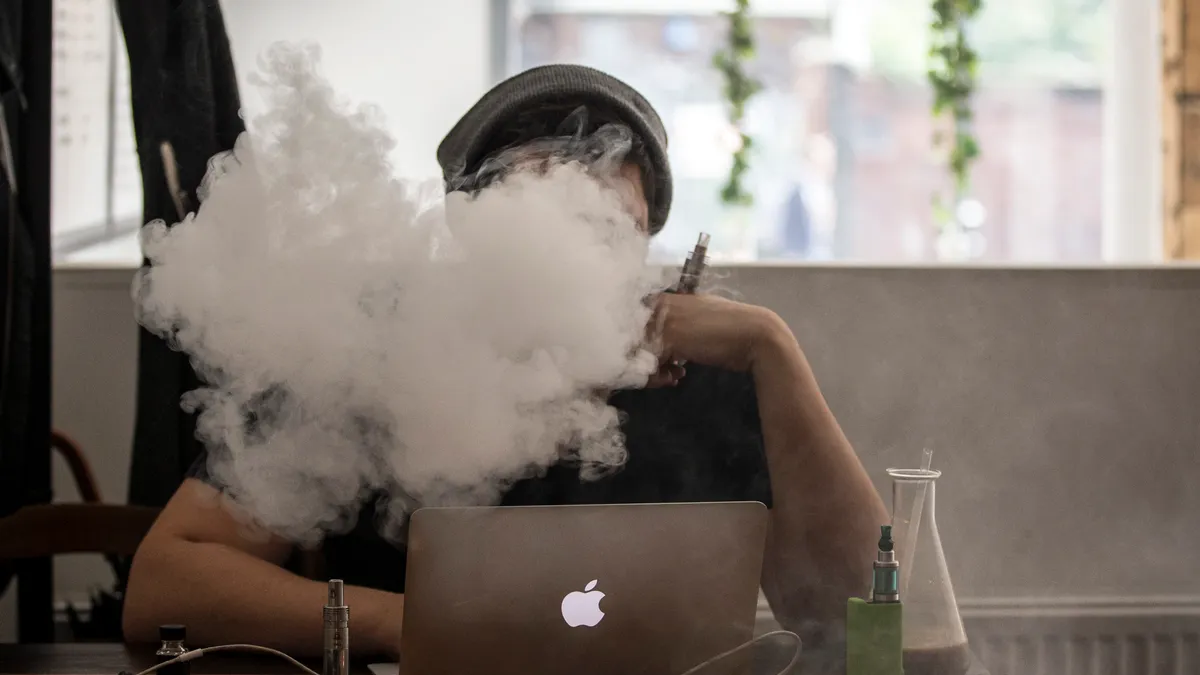
Vapes are now a ubiquitous part of the waste stream in the U.S., but solutions for managing the material are far less common, said speakers at the summit, hosted by a division of the National Waste & Recycling Association.
The U.S. EPA classifies vapes as hazardous waste. The devices contain both nicotine, a toxic substance when absorbed into the skin, as well as a lithium-ion battery, which creates facility fire risks.
To further complicate matters, there’s no standardized collection or disposal path for the devices, said Rob Motl, national sales director of healthcare for Reworld, which has handled some vape waste contracts.
“A vape is a convergence of three historically separate waste streams. You've got the consumer product waste, your electronic waste and the lithium battery waste all combined in this one little jewel of a device,” he said in a nod to the Juul brand of e-cigarettes.
Finding better management pathways for vapes is an urgent need, especially as battery-related fires continue and companies that manage hazardous waste are getting more requests to deal with large volumes of discarded vapes, speakers said.
Multiple lines of defense might help, such as redesigning vapes to make batteries easier to remove. Banning or restricting vape sales and implementing new extended producer responsibility programs could also help. Some industry representatives also discussed plans to work with regulators on streamlining vape waste transportation requirements.
Stakeholders across the manufacturing, regulatory and waste diversion sectors need more opportunities to be in the same room to collaborate on long-term solutions, but siloes between industries are creating roadblocks, speakers said.
Incineration is an imperfect option
Recycling infrastructure for vapes is limited, and that means companies like Reworld and Arcwood Environmental often get calls to manage end-of-life vapes.
“There are a few companies out there now that are recycling them, but the actual steps to disassemble these [vapes] and recycle them are so arduous,” and the design of each type of vape is different, making the process even more complicated and time-consuming, said Angie Martin, senior vice president of environmental programs at Arcwood Environmental.
Arcwood does have a hazardous waste incinerator that can take vapes, but the company has to be mindful of the volumes it can take. “We can put them directly in the incinerator, but we have to watch how much lithium we put in our incinerator, because it's not always compatible,” she said.
Reworld, meanwhile, is also able to incinerate vapes, but Motl says the company doesn’t usually want them in their facilities because of safety issues with storing the devices before destruction.
“It's not necessarily once they get fed into the hopper that all hell is going to break loose. It's the front end that’s the problem. It's the collection, it's getting the material up into our hoppers, it's putting them in the pit,” he said. “There are multiple handling points from the time this material is picked up to the time it actually gets incinerated, and that's where the danger is. These batteries can have a thermal runaway at any part of the process, and that's going to create significant operational disruptions for us as an organization.”
Policy solutions need nuance
Another hurdle is cost, said Kristin Fitzgerald, environmental protection specialist at the U.S. EPA. The cost to collect and manage vapes in the U.S. is often borne by municipalities and schools through occasional household hazardous waste collection events, and those costs are only rising while the number of outlets for managing the vapes remains limited.
When municipalities set out to collect vapes as part of these community collection programs, “you need to identify a funding source for your plan for how you're going to manage them after you collect them,” she stressed, adding that disposal costs are often quite high because few companies are willing to take a mateiral with such complicated and sometimes dangerous characteristics.
The EPA recently met with a startup that has been “very successful” with collecting vapes — about 1,000 pounds in just a few months — but has little idea of what to do next. “They have no outlet for them now,” Fitzgerald said.
Battery recycling policies may help address a few of the recycling and disposal infrastructure concerns, particularly through extended producer responsibility programs for batteries, said Stephanie Weeks, senior product portfolio manager at The Battery Network.
New EPR laws for a range of batteries are “scaling rapidly across the U.S., so our collections are increasing very rapidly alongside it,” she said. By 2030, Weeks expects about 47% of the population to be covered by some form of battery EPR, which could boost battery collection to 160 million pounds a year. Today, collection volumes are closer to 10 million pounds a year.
This trend has significant implications for vapes, she said. With more resources available to manage battery recycling, similar programs could also encourage similar funding and infrastructure pathways for vape waste.
Maine just passed the first-ever vape EPR law in the country, which will require manufacturers to create and fund a program that provides safe collection points and disposal or recycling services for the devices. The law will also offer a $2 incentive for each vape a person returns to a collection point, which is an effort to curb littering and prevent vapes from entering the waste stream.
But some participants at the summit expressed concerns over whether the program would be able to provide enough funding to support the new EPR setup or develop stable end-of-life outlets for the vapes.
Vape bans are another policy tool that might reduce the flow off discarded vapes over time, speakers said. California legislators are attempting to ban certain types of vapes, partly in an effort to prevent future facility fires, toxic substance exposure and marketing to teens. One such bill would also allow hazardous waste facilities to “mechanically disassemble” vapes and process individual components.
But vape ban legislation in any state must carefully consider unintended consequences that might create even more waste, said Joseph Boudah, program analyst for the District of Columbia’s Department of Energy and Environment.
“A lot of legislation and regulations try and get people to not use these devices,” he said. But “now we might have a lot of devices that we can't dispose of without creating a new form of waste stream for it.”
This story first appeared in the Waste Dive: Recycling newsletter. Sign up for the weekly emails here.