California lawmakers have advanced key waste and recycling bills in the months before the session ends on Aug. 31.
Notable bills include a hauler franchise agreement bill opposed by major waste companies, as well as a bill that would create an EPR program for medium-format batteries and two that would explore vape waste solutions.
Here’s a look at what’s still in play this session:
Hauler franchise agreements, force majeure and labor disputes
SB 1371 would prohibit a city or county from entering into or updating a solid waste hauling agreement if a labor dispute would excuse the hauler from carrying out its duties.
The bill would also void any existing force majeure provisions from such contracts if that force majeure provision is meant to be used due to a work stoppage from a labor strike. This would take effect Jan. 1, 2027.
This bill passed the state Senate on May 19 and is now awaiting consideration in the Assembly.
Force majeure clauses typically cover “acts of God” that prevent haulers from providing services, such as extreme weather. SB 1371 is meant to clarify that “lawful labor disputes are not ‘acts of God’ and should not automatically relieve companies of their contractual obligations to provide essential services,” according to a bill analysis.
A version of the bill passed the legislature in 2023, but was vetoed by Gov. Gavin Newsom. “Local jurisdictions voluntarily enter into franchise agreements and currently have the ability to negotiate amendments to such contracts without legislation.”
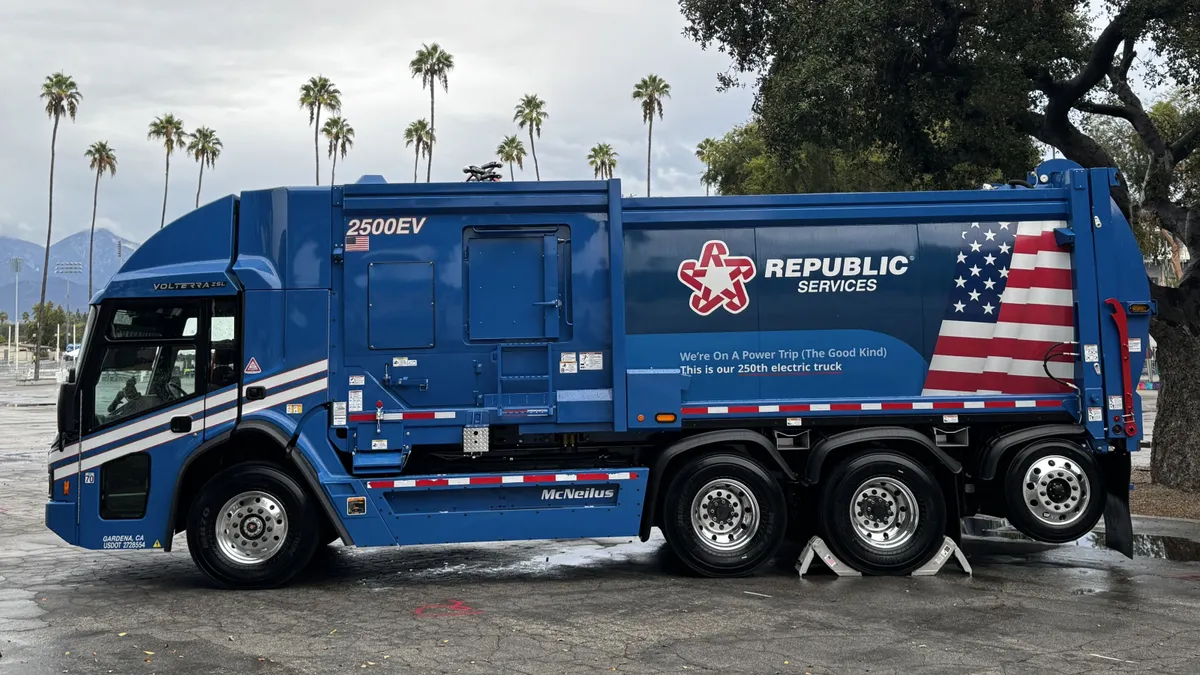
WM, Recology, Republic Services, the Resource Recovery Coalition of California and Waste Connections oppose SB 1371. These groups also opposed the previous version, saying it did not provide enough flexibility and could raise costs both for local agencies and for customers.
Supporters include Teamsters California and the California Federation of Labor Unions AFL-CIO. These labor groups say the bill holds haulers accountable for providing services and paying workers.
“Waste companies know exactly what they’re doing — the longer they drag out strikes, the more the trash piles up and the more our communities suffer,” said Marcus Ford, a member of Teamsters Local 396 who works for Republic Services, in a statement. “But employers are barely affected because the force majeure clause sitting in their back pockets is a get-out-of-jail-free card.”
Force majeure clauses have been used during labor strikes in California’s past, including in 2021 during a Republic Services strike in Chula Vista that halted some waste collection services and shielded the company from liability, according to bill analysis.
During the month-long strike, Republic did not collect waste but allowed customers to drop it off at a nearby landfill for free, according to the bill analysis. Chula Vista used its own staff and contracted with nonprofits to cover during lost or reduced services.
Medium-format battery EPR expansion bill
SB 501 would add rechargeable medium-format batteries to the state’s existing extended producer responsibility program for batteries, known as the Responsible Battery Recycling Act of 2022. The bill passed the Senate in January and is awaiting consideration in an Assembly committee.
California already has stewardship programs for several kinds of batteries, including small loose batteries and batteries embedded in products. SB 501 would add more types of batteries to the program, such as “those found in e-bikes, outdoor lawn equipment, and portable power systems,” according to a bill analysis.
Recology, Republic Services and the National Stewardship Action Council support the bill, along with Californians Against Waste, the California Product Stewardship Council, the Product Stewardship Institute, Resource Recovery Coalition of California and several solid waste authorities and municipalities, among others.
Bill supporters say the program will help prevent fires from improper disposal. “Creating a pathway for responsible end of life management for these mid-sized batteries is especially important as sales of e-bikes and other battery-powered appliances are on the rise,” supporters said in bill analysis.
As of January, Redwood Materials, a battery recycler, was the sole listed opponent. At a January bill hearing, lobbyist Ryan McCarthy said the company wanted to iron out clarifications between medium and small format batteries, but noted that it wanted to “work together as an active battery steward today for small and medium format batteries.”
California’s severe fire season is one impetus for the legislation, sponsors wrote in a bill analysis. In 2019, a trash truck caught fire in the foothills of the San Bernardino Mountains, and the fire spread to the surrounding hillside when the driver unloaded the truck to try to extinguish the flames. That fire spread to a mobile home community, “leading to the deaths of two people and the destruction of dozens of homes, burning over 1,000 acres.” The analysis notes that the fire’s cause is still under investigation, but “action is required to reduce known sources of fires including lithium-ion batteries.”
A fire at the South Bayside Waste Management Authority’s San Carlos facility in 2016 caused over $8.5 million in damages and led to more than 50 employees being furloughed as repairs took place, lawmakers said.
Vape waste disposal and marketing to teens
AB 2667 calls for the state’s Department of Toxic Substances Control to look into how to properly dispose of vape pens, particularly those confiscated from schools. It also would authorize a “permanent” household hazardous waste facility to “mechanically disassemble” vapes to process individual components.
DTSC would have until Jan. 1, 2030, to evaluate collection, disposal and management options and recommend possible solutions that might require legislative action.
The bill further prohibits anyone from selling, marketing, advertising, or distributing vape products that imitate foods typically marketed to minors, such as candy. It also prohibits branding and marketing specifically meant to appeal to minors.
“Schools are increasingly confiscating these vapes, yet they lack practical options to safely manage and dispose of them,” wrote bill sponsors in an analysis report. “Similarly, local household hazardous waste facilities receiving these vapes are unable to identify them and disassemble them, increasing costs and fire hazards.”
National Stewardship Action Council, Californians Against Waste, California Product Stewardship Council, Republic Services, Recology, ReThinkWaste and several school districts and zero waste groups all support the bill. The bill has no recorded opposition.
Vape manufacturing and sale ban
AB 762 calls for banning the import or manufacture of new or refurbished battery-embedded disposable vapes after Jan. 1, 2027. It would prohibit their sale by Jan. 1, 2028 and impose fines. Bill authors expressed concerns about the devices’ batteries, which can cause facility fires, as well as other toxic substances from the devices.
Californians Against Waste, California Product Stewardship Council, California Public Interest Research Group, and Rethink Waste support the bill. “Without a standardized way to recycle single-use vapes, they are sent to material recovery facilities and landfills, where they can ignite dangerous and costly fires. Not only is this dangerous, it is unsafe for workers and costly to local governments to clean up,” they noted. Residual liquid nicotine can also pose environmental and health threats, they said in a bill analysis.
The California Distributers Association opposs the bill, saying it’s “unnecessary and duplicative of existing laws" including a law prohibiting the sale of flavored tobacco producs and a law creating a state product registry with compliance guidelines.
Other bills to watch
- SB 936: Nitrous oxide sales: Adds new restrictions to the sale or distribution of nitrous oxide, making it iillegal to sell or distribute it in a container that can hold more than eight grams of the substance, or a container that allows a user to directly inhale the substance. Groups such as SWANA, Recology, Republic Services, NSAC, the California Product Stewardship Council, Californians Against Waste and others support the bill due to safety concerns and the burden on household hazardous waste programs in the state.
- SB 881: Food waste tax credit extensions: The bill would extend a tax credit for qualified agricultural donations, which some farmers use to cover harvesting and donating food that might otherwise go to waste. It also would extend a separate emergency food tax contribution program that allows Californians to donate part of their tax refund to support food banks. These extensions are meant to prevent food waste.
- SB 811: Metal shredder regulations: The bill would require metal shredders to obtain a permit from the Department of Toxic Substances Control and requires other regulatory and reporting requirements. It would also exempt treated metal shredder residue, finished ferrous and nonferrous commodities and some other materials from the definition of hazardous waste.