MRF and recycling facility operators are spending the summer moving into bigger, better recycling and research facilities. These buildings are designed to expand sorting and service capabilities in the wake of new state laws or new local recycling contracts.
Here’s a look at a few new facility updates in July. What MRF upgrades or updates are you following? Send us a note at waste.dive.editors@industrydive.com.
Amp nears completion of ramp-up at MSW, recycling facilities in Portsmouth, Virginia
The artificial intelligence-enabled sorting company Amp expects to soon complete commissioning of its upgraded single stream recycling facility in Portsmouth, Virginia.
The facility will process recyclables from a nearby Amp-operated MSW sorting facility, a separate facility the company recently refurbished and finished commissioning.
Both the MSW facility and the recycling facility should be fully online “within the next month,” said Andrew Trump, general manager at Amp who has helped oversee the project. “By the end of this month, we'll be processing the equivalent of 108,000 tons per year, which for us is full capacity.”
Amp has a 20-year contract with the Southeastern Public Service Authority to process the region’s waste, organics and recycling, with a goal to divert 50% of waste from the region’s landfill and recycle 20% of the waste stream. That would be an improvement over the estimated 7% recycling rate in the region, SPSA said.
The recycling facility, which Amp acquired and upgraded with its own equipment earlier this year, processes MSW-derived recycled materials from SPSA’s service area into salable commodities, he said.
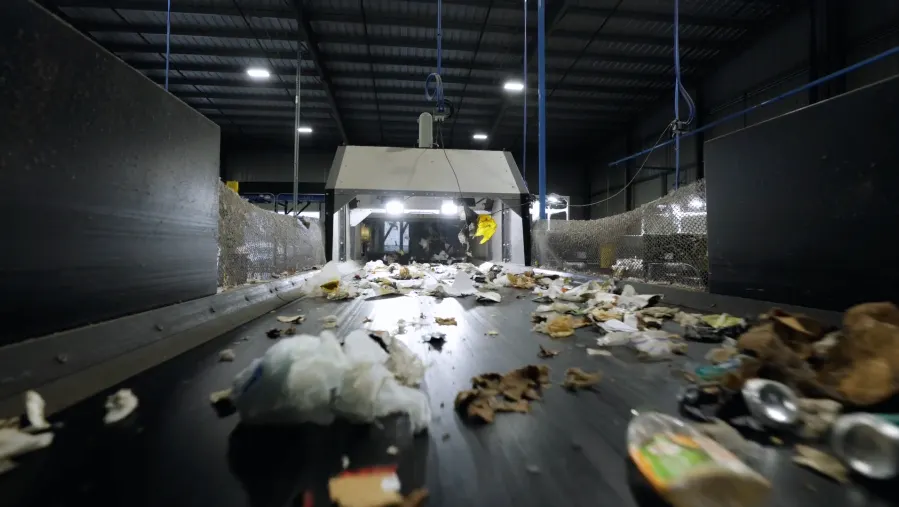
The new equipment in the refurbished facility will allow the MRF to sort nine commodity streams instead of the previous five, he said. The equipment “relies on a system of cameras and jets to identify and then move material, so it's totally reconfigurable” based on market conditions or regional demands, he said.
WM opens $110 million recycling and fleet facility campus in Colorado
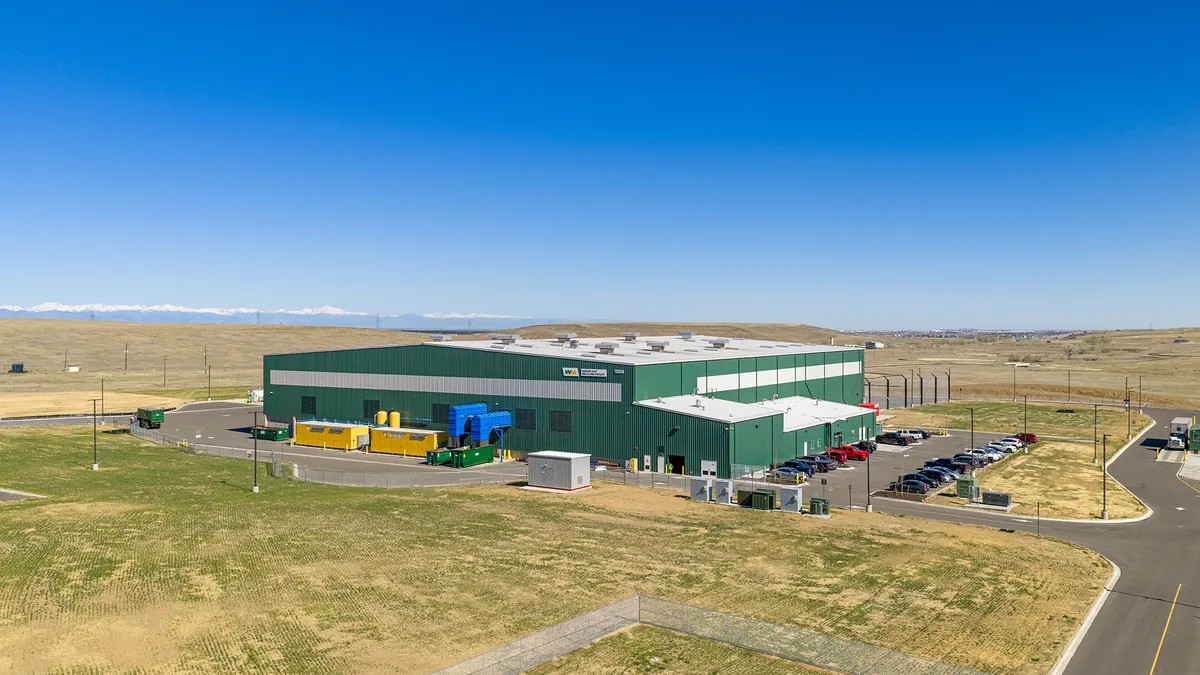
WM has opened a new $110 million recycling and hauling site in Aurora, Colorado. WM said the facility will help the state keep pace with the rollout of its extended producer responsibility law for packaging that includes free recycling collection programs for residents across the state.
WM invested about $73 million in the 84,000-square-foot Denver East Recycling Facility. The MRF is expected to process more than 175,000 tons of recyclables per year, WM said in a news release.
It can process up to 45 tons of material per hour and has more than 30 “advanced automated equipment stations” with optical sorters and AI-assisted tech, the company said. Material moves around the facility along almost two miles of conveyors. An onsite Recycling Education Center is designed for group facility tours.
On the same campus is the $36.4 million Denver East Hauling site. That 30,000-square-foot building includes office space and a 10-bay truck maintenance shop, according to WM. It also includes 104 compressed natural gas fueling stations for collection trucks.
Colorado Governor Jared Polis attended a ribbon cutting of the new Denver East facilities last week. “As Colorado continues to transition to EPR for packaging and paper products, expand recycling to all residents and work to reduce both waste and greenhouse gas emissions, investments in sustainability infrastructure like WM is making here in Denver, are crucial to supporting the state’s aggressive goals for environmental, economic and public health,” he said in a statement.
WM has future plans for the Aurora site and adjacent facilities, the company said. It recently broke ground on a co-located facility that will handle “difficult, sometimes hazardous and hard to recycle materials” for its At Your Door special collections program, which collects items such as household chemicals, consumer electronics and automotive products.
At an adjacent site, WM has plans to build a $67 million large-scale renewable natural gas facility at the Denver Arapahoe Disposal Site (DADS), which the company said is the state’s first. WM also invested about $8.2 million in an organics facility at DADS, it said.
Textile recycler Reju opens R&D site in Pennsylvania
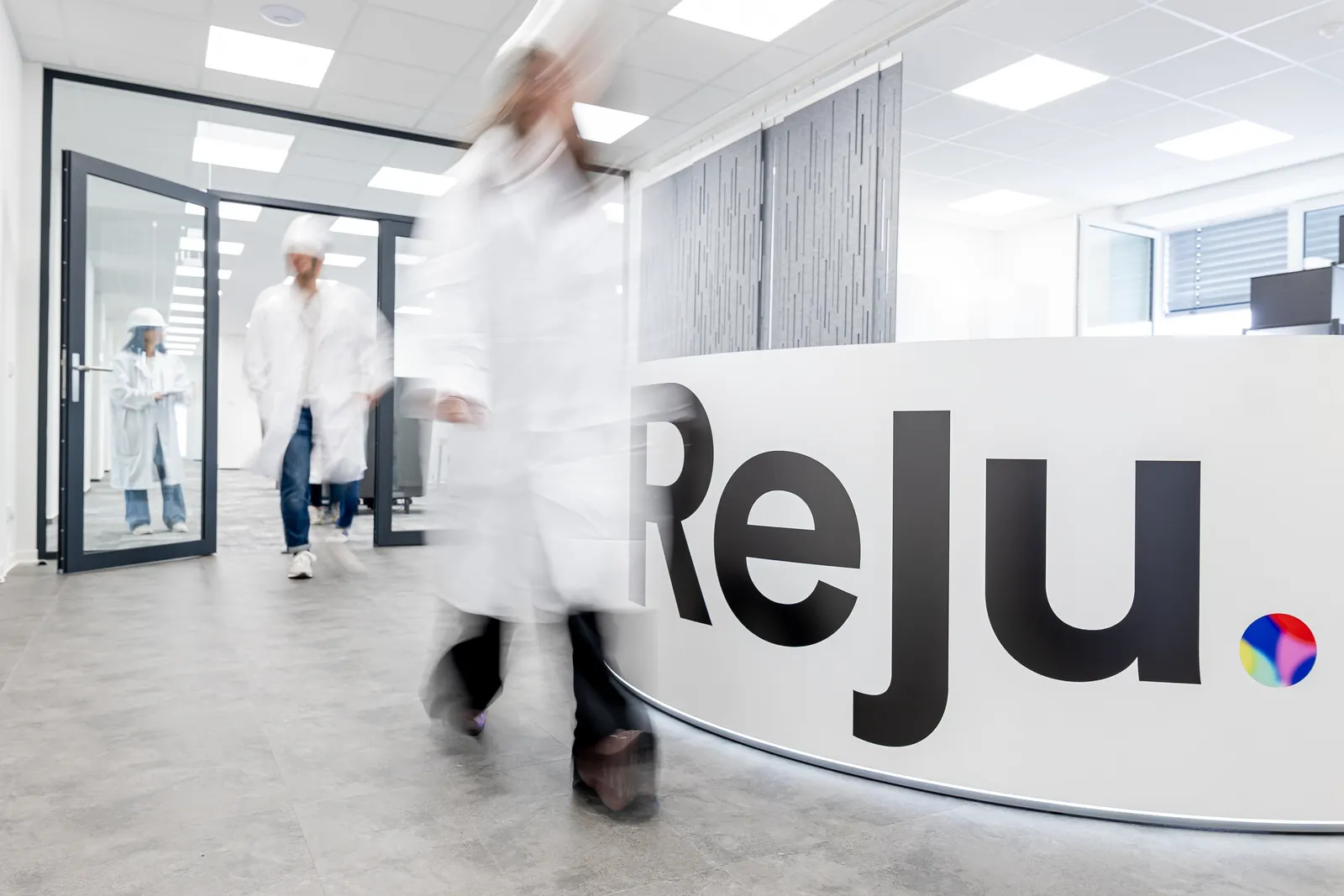
Reju, the France-based textile-to-textile “regeneration” company that makes 100% recycled polyester, opened a new research and development center in Conshohocken, Pennsylvania. It’s the company’s first dedicated research facility in North America.
Reju is most widely known for its closed-loop recycling ecosystem that converts discarded polyester fabric and textiles back into new products using a depolymerization technology. The new lab will help support Reju’s “full development spectrum” of technologies from early-stage feasibility work to full-scale production, according to the company. Projects include polyester recycling, mixed-fabric solutions, and “new circular chemistry pathways,” the company said.
The technologies developed at the Pennsylvania center are meant to be deployed at the company’s planned industrial production facilities, dubbed Regeneration Hubs. Reju previously announced that its first U.S.-based Regeneration Hub would be built in New York, and future hubs are also planned for the Netherlands and France.
Reju is owned by tech and engineering company Technip Energies, and the new R&D facility is located within Technip Energy's Advanced Materials and Catalysts' research center. Reju uses technology from IBM, and as part of the opening of the new R&D facility, Reju’s core research team from the IBM Almaden Research Center in California will relocate to Pennsylvania.
This story first appeared in the Waste Dive: Recycling newsletter. Sign up for the weekly emails here.