Dive Brief:
- Maine has become the first state in the country to establish an extended producer responsibility program for vapes and e-cigarettes after Gov. Janet Mills signed LD 1519 in April.
- The program will require manufacturers of vapes and e-cigarettes to join a producer responsibility organization by Nov. 1, 2027, and pay into a program that provides safe collection points and disposal or recycling services for the devices.
- The law will also offer a $2 incentive for each vape a person returns to a collection point, and will also offer training for vape shops on proper storage and handling, as well as general public education on the program.
Dive Insight:
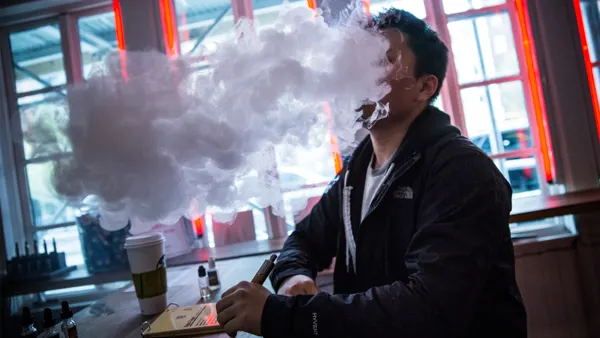
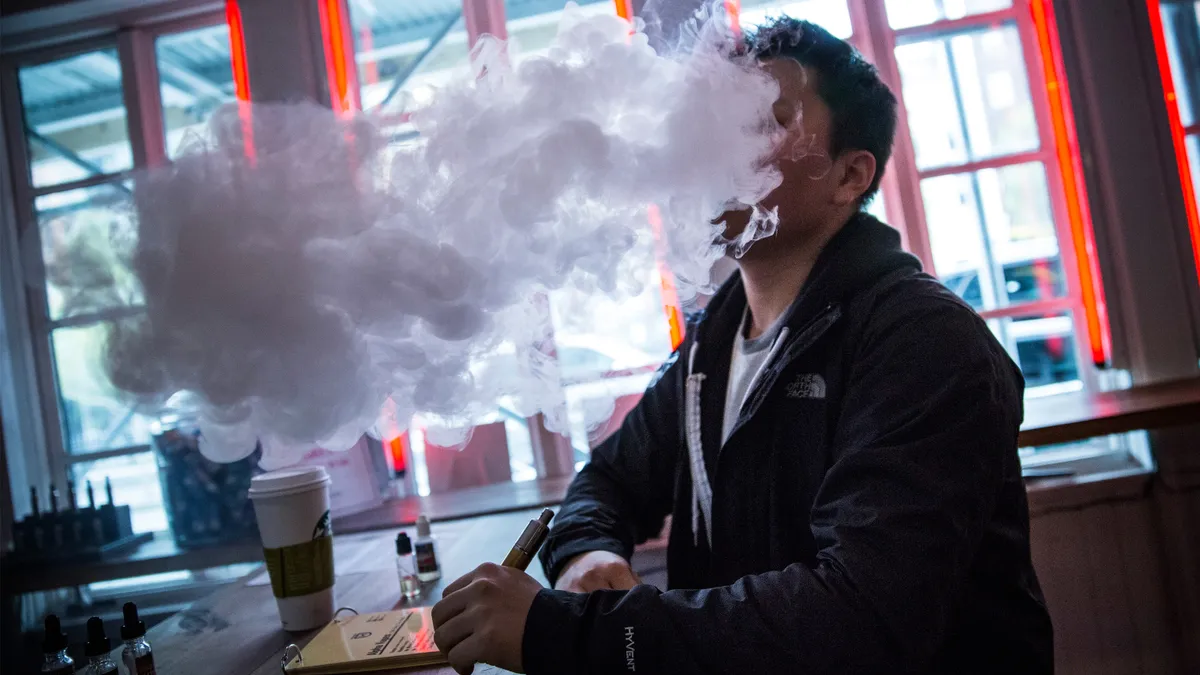
Vapes are a leading cause of waste and recycling facility fires due to the lithium-ion batteries inside, but there are few outlets for users to safely dispose of the devices.
The waste industry has been grappling with vape safety issues for years. The devices are difficult to identify and remove from tipping floors and processing equipment. Vape pens can also leak harmful chemicals, including nicotine and certain metals.
Maine’s bill, introduced in 2025, took about a year to get off the ground.
Karen Peterson, manager of the Readfield Transfer Station in Maine, noted in bill testimony in April 2025 that her facility already recycles many kinds of batteries and electronics and sees an additional vape program as a good way to manage the wave of e-cigarettes she sees at her facility each day. “[T]he current program only accepts the batteries themselves for recycling. I can't simply access and remove the batteries from these [vape] devices,” she wrote.
Because there is “no coordinated system” for collecting and disposing of these vape products, local governments are often the ones that bear management costs, according to the Product Stewardship Institute, which supported the bill. PSI estimated those disposal costs could range from $20 to $60 per pound.
Organizations like PSI hope a vape EPR law can help boost recycling resources for these materials, because options are rare. Because of a lack of alternative recycling options across the country, “incineration is the current best practice for disposal, resulting in the loss of valuable materials. However, many components of these devices are recyclable,” said Scott Cassel, CEO of PSI, in written testimony last April.
Though the devices are small, they do contain some amounts of “valuable and critical materials” like lithium and cobalt that aren’t being recovered for reuse, he added.
Maine’s Department of Environmental Protection also testified in support of the bill.
The National Stewardship Action Council, which is also advocating for vape bans and other vape-related EPR bills in California and elsewhere in the country, also supported the Maine EPR bill. Heidi Sanborn, NSAC’s executive director, said in bill testimony that an EPR program would “create a safe, statewide collection system, reduce fire risks, and protect our sanitation workers, facilities and environment.”
The EPR program aims to inject funding and resources into responsible collection, disposal or recycling initiatives.
The PRO will need to create and submit a program plan for approval, which includes plans for offering a collection system for unwanted vapes. Permanent collection locations must be established within 15 miles of 90% of the residents of the state, the law stipulates. These locations can include transfer stations, fire or police stations, and locations designed for school faculty to safely collect vapes they confiscate from students.
Retailers that sell vapes in the state must also participate as collection locations within three years of the program plan approval. That decision raised concerns with some vape shop owners that worried their small stores might be overburdened by new collection and storage rules. Some shop owners testified during a bill hearing last year that they’re trying to stay afloat in an industry where its products are being targeted for bans in other parts of the country.
The new law will require the PRO to provide retailers with safe collection receptacles, as well as training for handling and storing the devices. The PRO is also in charge of making sure receptacles don’t overflow, which leads to safety issues, the bill states.
Producers will need to meet certain performance goals, but the law will allow the PRO to choose which one to prioritize. One goal stipulates a 50% disposal diversion rate by the end of the program’s third year. Another goal requires the PRO to ensure at least half of residents are aware of the program by the end of the program’s third year, and 70% by the end of the sixth year.
Other states are working on similar bills to curb vape waste. California lawmakers recently advanced two bills: one to ban the sale of disposable single-use vapes, and another to research and promote solutions for collecting and disposing of vapes confiscated in classrooms.
New Jersey lawmakers reintroduced an EPR bill for vapes in January, but that bill has not yet moved forward.
There are currently no other EPR programs for vape pens in the United States. In Canada, Quebec has an EPR program which recently expanded to include cannabis-related vapes.
Pilot programs are another way to manage the material. PSI is working with the State University of New York College of Environmental Science and Forestry on a collection pilot program that launched in September 2025 and is set to run through August.