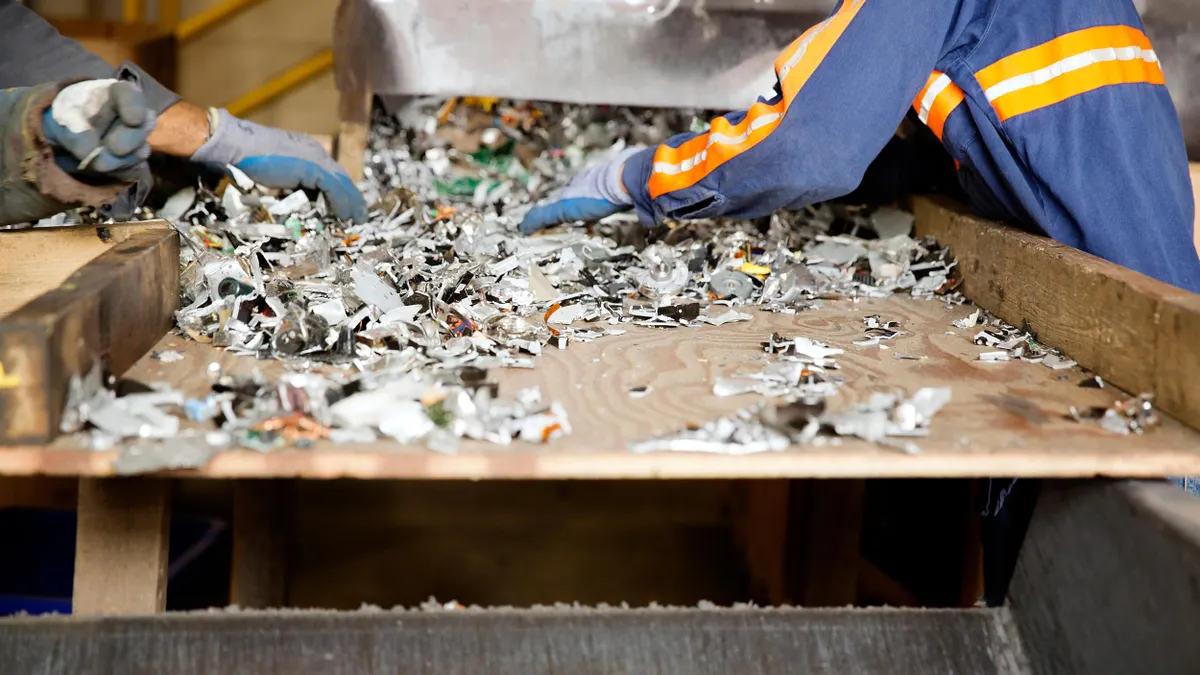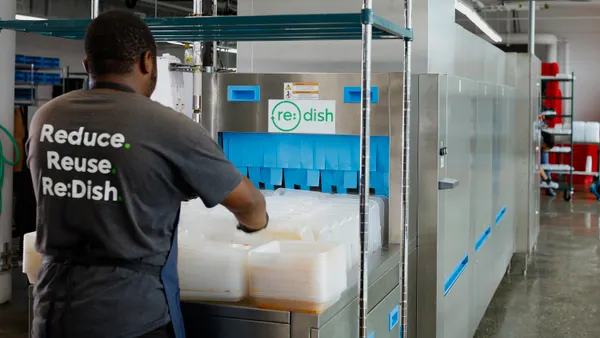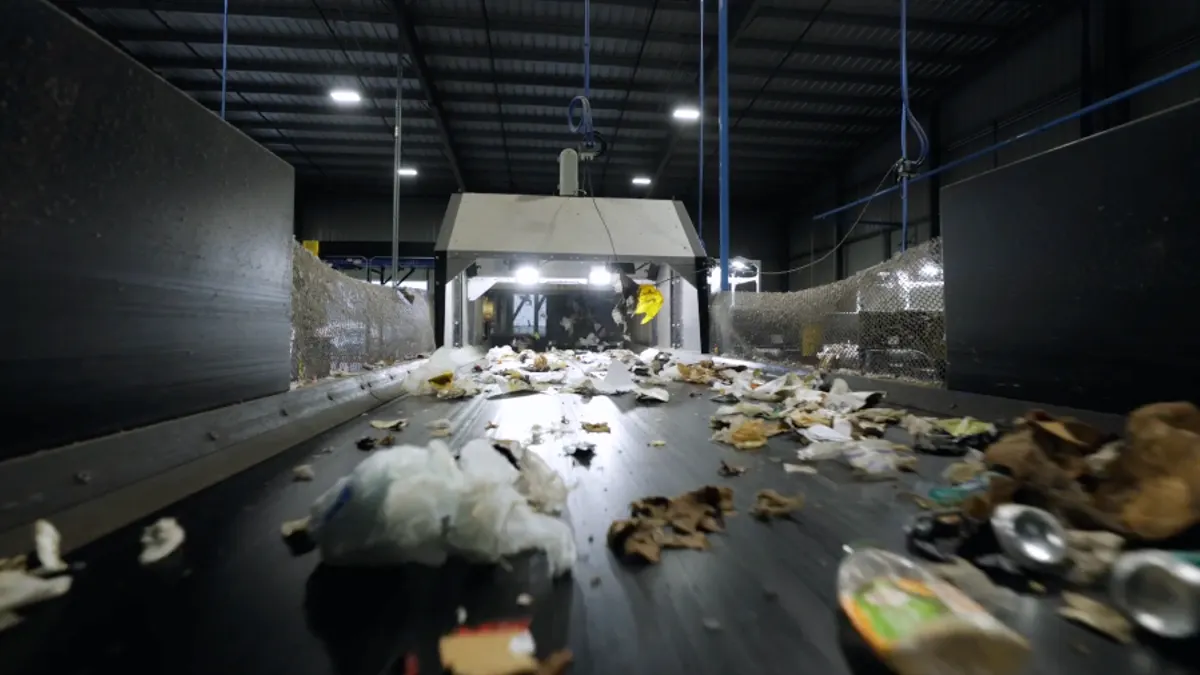
MRF and recycling operators across the country are celebrating how major system investments and more targeted equipment upgrades are making recycling centers safer and more efficient.
What MRF upgrades or updates are you following? Send us a note at waste.dive.editors@industrydive.com.
Amp and Kent County, Michigan, target WTE efficiency with new MSW sorting system
Kent County, Michigan, is updating how it manages its waste-to-energy and recycling processes by partnering with Amp on a new municipal solid waste processing system.
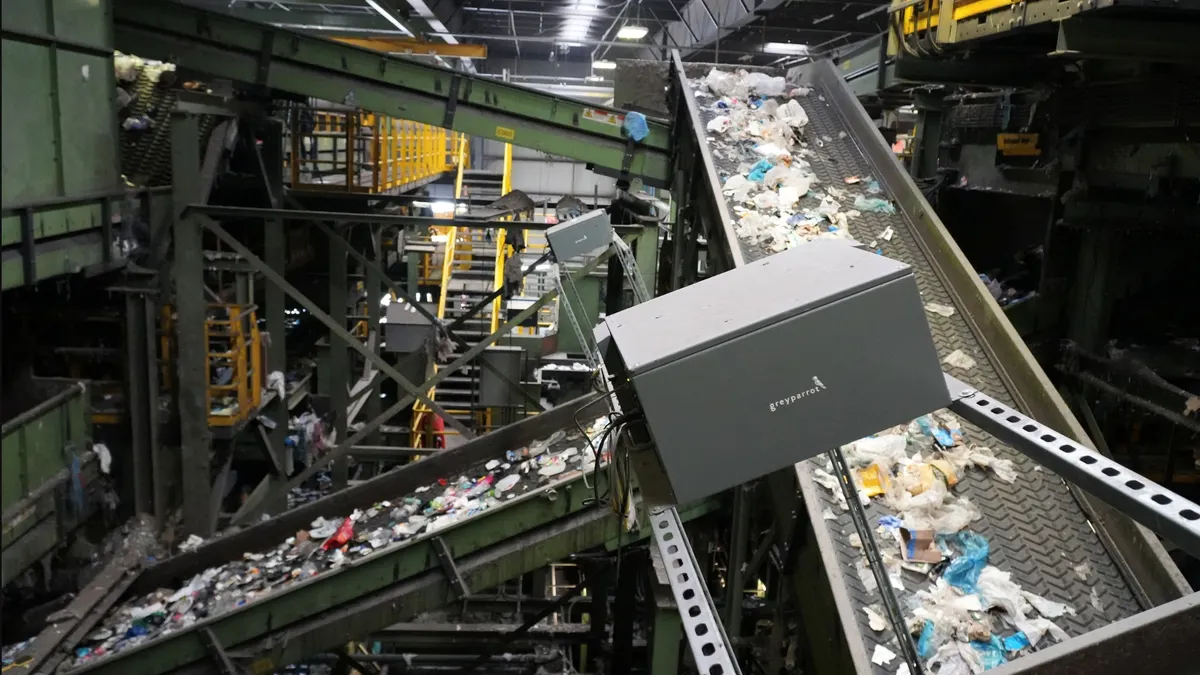
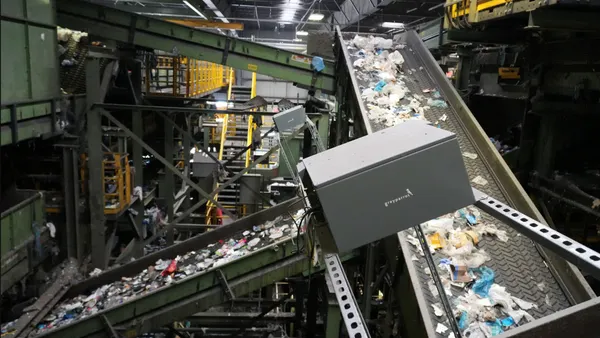
The planned facility, co-located at the county-owned mass burn combustion facility, will separate bagged trash into streams of mixed recyclables and residuals using computer vision and pneumatic sorting technology. The Amp One system is meant to remove recyclable materials from the waste stream and sort them into salable commodities, which Amp said will also improve throughput at the mass burn facility. The system is expected to process about 25 tons of MSW per hour.
Amp says the system will enable the facility to process more MSW while preserving regional landfill capacity.
“This will quickly become a best practice for the waste industry as we look to increase our efficiency; improve safety; increase recycling; and protect the air, land, and water in our community,” said Dar Baas, director of Kent County’s Department of Public Works, in a statement.
Amp has already worked with Kent County on past recycling efforts, including on a project to install AI-powered sortation technology at the county’s MRF.
Amp was first known for its AI-powered robotics offerings, but the company has recently been expanding its MSW processing capabilities through its Amp One sorting system. Last year, it contracted with the Southeastern Public Service Authority in Virginia to process the region’s waste, organics and recycling using a similar Amp One system, and the company has said it plans to deploy more of the systems across the country as a solution for extending landfill capacity issues and managing other recycling infrastructure constraints.
“This project demonstrates how AI-powered automation can help municipalities unlock more value from the waste stream, extend landfill life, and complement waste-to-energy systems in a cost-effective and scalable way,” Amp CEO Tim Stuart said in a statement.
Fiber line upgrades are reducing downtime in Prince George’s County, Maryland
Upgrades on the fiber line at the Prince George’s County MRF in Maryland are reducing downtime and increasing bale quality, officials said last week.
Recent upgrades to the county-owned MRF include new anti-wrap star screens, new cameras to view equipment operations and improvements to the tipping floor. During a county presentation on Aug. 4, officials touted the upgrades as having an immediate impact: Downtime has reduced by 8%, and they’re already baling more aluminum and paper now that the screens aren’t clogged by contamination like plastic bags.
PG County’s recycling program services about 180,000 households, and its MRF accepts more than 60,000 tons per year, officials said.
The facility is open for tours to school groups, churches and the general public. Anthony Bennett, deputy director of the environment for PG County, said the tours are as important to the facility as the upgrades themselves.
“If people don’t know, they don’t do. The more they know about the facility, the more they’ll get involved” in better recycling habits, he said.
PG County has one of the highest diversion rates in the state at around 65%, compared to a 20% to 40% average in other counties, said Tim Ford, managing director of environmental operations for the MRF’s operator, Maryland Environmental Service. That also helps the county fetch some of the state’s highest per-ton revenues for recyclables.
The latest upgrades follow a series of other MRF investments the county made in 2021, when operators added optical sorters and other improvements, he said.
Charlottesville recycling facility gets safety, efficiency upgrades
The Ivy Solid Waste & Recycling Center in Charlottesville, Virginia, has a new recycling and baling building meant to help make operations safer and more efficient.
The new 16,800-square-foot facility is set up to receive and bale mixed paper, corrugated cardboard, plastic film, PET and HDPE, according to a news release from the Rivanna Solid Waste Authority.
The new building has 11 loading docks for tractor-trailer staging, and the design provides at-grade loading for forklifts to more safely move finished bales for transport.
Previously, recycling facility baling operations took place in an “undersized leased facility. Moving operations directly to the Ivy recycling center makes the workflow more efficient and adds capacity to recycle and bale more materials as demand for these services grows, the solid waste authority said.
Here’s where other facility updates are happening:
- Summit County, Utah: The county and local partners opened four new neighborhood recycling drop-off sites, part of an effort to extend the life of the nearby landfill and reach the county’s goal to divert 7,500 tons of waste a year. The locations were decided based on resident feedback and commuter routes, KPCW reported.
- New Bedford, Massachusetts: The City has opened a free Swap Shop at the New Bedford Recycling Center. The shop allows residents to drop off and pick up reusable items, like cookware and books. The program is a way to divert reusable items from disposal.
- City of Phoenix: The city’s Solid Waste Division received a Project of the Year award from the American Public Works Association for upgrades to its 27th Avenue MRF, which added 11 optical sorters, two ballistic separators and robotics programmed to remove about 70 contaminants from a sorting line a minute. That renovation opened in April 2025. The MRF is operated by Circular Services.
This story first appeared in the Waste Dive: Recycling newsletter. Sign up for the weekly emails here.