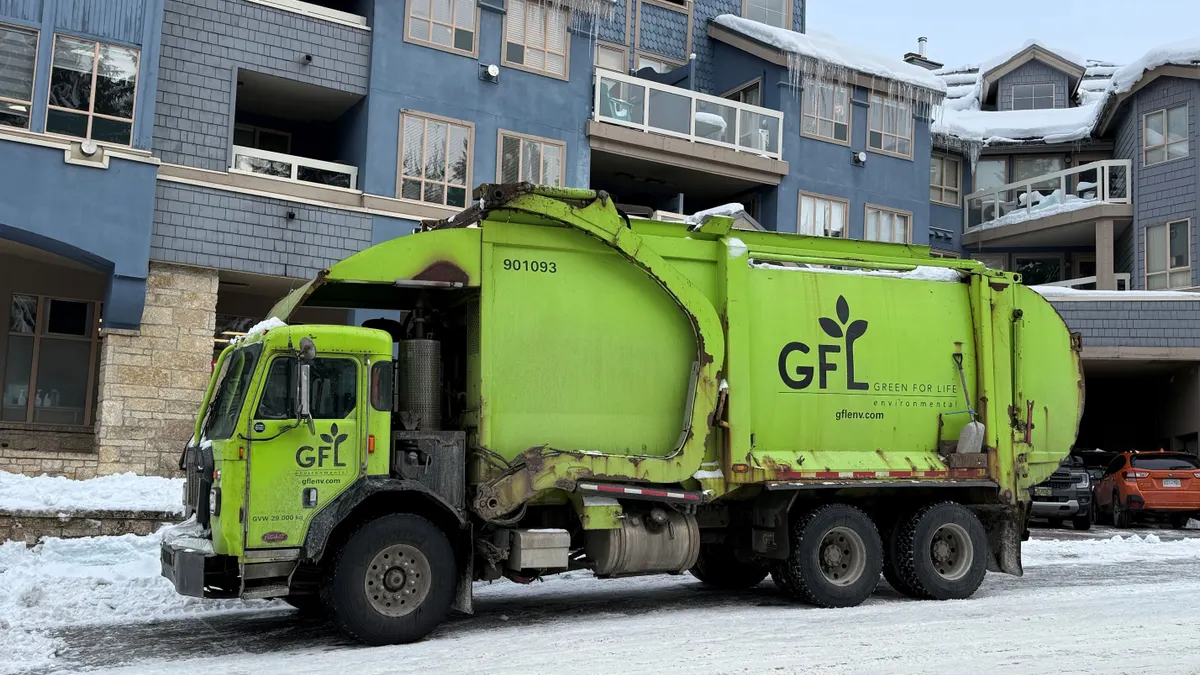
GFL Environmental’s board of directors rejected a buyout offer, affirming the company will remain public following the conclusion of an evaluation performed by a special committee of the board, the company announced Tuesday.
In recent months, executives have affirmed that GFL was receiving leveraged buyout offers from private equity investors and disclosed the formation of a special committee of independent directors to evaluate bids.
The highest offer came from a consortium of bidders led by Blackstone, KKR and Energy Capital Partners, The Globe and Mail reported late Monday. Their reported offer of $52 per share would have been a premium on GFL’s share price of $45.88 as of Monday afternoon, but the company’s executives were seeking an offer close to the $58 per share range.
“[W]hile the range of valuations proposed were based on a premium to where GFL currently trades, that is not reflective of the full value of our standalone strategy," Dino Chiesa, chair of GFL’s special committee, said in a statement. "The Board is unanimous in its conviction that GFL's standalone growth plans offer far superior risk-adjusted returns for shareholders.”
A deal would have returned the fourth-largest public waste company in North America to private hands for the first time since 2020. CEO Patrick Dovigi had previously said he would keep his stake in GFL and remain in a leadership position regardless of the outcome of the evaluation process.
In a statement Tuesday, Dovigi reiterated his confidence in GFL’s upside and ability to meet financial targets, noting its free cash flow had “meaningfully inflected,” creating “ultimate financial flexibility for capital deployment” in M&A and internal improvements.
“Over the last 20 years, we have built a resilient, market-leading environmental services platform that has consistently performed quarter after quarter across all economic cycles,” Dovigi said in his statement.
Reports that GFL's management was fielding buyout offers surfaced in July. They came after GFL's share price dropped in reaction to its acquisition of Secure Waste Services, an oilfield waste company based in Alberta.
GFL’s acquisition of Secure closed on Sept. 1. Dovigi said the deal would allow GFL to “materially increase our capital deployment capacity while maintaining our targeted year end net leverage in the mid 3s,” in a statement at the time. In the company’s third quarter earnings release, it confirmed it was still on track for that leverage target.
In an June interview, Dovigi said the company should be trading closer to its peer group on the public markets. He said “there’s real value that’s sitting inside GFL today" that he wanted to unlock.
GFL was founded by Dovigi in 2007, and grew quickly through an aggressive acquisition strategy. It received funding from HPS Investment Partners, Macquarie Infrastructure and Hawthorn Equity Partners, which were later bought out by by U.K.-based BC Partners and the Ontario Teachers’ Pension Plan.
Over the years, the company has closed acquisitions of several large regional players, including WCA Waste in 2020 and Waste Industries in 2018. It acquired large Texas hauler Frontier Waste from private equity backers earlier this year.
GFL first went public in March 2020. The initial public offering raised nearly $2.2 billion, with stocks trading in Canada and the United States. At the time, Dovigi said going public would allow the company to be "a little bit more nimble and a little bit more versatile."
During its run as a public company, GFL has continued to make deals with its private equity counterparts. It recapitalized the spun-off infrastructure services division in which it maintains a significant stake and sold its environmental services division to Apollo Global Management and BC Partners for $8 billion. Both those deals helped add cash to the company's balance sheet.
Executives have long held that the company is undervalued on public markets. GFL ran with a high debt-leverage ratio in its first years as a public company as it used debt to aggressively increase its market share through acquisitions. The company gradually lowered that ratio to below 4x to reassure investors.
Dovigi has said the buyout negotiations had no impact on the company's M&A strategy. Executives have publicly stated they expect the company could double in size in the next six or seven years through acquisitions.
In the release Tuesday, executives also acknowledged that “certain parties remain interested in acquiring some or all of the stakes held by our financial sponsor shareholders and we will facilitate that process as required.”
The Globe and Mail reported that BC Partners may sell a significant portion of its stake in GFL as a result of the buyout process.