Dive Brief:
- The EPA released its new PFAS Technology, Evaluation, Coordination, and Harmonization strategy in late October for developing technological solutions to per- and polyfluoroalkyl substance contamination in water.
- The strategy doubles down on the agency’s previously telegraphed interest in foam fractionation and granular activated carbon, as well as other experimental solutions like anaerobic digestion and sewage sludge incineration.
- The agency noted in announcing its strategy that it would make grant funding available for PFAS destruction pilots through its Science to Achieve Results and Small Business Innovation Research programs. It also planned to launch an information sharing platform to help decision-makers understand the latest research.
Dive Insight:
The new strategy comes as the waste industry faces increased scrutiny for the leachate landfills release, which can contain PFAS. The industry itself has also objected to restrictions or liability related to PFAS, arguing it receives the chemicals from industrial sources upstream of landfills.
The EPA under President Donald Trump has rolled back some proposed regulations on PFAS in drinking water while maintaining its designation of certain PFAS chemicals as hazardous substances. But the agency has also repeatedly emphasized the role of partnerships with private industry to address the family of chemicals.
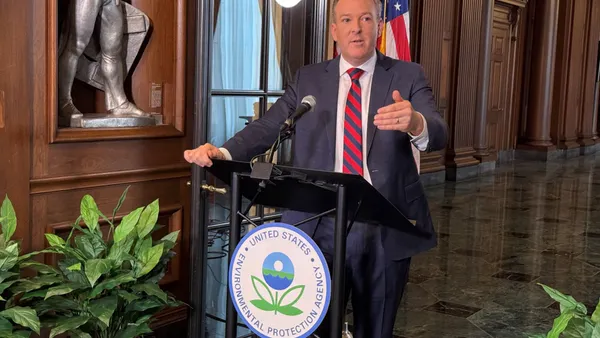
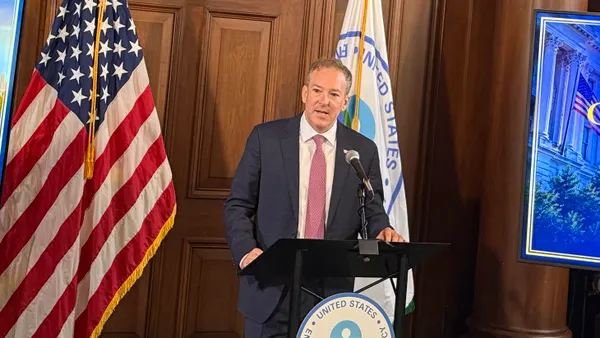
“Partnerships are the key to unlocking innovation and next-generation technologies. To that end, EPA’s Office of Water is actively pursuing public-private partnerships to promote research, development, and scalable water treatment technologies for PFAS removal,” Jess Kramer, EPA’s PFAS lead and assistant administrator for the water office, said in a statement announcing the strategy. “These partnerships will accelerate technology breakthroughs to reduce PFAS in water while also reducing the cost of treatment to save money.”
The strategy is the EPA’s latest show of support for technologies that can treat PFAS-contaminated water. EPA has joined with the U.S. Department of Defense for years to pilot such technologies, including hydrothermal alkaline treatment and thermal soil treatment methods.
Companies offering such technologies have taken notice of the agency’s continued support — 374Water, which offers supercritical water oxidation technology, praised the EPA’s newest strategy in a release to investors on Oct. 29.
"EPA has now said publicly what we have been demonstrating for years: capturing PFAS is not the end of the problem, and destruction technologies like supercritical water oxidation are critical," CEO Danny Bogar said in a statement accompanying the release.
But Betsy Southerland, former director of science and technology in the EPA’s Office of Water, said the strategy is missing solutions that address upstream contamination before it reaches drinking water plants, echoing longstanding concerns about the Trump administration’s approach to PFAS.
Southerland, who worked for the EPA for 33 years before retiring in 2017, said the federal government can play an important role in identifying and developing treatment technologies, especially if those efforts help make treatment cheaper for cash-strapped public water systems. But she said the agency is ignoring a key step in what should be a comprehensive strategy to halt PFAS before it reaches drinking water plants.
“It’s really such a one-sided strategy, because it’s really only focused on cleaning up drinking water and Superfund sites after they’ve already been contaminated,” Southerland said.
To that end, the EPA has also changed its policy for states hoping to address discharges of PFAS into water systems. In August, the agency rescinded a December 2022 memo that encouraged states to use their water permitting authority to restrict PFAS discharges from industrial sources. EPA has also walked back a draft risk assessment for PFAS in biosolids, and released in July an overview of existing monitoring practices for biosolids without endorsing an approach.
The July guidance also said EPA needed more information on the occurence of PFOA and PFOS nationally before it could draw conclusions about the risk to public health posed by PFAS in biosolids. Yet the agency had developed a national survey that would obtain that information as far back as 2024, but has failed to move forward with the research, Southerland noted. She said EPA “wanted to send a signal to the states: ‘Don't bother to do anything on your own. Just leave it to us.’”
“What they’re doing basically is they’ve dismantled every previous effort to try and put the polluter-pay principle in place and make the PFAS dischargers stop the discharge. Instead, now the emphasis is on letting them go unregulated and have all the people downstream... pay extra to clean up their drinking water,” Southerland said.
The agency has indicated plans to release effluent limitation guidelines for several categories of industrial facilities this year, including landfills and frequent PFAS dischargers like chrome plating facilities. So far, EPA has not released proposals for such facilities. Other research efforts, including an incineration pilot in Ohio disclosed in the strategy, remain ongoing.