Dive Brief:
- Construction sites offer a major opportunity for diverting plastic waste from disposal, said researchers with Light House, a circular economy nonprofit. They spent 14 months collecting and documenting plastics from eight construction sites throughout Vancouver.
- Researchers diverted about 38,000 kilograms during the pilot period and found about 77% of the plastics collected from these sites were recyclable. They tested collection strategies to avoid contamination and connect the materials with recyclers and end markets.
- To overcome practical hurdles, the team suggested coordinating with construction crews to optimize recycling systems and working with recyclers equipped to handle materials like LDPE construction films.
Dive Insight:
Canada introduced 7.1 million metric tons of plastic into the domestic market in 2021, and 22.3% was construction-related products, excluding packaging, according to the report.
There’s not a lot of data on how construction-related plastics move through the waste stream, in part because Light House’s pilot is one of the first in North America to research it, said Gil Yaron, managing director of circular innovation. “There was really no focus at all on the construction sector, which is arguably one of the largest contributors in terms of plastic waste,” said in an interview.
Light House sees the pilot as the first step in a long-term process of building better systems for collecting and recycling construction-related plastics. During the pilot, researchers tracked material from job sites through the full process of hauling, sorting, storage, processing and manufacturing. They also documented factors that affected how much material was actually recovered.
This project is funded in part by the Canadian government. The CleanBC Plastics Action Fund, which supports plastic waste prevention efforts, also provided funding.
Films, wraps, strapping, geotextiles and other flexible film plastics, mainly made of LDPE, were the most promising materials for recycling on these construction sites, according to the report Light House published on the pilot program. Other materials, like plastic paint cans, were also recycled.
Researchers found that the plastics were much more likely to avoid contamination if they went directly into a specific collection bin that was conveniently located at the site. Most of these plastics were single-use, “so it’s literally coming off of containers or skids, and as long as it's not dragged through the mud and it's thrown into a container, it's clean,” Yaron said.
There also needs to be buy-in from the construction crew, who are typically under time and performance pressures. When recycling bins were clearly labeled, convenient and out of the way of day-to-day operations, crews were much more likely to sort plastics for recycling.
One idea is to put dividers inside existing roll-off containers so workers can sort materials into specific categories within one bin without having to find space for another large roll-off.
“It's about setting up the right systems on site and having the right awareness amongst the crews to make sure that the material gets captured properly,” he said.
Having a site supervisor who “really understands and appreciates and has bought into the value of separating materials out,” is another key to success, he said.
Plastics collected during the pilot had about a 21% contamination rate. Other contamination factors included weather, crew turnover, loading practices and bin placement, Light House’s report states.
Researchers also noted challenges in finding the right regional recycling facilities that were capable of processing “construction-derived” plastics. The right facilities need to be able to accommodate a high volume of films and packaging, plus be able to “tolerate modest levels of contamination, recognizing the operational realities of construction sites.”
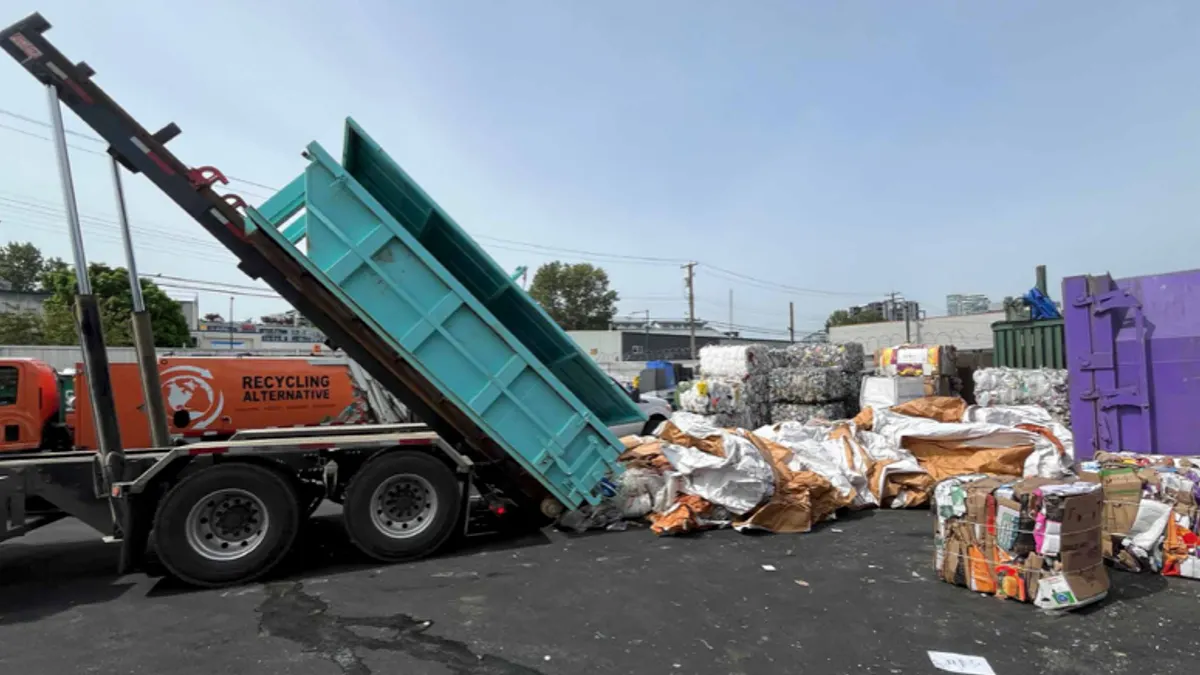
“We can divert construction plastics, but there needs [to be] investment in infrastructure for these specialized, sector specific waste streams, in order to create systems to effectively capture and recover these materials,” wrote Louise Schwarz, co-founder of Recycling Alternative, in the report. The Vancouver-based recycler consulted on the project.
The report outlines options for incentives that could help drive more investments, such as regional or municipal efforts to establish variable tipping fees for sorted plastics, or landfill bans on recyclable plastics from construction sites.
Another hurdle is developing more end markets for the material. Tax credits, public procurement standards, corporate purchasing commitments or recycled content mandates for using construction-derived plastics in products could help kick-start partnerships, according to the report.
The pilot followed some of the construction materials — including LDPE lumber wrap and PP from clear poly sheeting — through the process of being recycled into pellets that were then used to manufacture plastic devices designed to reduce the volume of cement needed in certain construction projects. The devices can be manufactured with a “tolerance for different plastic resin types and contamination,” the report said.
Other construction-related products have the potential to incorporate recycled plastic from construction sites, too, he said.
“We can tell this amazing story about taking plastics from construction sites and making a new product for use in construction,” Yaron said.