Dive Brief:
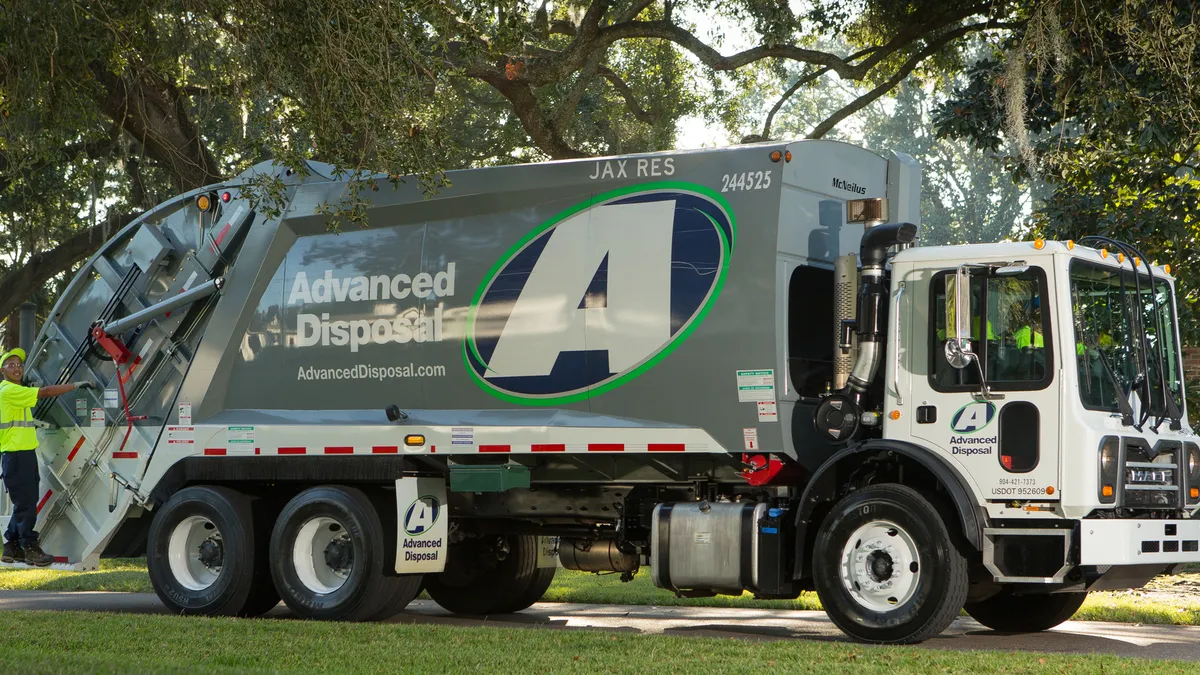
- A class action investor lawsuit involving WM’s 2020 acquisition of Advanced Disposal Services is drawing to a close after a judge issued an order granting final approval of a settlement. The order, issued Dec. 18, helps finalize a preliminary settlement from August, where WM agreed to pay $30 million to resolve the lawsuit.
- The lawsuit alleges that WM misled investors about how long it would take to close the ADS deal and what financial risks would be involved, causing those investors to lose money on senior notes issued to help pay for the acquisition.
- Seafarers Officers & Employees Pension Plan, Seafarers Money Purchase Pension Plan and United Industrial Workers Pension Plan brought the case against WM and several company executives, including CEO Jim Fish. WM has denied wrongdoing, and said in a statement that the “settlement will not impact WM’s financial or operational abilities” and will be covered by insurance.
Dive Insight:
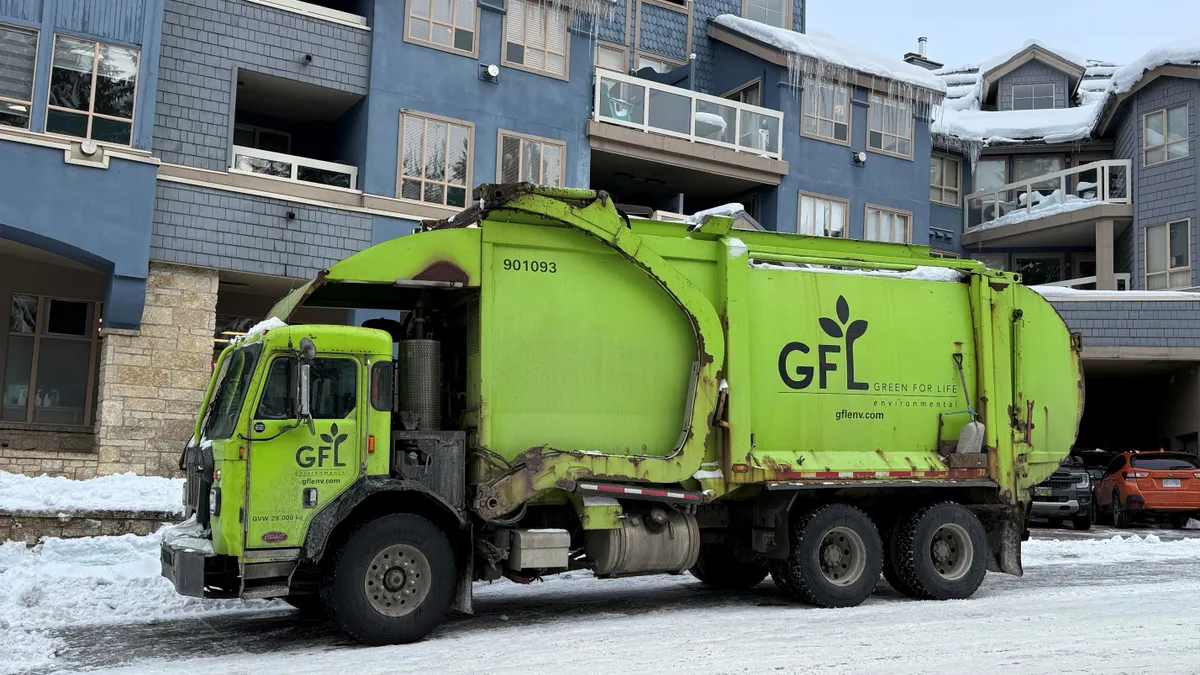
The final steps of the class action lawsuit will wind down a case that has been in the works since 2022, though WM said in December that some “ancillary matters” are still in the final stages of being wrapped up. WM completed the acquisition of ADS in October 2020 and divested a major chunk of assets in the process to GFL Environmental.
The lawsuit stems from the beginning of that acquisition process, when WM announced in April 2019 that it planned to acquire ADS for $4.9 billion. To finance the deal, it issued $4 billion worth of senior notes in a public offering to investors in May 2019.
WM had expected the merger to close by the first quarter of 2020, and about $3 billion of those notes were subject to a special mandatory redemption feature, known as an SMR, that required WM to repurchase the notes for 101% of par, or face value, if the deal wasn’t completed by July 14, 2020.
WM also needed antitrust clearance from regulators in order to close the deal, as the U.S. Department of Justice considered it to be “the most significant consolidation in the waste industry in over a decade,” according to the lawsuit. As a result, WM agreed to divest up to $200 million in assets to address those antitrust concerns.
According to the lawsuit, WM eventually realized that it would need to divest assets over that $200 million antitrust revenue threshold in order to satisfy the DOJ’s stipulations, a process that meant WM would likely miss the July 14 merger deadline. WM and ADS decided to renegotiate parts of the deal to account for the increased asset divestiture requirements.
But the lawsuit alleges that WM didn’t disclose these details to investors, instead “repeatedly assuring investors that the DOJ’s antitrust review was proceeding as planned.”
WM did tell investors in March 2020 that they had to push the closing date to Q2 of that year, attributing the delay to the ongoing COVID-19 pandemic. The lawsuit says WM’s reasoning was “a half truth at best” but was also a cover to conceal the fact that WM and ADS were working to renegotiate the deal.
On June 24, 2020, WM announced that the company and ADS had revised the terms of the merger. Under the new terms, the companies agreed to sell $835 million worth of assets, mainly to GFL. Those assets had generated about $345 million in revenue the previous year. Under the revised merger terms, WM would acquire ADS for $4.6 billion, $300 million less than the original agreement.
WM also announced that the deal wouldn’t close until the third quarter of 2020, six months later than it had originally planned. As a result, WM would trigger the SMR feature of certain notes, redeeming them at the 101% of par, on July 20, 2020.
The unexpected June announcement “thus eviscerated the Notes’ premium, causing the price to drop to approximately 103 cents on the dollar in anticipation of the SMR,” the lawsuit said.
Bond investors had previously been willing to pay “premium prices” for the notes, based on “repeated assurances” that the deal was going according to plan, and WM’s decision to trigger the SMR led to major losses, the lawsuit said.
At the same time, it allowed WM to obtain cheaper interest rates and other financial incentives. The revised deal changed the purchase price from $33.15 to $30.30 per share, saving WM about $300 million in purchasing costs, while also allowing WM to replace the notes “with new debt at a substantially lower cost,” the complaint said.
By the time WM finally closed the deal in October 2020, it was in compliance with a separate lawsuit filed by with the DOJ over the divestment of its assets. The consent decree required WM to divest 15 landfills, 37 transfer stations, 29 hauling facilities, over 200 waste collection routes and other assets across 10 states.