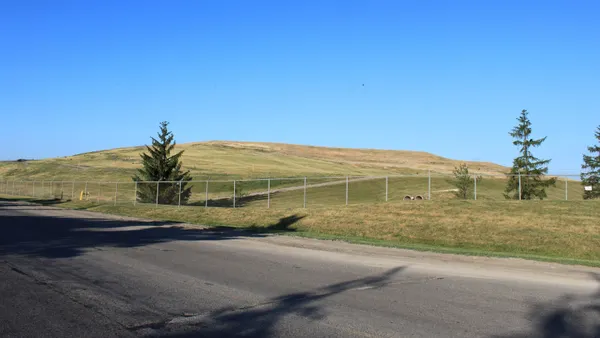
California Air Resources Board staff released proposed tweaks to the language of the Landfill Methane Regulation, which sets gas collection rules for more than 150 landfill across the state. In comments on the 15-day proposal, groups offered some praise for new transparency requirements but continued to voice concerns about rules designed to enhance monitoring.
In November, the board approved the first major overhaul of the LMR since it was adopted in 2010. The hotly contested update included a range of new requirements for landfill operators, including faster timelines by which operators must respond to landfill gas leaks and new monitoring requirements for landfills with and without gas collection and control systems.
In submitted comments, landfill operator WM expressed appreciation for regulators’ decision not to add new fenceline monitoring requirements, noting the November update already added “unprecedented monitoring, recordkeeping, and reporting of a variety of data generated at landfills across California” that would likely force operators to hire additional staff. In its response to the new 15-day proposal released on April 2, the company again urged the state to roll back certain requirements to align with federal rules.
“Unfortunately, WM continues to feel that the rule will result in significant costs without comparable benefits,” Christine Wolfe, director of government affairs for WM in the state, wrote in the company’s comments. “WM will continue to work with CARB and its sister agencies at the federal, state, and local level to analyze the data generated through the LMR and other programs to determine what data is most useful in diagnosing issues at landfills and what, if any, is the most useful in preventing expensive corrective action measures.”
Full Circle Future, a nonprofit that advocates for stricter landfill regulations, commented on the proposed update in a letter to CARB staff also signed by a range of grassroots and environmental groups. The groups praised new proposed requirements that operational waiver requests and decisions be reported to CARB's executive officer. Supporters say this will ensure greater oversight of High Operative Value waivers, which are issued when a landfill exceeds certain standards but is still looking to operate as it brings landfill conditions back under control.
Full Circle Future is looking to expand that oversight by making HOV waiver requests and decisions public. Lee Helfend, the organization’s director of campaign strategy, said that would prevent them from being used as a "Get Out of Jail Free card."
"I think it's pretty clear that that could be abused if a landfill is not being managed properly in the first place," Helfend said in an interview. "We don't want to see waivers just given out freely to landfill operators for any number of reasons."
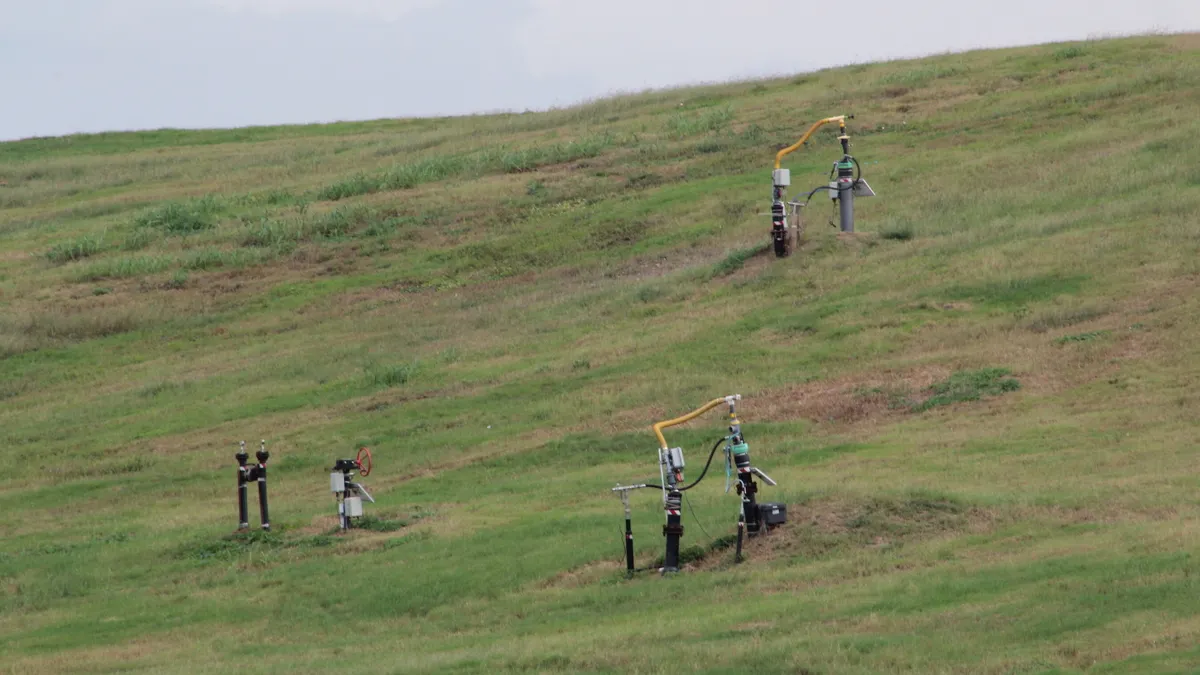
But the group also noted some language it deemed too loose. The proposal would shift the timeline by which operators must install landfill gas collection wells in active areas like the working face of a landfill by six months, even though the November update to the LMR had required installation at the same time waste was first being placed in a new area.
CARB spokesperson Lynda Lambert said that the new language was designed to coincide with when anaerobic conditions at a landfill are first achieved, under which methane is proposed.
“Expanding the timeline for installation and the types of collectors that can be used helps to ensure that all landfills are able to comply with the requirements and can install safe, effective gas collectors that can begin operation quickly upon establishment of anaerobic conditions,” she said in an emailed response to questions.
Full Circle Future also took issue with the length of well downtime allowances for landfill operators. Proposed language would allow wells at smaller landfills to be down for up to 10 days total each year. Helfend said the current language appears looser than federal requirements under the Clean Air Act, which only allows downtime in cases where a gas collection and control system is malfunctioning. WM, conversely, urged CARB to ensure the language applies to all landfills regardless of size.
“What we really don't want to see is a downtime allowance where these landfill operators can, for any reason, shut the system down. That's a huge amount of time in which pollutants and emissions can seep into the environment and the surrounding community,” Helfend said.
Environmental groups and local advocates also took issue with some measures that they said could weaken protections for communities near landfills with elevated temperatures. That issue has proven particularly potent in California, where Waste Connections was forced to close the Chiquita Canyon Landfill in January 2025 after a long-running landfill elevated temperature event, which remains ongoing.
Waste Connections did not respond to questions about the LMR update or current conditions at Chiquita Canyon.
Helfend said the experience of communities like Val Verde that neighbor the landfill demonstrate the importance of strict new monitoring rules for other facilities in California moving forward.
"Their specific example is definitely sort of the canary in the coal mine of what landfill operations under current standards can look like when there's not enough oversight or accountability," Helfend said.
Jennifer Elkins, whose Val Verde Civic Association cosigned the Full Circle Future comment letter, had praise for new data transparency measures in the regulation. She said community members have a right to know the emission levels of chemicals like benzene from a nearby landfill on a given day so they can make an informed decision about whether to be outdoors.
"We want to know what’s in our air, we want to know what our kids are breathing and what these landfill operators are doing on site," Elkins said. "A lot of that info is already there, it’s just a matter of making it accessible for the public."
But other updated language in the 15-day proposal is giving Elkins and others pause. CARB is proposing to set a 145 degree Fahrenheit downwell monitoring temperature threshold, past which operators must take action within a week to lower the temperature. Environmental groups wanted to see that threshold lowered to 131 degrees Fahrenheit, arguing any higher standard could be too late to prevent the kind of runaway event seen at Chiquita Canyon.
WM said in its comments that the requirements at 131 degrees were too strict and sought changes to loosen them. It said that individual wells may register above 145 degrees for more than 120 days within normal
average operations without indicating an elevated temperature event.
In a statement, CARB’s Lambert noted the agency still requires corrective actions past 131 degrees Fahrenheit, albeit with a different timeline and restrictions. She also noted CARB is one agency among several responding to elevated temperature events at landfills.
Despite complaints from Full Circle Future and its allies that the 15-day timeline was too short to process and respond to technical language in the new proposal, the comment period ended April 17. An agency spokesperson said CARB would review the comments and issue final language in the second or third quarter of the year.