Amid a growing number of regulations targeting products and materials containing per- and polyfluoroalkyl substances, the business of collection, remediation and destruction is booming, companies say.
State and federal agencies are identifying materials that are fueling that business, leading the way on disposal decisions as they get ahead of liability concerns from PFAS’ potential health effects.
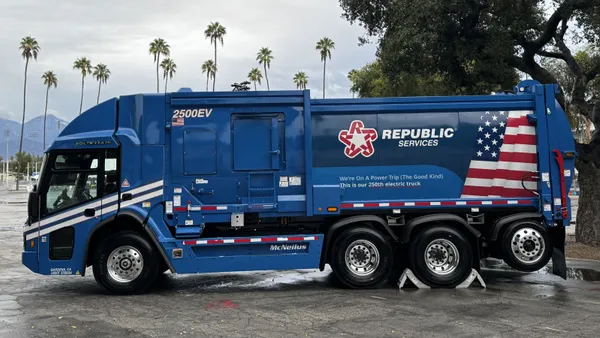
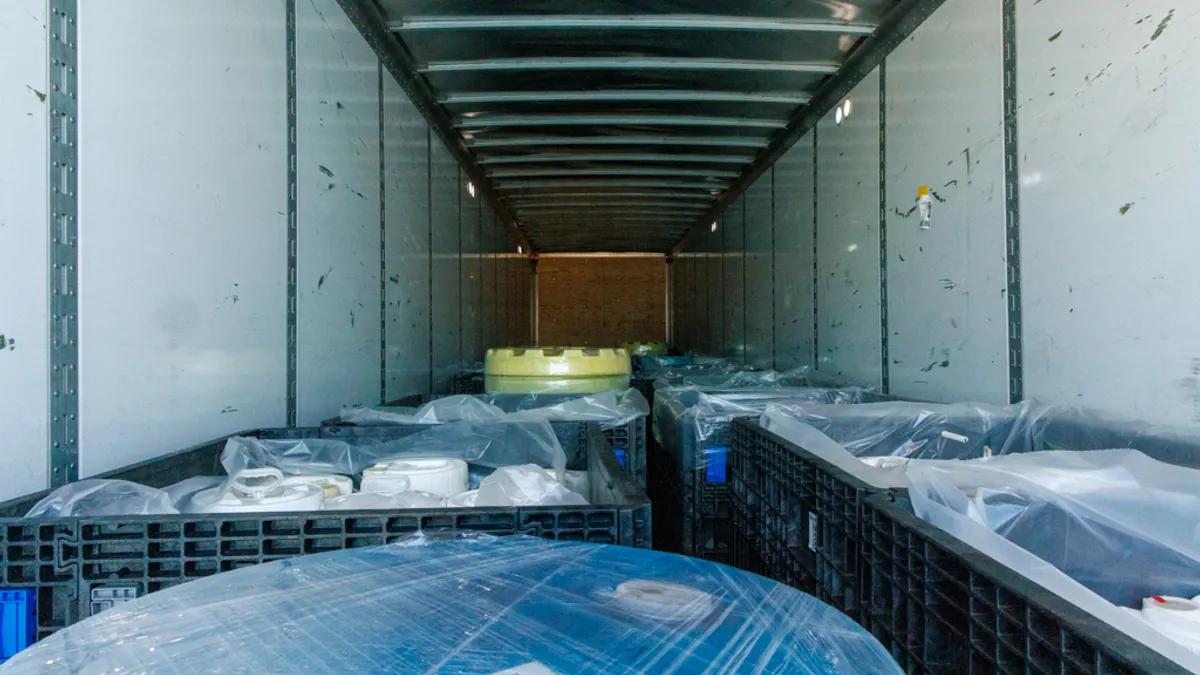
In New Jersey, a pending ban on the use and sale of aqueous film-forming foam with intentionally added PFAS led to a major collection program. Revive Environmental partnered with the New Jersey Department of Environmental protection and Republic Services to collect, treat and dispose of the foam used by firefighters. The 30-day program, which was free for fire departments across the state, collected over 150,000 gallons from 300 departments, according to Rick Gillespie, CEO of Revive.
Revive, based in Columbus, Ohio, has been treating PFAS-contaminated materials since 2023. This is the fourth state where the company has run a collection drive, and Gillespie expects the work will only increase over time.
“Even though this is the largest today, there are a number of states out there that have stockpiles that are likely similar in volume,” Gillespie said in an interview. “These state collection programs are a strong customer for us, but they represent only a percentage of the work that we're doing with PFAS.”
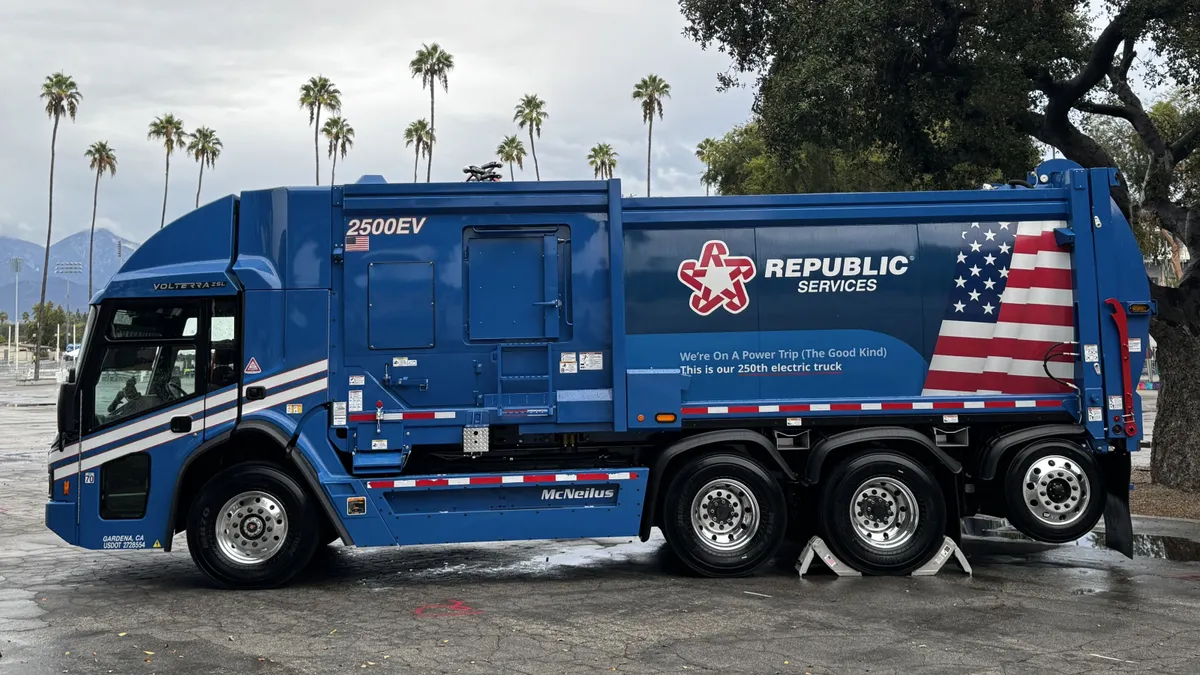
Republic Services provided collection and logistics support for the New Jersey program, and it’s previously partnered with Revive for similar state collection programs.
“This collaboration with the state and Revive Environmental provides a seamless solution to remove PFAS and protect first responders, communities, and the environment,” Julia Arambula, senior vice president of operations at Republic Services, said in a statement in March. “We welcomed the opportunity to provide our environmental solutions expertise and capabilities for the largest-ever AFFF collection and destruction program.”
Revive is jointly owned by nonprofit Battelle and investment firm Viking Global Investors. Its PFAS Annihilator technology uses supercritical water oxidation to break down PFAS compounds under high temperatures and pressures. The company said its process is verified by independent, third-party testing to meet or exceed U.S. EPA drinking water standards.
While Revive has developed backing and key partnerships, it’s far from the only player cashing in on the need to treat PFAS-contaminated material.
Estimates fluctuate, but the total market for PFAS treatment is expected to be more than $100 billion over the next 30 years, according to an Environmental Business Journal report released last year. That includes remediation of contaminated materials, including soils, as well as treatment of wastewater and drinking water.
The market’s potential has tracked with the status of federal rulemaking on PFAS, which remains in flux. Over the last year, the U.S. EPA has said it would defend its designation of PFOA and PFOS as hazardous substances and its drinking water regulations for the same two chemicals, though not other PFAS compounds.
Against that federal backdrop, Clean Harbors’ PFAS business has also grown considerably. The company logged about $40 million in revenue in 2024 from PFAS-related business, which shot up to $125 million in revenue in 2025. The company projects $175 million in revenue from PFAS-related services this year, according to Paul Bratti, senior vice president of the company's project services group.
“We’re off and running,” he told Waste Dive. “The company's put a lot of effort into it.”
Clean Harbors has worked to educate customers about its solutions as demand increases. On April 1, it released a framework to help them guide decisions for the proper disposal pathway for PFAS-contaminated materials.
For disposal, the company typically recommends material go to one of three kinds of locations based on the level of contamination. Materials with two to 20 parts per billion of PFAS can go to Subtitle D solid waste landfills; materials with up to one part per million can go to Subtitle C hazardous waste landfills; and materials with more than one part per million go to hazardous waste incinerators.
The company allows for some variability due to factors like proximity of available facilities, Bratti said. But he emphasized the legwork Clean Harbors performed to identify solutions for clients nationwide, and noted additional measures like liners and leachate collection systems at the company’s Subtitle D landfills to ensure safety regardless of destination.
“We put an awful lot of effort into it, with risk assessment as the priority, cost as a priority, and then safety of the community as a priority,” Bratti said.
Currently, the company’s Subtitle C landfills are accepting the “vast majority” of PFAS-contaminated material. The company is taking in a range of materials, including buckets of AFFF and soils. A single U.S. National Guard site in need of remediation could have as much as 4,000 tons of soil that need to be remediated, and that material typically goes to landfill, Bratti said.
But the balance of material going to landfill rather than incineration may shift. The Department of Defense, which is a significant client for Clean Harbors, recently lifted its moratorium on incineration of PFAS-containing materials. Over the next 12 to 18 months, the volume of material going to landfill will likely level off as the amount going to incineration rises, according to Bratti.
The incineration business was also boosted by a study conducted at Clean Harbors’ Aragonite, Utah, facility in coordination with the U.S. EPA and then-Department of Defense last year. The study confirmed the incinerator could achieve up to 99.9999% destruction of PFAS chemicals, a key standard giving stakeholders confidence the treatment method was safe.
DOD also noted in its latest destruction and disposal guidance document, which it released to the public on March 3, that Veolia’s incinerator in Port Arthur, Texas, demonstrated high levels of PFAS destruction. Now that federal partners have given the OK for incineration, Bratti expects more customers will follow.
“I think we’re probably at the beginning stage of the incineration growth in the PFAS market because most people tend to follow what the federal government does,” he said.
In recent earnings calls, Clean Harbors co-CEO Eric Gerstenberg has repeated the company’s expectation to achieve 20% quarter-over-quarter growth in the PFAS business. Bratti said he expects the company to continue double-digit growth in the business over the next few years, as awareness of the need for remediation grows.
“It’s not a problem that’s going away,” Bratti said. “I think Clean Harbors has positioned itself well.”
When it comes to future revenue streams, Revive is also optimistic about the need to treat landfill leachate. Gillespie estimates more than eight billion gallons of leachate is generated across the country's landfills each year, and almost all of it has at least some level of PFAS contamination.
Landfill companies have increasingly identified PFAS in leachate as an area of concern, including Republic Services. When the company announced its acquisition of Shamrock Environmental last year, CEO Jon Vander Ark noted Republic had already been sending its leachate to Shamrock for PFAS treatment, and it could now bring those capabilities in house.
Revive plans to establish centralized waste treatment facilities around the country to accept and decontaminate the leachate from landfills, pulp and paper mills, and other industrial sites with high levels of PFAS in their effluent. It also plans to continue to partner with landfills and other facilities for on-site treatment and destruction solutions.
Revive is growing rapidly, Gillespie said, and plans to achieve $100 million in revenue in the next five years.
"We know this PFAS market is huge, and we're going to be a part of the solution set to address it," Gillespie said.
Editor’s note: This story has been updated with additional information about Revive Environmental.