Dive Brief:
- Houston is expanding its multifamily recycling pilot program in an effort to bring more reliable recycling services to a growing part of the city’s population.
- The project, first launched in September, is testing several collection and education methods in a range of apartment buildings. It’s funded by a grant from The Recycling Partnership and the Alliance to End Plastic Waste.
- Around 1,334 units are already enrolled, and the city’s Solid Waste Management Department plans to add services for 500 more units this month. By the end of the pilot in late 2026, about 3,000 units across 12 properties are expected to have recycling services, according to The Recycling Partnership.
Dive Insight:
Houston’s multifamily housing population is growing, but recycling resources for them are not, according to Houston officials and environmental groups.
About 1 million Houston residents — about half the city’s population — now live in apartments or other multifamily units, according to Luke Metzger, executive director of Environment Texas. That number is expected to hit 1.6 million by 2040, he wrote in a recent blog post.
The Recycling Partnership estimates that 20% of multifamily households in Texas have recycling access, and in Houston, that’s limited to just a “handful of properties.” Houston SWMD estimates about 15% of the city’s waste comes from such units.
Looming landfill capacity issues are also at play, Houston SWMD officials noted during a March 31 update to City Council. The nearby McCarty landfill is expected to reach capacity in the next nine years, prompting the city to do more to increase recycling efforts as it also plans to shift waste to other facilities, officials said in their presentation.
City Council member Abbie Kamin spearheaded the multifamily recycling initiative, which was established in a 2021 budget amendment. Grant support from the The Recycling Partnership and Alliance to End Plastic Waste helped finally launch the program in September 2025. The two organizations help cover costs related to technical assistance and education, as well as collection crews, recycling containers and other operational costs, Kamin’s office told Community Impact in October.
“This initiative is expected to save taxpayers hundreds of millions of dollars by extending the lifespan of our landfills,” Kamin added in a year-end status report to residents. “It's good for our environment too.”
Recycling bins were delivered in September 2025 to the first round of participating multifamily properties, TRP said.
The pilot is testing two types of service: One type provides a centralized collection point at the building, such as a large container outside, while the other type offers a “valet” service where recyclables are collected at the resident’s doorstep. Two properties currently have the valet option and have a set-out rate of around 20%, according to Houston SWMD.
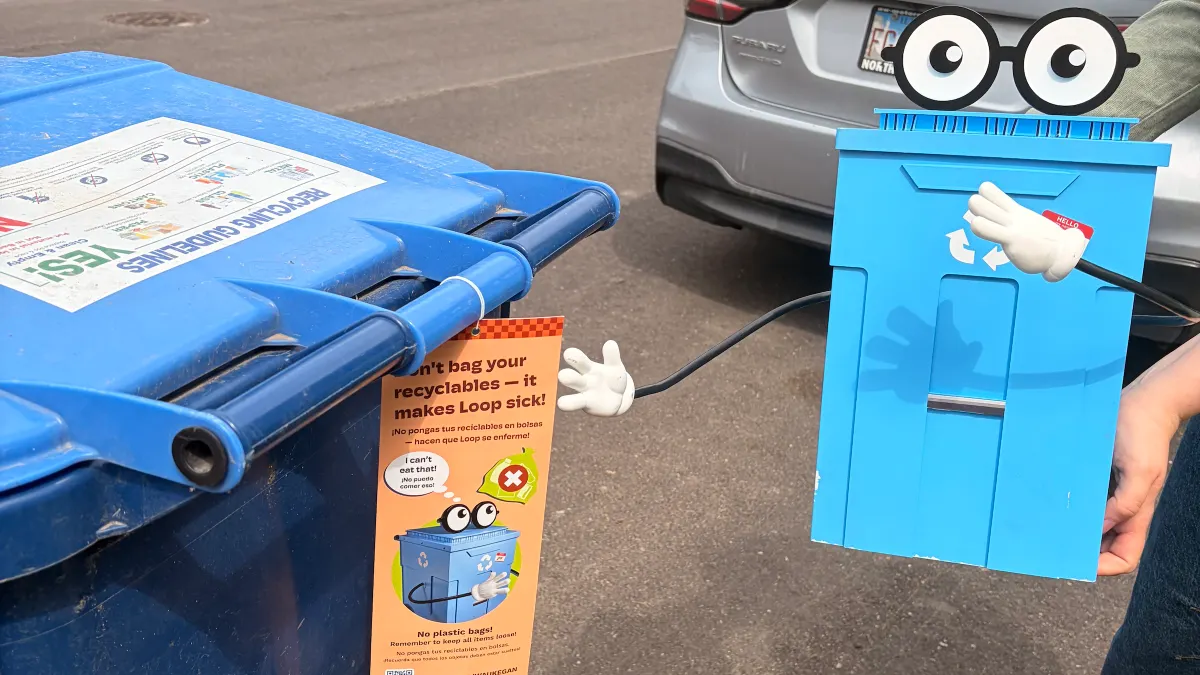
Residents also receive educational materials to help them recycle correctly, such as door hangers and reminders designed by TRP.
Recyclables from the participating buildings go to FCC Environmental for processing. FCC handles a significant amount of recycling for the city, and Houston SWMD estimates FCC processed about 54,674 tons of recyclable materials in 2025.
The company recently completed an upgrade of its Houston MRF meant to recover more materials, especially plastic film and flexible packaging. That upgrade was fueled by a separate $4.25 million grant from TRP, the largest single grant the organization has given to an individual MRF.
Environment Texas, which advocates for multifamily recycling solutions in Houston, said the multifamily recycling pilot is a strong first step toward long-term recycling improvements. It also helps the city align with other major Texas cities that already offer multifamily recycling services, Metzger said, such as Austin, San Antonio, Dallas and Fort Worth.
Metzger argues that Houston could scale up its efforts by establishing a solid waste fee to help pay for expanded recycling services. Some other Texas cities already “fund robust recycling programs” this way, he said.
San Antonio generates about $127 million a year from the fee, while Dallas generates about $165 million, Austin generates about $101 million and Fort Worth about $92 million, he said. Houston SWMD was not available to comment on future funding plans as of press time.
According to TRP’s case study for the project, the program will offer insight into how Houston can move forward with multifamily efforts after the pilot concludes. TRP will help conduct a final audit to measure tonnage, composition, and contamination rates from both the valet model and the centralized container models.
“The data will reveal the performance of each model and where to focus resources for the greatest impact as the city explores a multifamily recycling ordinance,” the organization said. “The results won’t just shape Houston’s future; they’ll inform strategies nationwide for scaling recycling to multifamily communities everywhere.”
This story first appeared in the Waste Dive: Recycling newsletter. Sign up for the weekly emails here.