Dive Brief:
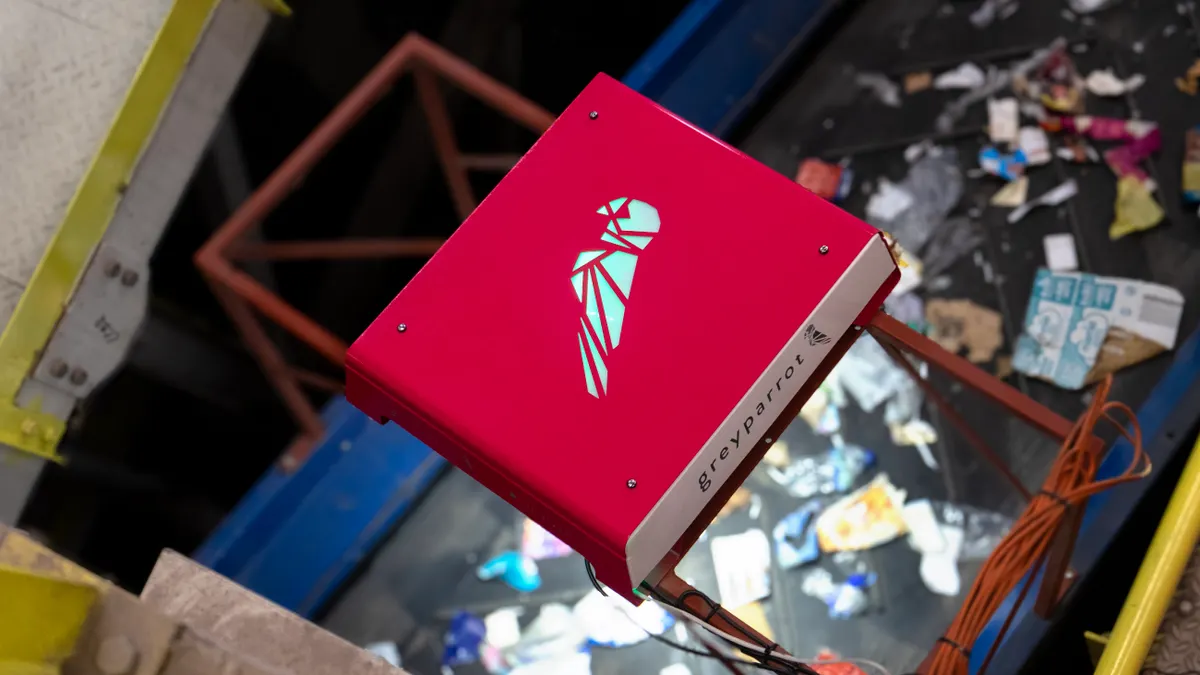
- AI-enabled waste analytics company Greyparrot has raised $27 million in series B funding in an effort to expand its network of MRF camera systems used to garner material insights for the recycling and packaging industries.
- The new funding round, led by technology investor Omar Mir, will help scale Greyparrot’s presence in North America and Europe by growing “our AI, data science and product teams,” co-founder and CEO Mikela Druckman said in an announcement. The latest round brings Greyparrot’s total funding to $60 million.
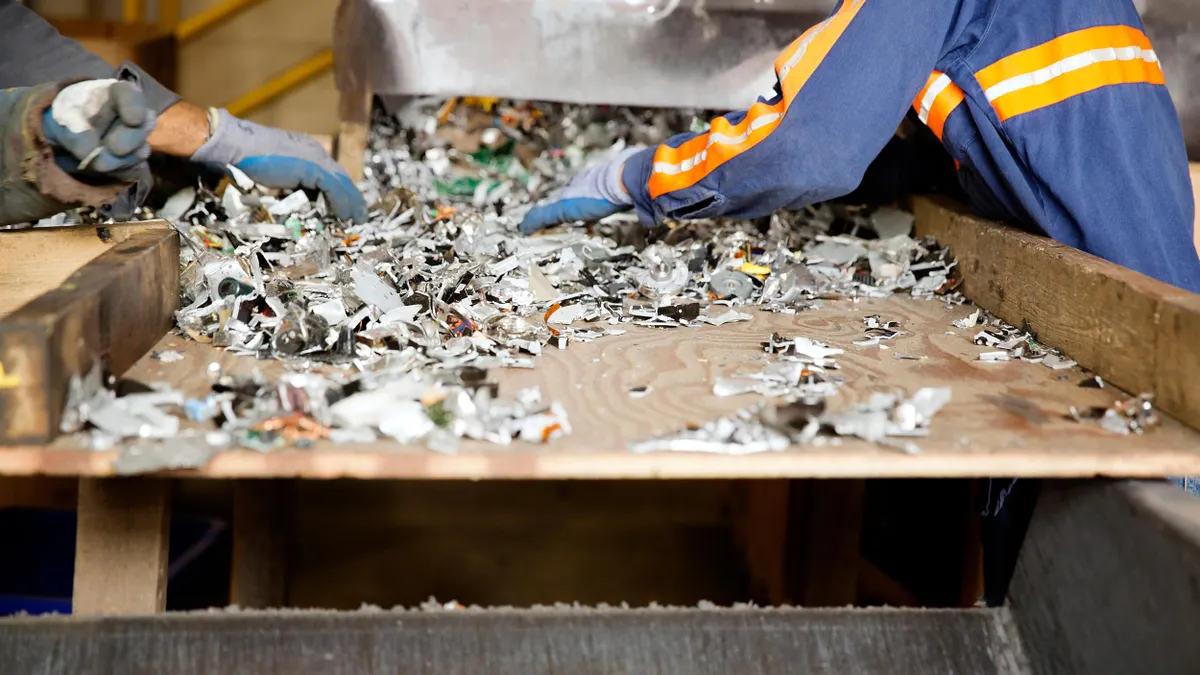
- London-based Greyparrot also aims to expand its dataset to help achieve the goal of diverting over 1 million tons of waste by 2030. The company's Analyzer technology, which uses cameras to scan items on sorting belts in more than 20 countries, recently logged a milestone of 1 trillion waste detections, the company said.
Dive Insight:
The new funding infusion is meant to help Greyparrot double down on its data collection work, especially at a time when the recycling industry is more frequently looking to AI tools to improve sorting capabilities, raise recycling rates, find new revenue streams and get better insight into contamination issues. The company also works with major brands to offer insight into how certain packaging moves through waste streams.
As extended producer responsibility for packaging takes shape across seven U.S. states, Greyparrot also aims to position itself as a way to give policymakers “verifiable evidence to shape initiatives” and offer data to help industry players meet new reporting and waste diversion requirements. Greyparrot also hopes its technology can help packaging producers looking to more accurately calculate EPR-related fees and ecomodulation data.
Greyparrot started in 2019 and began deploying its first commercial Analyzer units in 2021. Previous investors have included recycling equipment company Bollegraaf, which is now a distributor of the Analyzer technology.
Greyparrot says its trillion-detection dataset has detected notable amounts of material “going to waste” over the years, including an estimated 17.4 billion PET bottles and 4.2 billion aluminum items. Overall, Greyparrot estimates the materials the Analyzer tech has identified are worth about $2.5 billion in “recoverable value.”
“Waste is one of the planet’s largest untapped resources, and data is the infrastructure that unlocks it,” Druckman said in a statement.
Greyparrot has partnered with recyclers and brands for several years on projects meant to quantify, categorize and estimate the value of recyclable materials entering MRFs, partly in an effort to divert mis-sorted items away from disposal. It names WM, Circular Services, FCC and Veolia as some of its customers.
The company worked with Closed Loop Partners and a consortium of major brands to study how polypropylene moves through recycling streams to better estimate the “untapped value” of the material while also identifying common contamination issues. It analyzed 650 tons of material from MRFs including Balcones Recycling in Texas, Cougles Recycling in Pennsylvania, Rumpke Waste & Recycling in Ohio and Eureka Recycling in Minnesota.
Greyparrot also recently worked with Kenvue, a company with brands like Band-Aid and Tylenol, to track how branded packaging moves through recycling systems and use that data to inform design-for-recycling changes. Unilever and L’Oréal are other companies using Greyparrot for packaging insights, Greyparrot said.
“Waste intelligence will do for materials what satellite data did for navigation,” said co-founder Ambarish Mitra in a statement, noting that few tools exist to measure valuable resources that are being disposed. “Once you can measure a material, you can trade it and invest in it. That is when the circular economy stops being an ambition and becomes infrastructure.”