Dive Brief:
- The New Jersey Department of Environmental Protection this month extended a compliance exemption for a certain subset of food-contact packaging under its postconsumer recycled content law from Jan. 18, 2027 to Dec. 31, 2029.
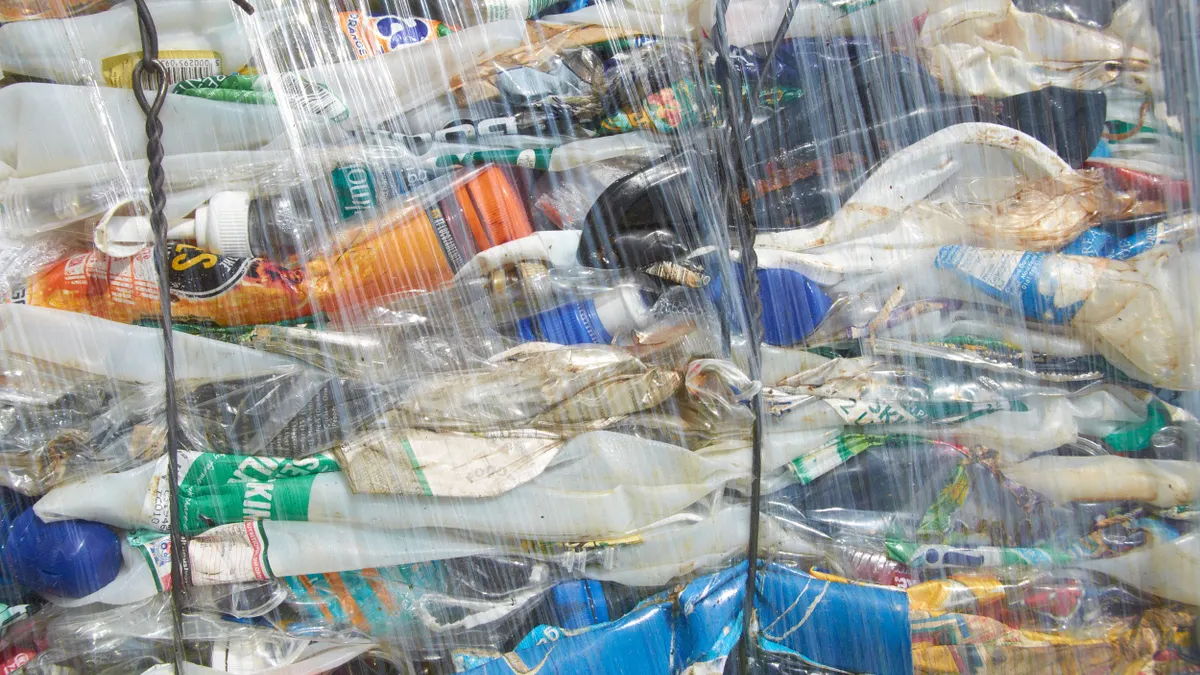
- Requirements remain in place for plastic beverage containers to include 15% PCR, glass containers to include at least 25%, and paper and plastic carryout bags to contain at least 20%. Those minimums are slated to rise over time.
- The Association of Plastic Recyclers said in a statement it was “deeply disappointed” and felt this delay undermined the goals of the law.
Dive Insight:
While a handful of other states have PCR requirements for beverage containers or bags, New Jersey’s 2022 law is considered the broadest recycled content mandate in the United States.
As part of the original law, producers of food-contact packaging were given a five-year exemption. However, in its Sept. 2 statement, DEP pointed to a section of the law allowing it to extend the initial five-year exemption for up to another five years.
“The NJDEP concluded based on research that the existing technologies available for creating food-safe PCR are not yet at a scale to warrant a mandatory adoption across the industry,” the agency noted. “Also, the limited availability of food-safe PCR restricts the ability of food product manufacturers to meet the PCR standards of the law.”
In addition, the department said it had concerns about a potential impact to food quality from such a “large-scale mandate.”
“Extending this exemption will grant allowable time for the necessary technological development, research, and testing to occur,” DEP said in its statement, concluding that the department expects that by 2030 there will be “more robust” availability of food-grade PCR.
However, APR called on the department to reverse the change and abide by the original deadlines. “The decision discounts the proven use and availability of postconsumer recycled content, as well as the environmental and economic benefits of using recycled plastic,” the group said, noting this decision was made without an opportunity for public comment.
Others had a different take on the news, citing safety concerns.
Anja Brandon, Ocean Conservancy’s director of plastics policy, said the “delay shouldn’t just raise the question of whether recycled plastic is safe enough for our food, but whether we should be using single-use plastic food packaging at all.”
“Even plastic packaging that contains zero recycled content has been shown to shed chemicals and microplastics into what we eat and drink,” she said. “If we’re serious about protecting public health and reducing plastic pollution, we should be working to eliminate unnecessary plastic from our food altogether.”
APR said the sudden change risks creating stranded assets, as companies have already made investments in equipment, capacity and operations based on the original deadline.
“Some recyclers have spent years on packaging innovations and testing to bring new recycled products to the marketplace, only to see that market demand disappear overnight because of New Jersey’s delay,” APR said.
PureCycle, for example, has been ramping up production of its recycled polypropylene resin. The company recently got a one-year conditional approval from the department, allowing its resin to be counted under the law.
APR said a blanket delay was “unnecessary” because the law already includes a waiver process. The group also wants to see stronger enforcement and transparency, such as publishing an updated list of manufacturers’ compliance status, enforcing penalties for noncompliance and giving greater transparency on approved waivers.
Prior to the recent exemption update, more than 30 producers, including many major CPG brands, had received compliance waivers good for two years.