A jury in Texas has found Bob Gregory, president and CEO of Texas Disposal Systems, guilty of arranging self-enriching deals that they say harmed his company.
Jimmy Gregory, Bob’s brother and a minority owner in TDS, filed the state lawsuit. He alleged that Bob Gregory actively worked to harm Jimmy’s stake in the company after the two brothers had a falling out over how to manage financial information about the company.
The lawsuit alleges Bob Gregory hid key financial information from his brother, then formed several side companies that Bob owned without Jimmy. Bob then arranged business between TDS and these side companies in an effort to profit while avoiding having to share revenue with Jimmy.
The jury decided on May 1 that Bob Gregory should pay about $23.7 million in damages. The jury also decided that TDS and related companies suffered about $91.1 million in total damages, which also includes possible future damages. The judge has not yet scheduled a final ruling on the case.
In an emailed statement, Jimmy Gregory applauded the jury’s decision, saying it shows “a pattern of actions by my brother that prioritized self-interest over the health of our jointly owned businesses.”
In an interview, Bob Gregory declined to comment on most aspects of the case, but noted that an appeal process is likely.
“The jury verdict and appeal will not affect the day-to-day operations, and [TDS] will continue to grow operations in the areas it services,” he said.
The Gregory brothers’ business arrangement
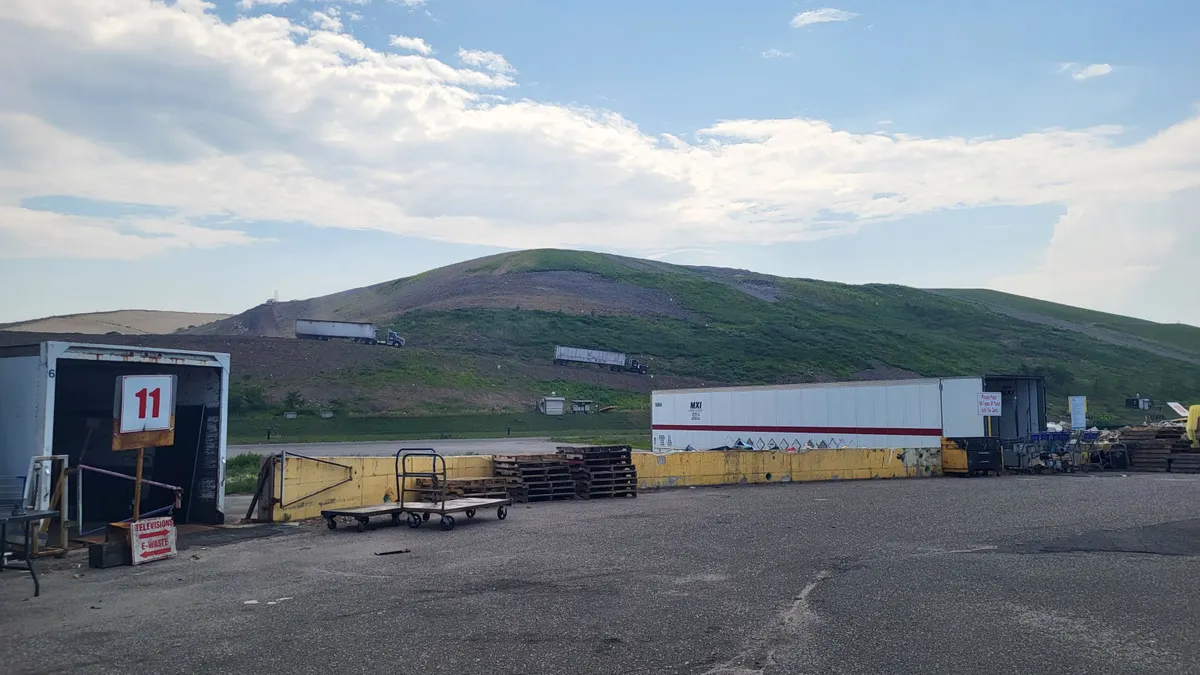
he brothers opened TDS in 1977 as a one-truck operation. Today it has nearly 500 trucks and more than 1,100 employees, one of largest independents in the country. According to court documents, TDS owns and operates a landfill near Creedmoor, a landfill in Alpine, and four transfer stations across the state. It also operates a MRF and has “several large-scale” composting operations, as well as a wild game ranch.
The brothers had a 50/50 ownership of the company until 1984, when Jimmy reduced his stake to 20%, making Bob the majority owner with 80%. The two continued to operate the company together under a letter of understanding that said any major decisions about the company would have to be endorsed by both of them.
Financial falling-out
According to court documents, Bob and Jimmy Gregory's relationship began to fall apart in 2019 after a disagreement over how to handle financial data for the company.
This falling out started when Jimmy began working on his retirement and estate planning process. As part of that process, he shared the company’s financial information with some attorneys and financial advisors, partially to determine how he could leave some shares to his children after his death and start the process of appraising his 20% stake in the company, the documents state. Those advisors signed a privacy agreement, the lawsuit states.
But Bob Gregory considered that move to be a breach of privacy that could hurt the company. According to court filings, he allegedly refused to give Jimmy access to certain financial statements, which Jimmy said he needed to help determine the value of his TDS shares.
In a May 14 interview, Bob Gregory said his concern stemmed from Jimmy and his daughter providing legal documents “to third parties, including the leading investment banking firm that markets the sale of companies such as ours.” He added that Jimmy’s “efforts went far beyond estate planning, even the early stages of marketing the sale of the companies both before and after the quote-unquote estate planning.”
According to the lawsuit, Jimmy had considered selling some of his interests in the TDS companies to Bob or the companies. Bob wanted Jimmy to name a price for his 20%. Jimmy estimated somewhere between $60 million to $72 million range, which he said was “based on limited and outdated information,” the lawsuit alleged. That estimation angered Bob, the lawsuit states.
After that conversation, Bob mostly refused to talk to or share financial information with Jimmy. The lawsuit alleged this was a “pretext” to cut Jimmy off from the company’s operations at large.
After that time, the lawsuit alleges that Jimmy no longer received dividends or monthly distributions even though he was entitled to them. Prior to the falling out, Jimmy “received hundreds of thousands of dollars in distributions each year,” the lawsuit states.
In January 2022, Bob then held a board meeting, where he “voted to remove Jimmy from his positions as a director, manager, and governing person of the various TDS Companies.” Jimmy’s children, Jennifer and Justin, were suspended from their positions.
Bob then appointed himself, his wife and the company’s lawyer to the board, two people the lawsuit alleges would go along with Bob’s decisions.
Bob then allegedly increased his own salary from $300,000 in 2019 to about $2 million in 2022. The salary increase allowed Bob “to take money out of the TDS Companies without paying dividends or distributions that would have to be shared proportionately with Jimmy,” the lawsuit states. The lawsuit argues that these salary increases would have also needed to be approved by Jimmy, according to the brothers’ letter of understanding.
Self-dealing allegations and outside companies
The lawsuit further alleged that sometime in 2020, Bob set up a series of six new companies — not related to TDS and not partially owned by Jimmy— and used at least four of those companies to provide services to TDS.
The lawsuit alleges that Bob did this to reroute TDS revenue to his own businesses, keeping profits for himself and further shutting Jimmy out of the revenue stream because he did not have to pay dividends or make distributions.
Okapi Leasing is one such company mentioned in the lawsuit. The leasing company purchased waste vehicles that it then leased back to TDS. Prior to this deal, TDS bought its own trucks and kept them as assets, the lawsuit said.
Bob also created another company called Okapi Environmental Services, which leased employees and labor services to TDS. The lawsuit alleged this arrangement was similarly set up to reroute TDS revenue to an outside company. “These functions had always been handled by the TDS Companies themselves until this dispute began,” the lawsuit claims.
In 2022, another Bob Gregory company called TxAlloy purchased a TDS scrapyard owned by both brothers. The lawsuit alleges that Bob paid an “improperly determined” liquidation value for that business, allowing him to get a better deal. The property “has not materially changed — it is still operated at the same location — but all the profits now flow to a Bobby-Only Company and then to Bobby personally,” the lawsuit states.
Jury ruling and next steps
In a May 1 decision, the jury said Bob Gregory did not act in good faith as the head of TDS and “usurped corporate opportunities for personal gain.” He also failed to disclose important information about the company, and failed to follow a stock transfer restriction agreement.
In an email, the family of Jimmy Gregory said they are asking for changes to the company’s leadership structure and for a receiver to be put in place.
The trial and the jury’s decisions did not specifically cover that possibility. The trial judge did not comment on whether he might decide to appoint a receiver, but the topic might be discussed at future hearings leading up to the judge’s final decision, according to Sara Clark, a partner at Scott Douglass & McConnico representing Jimmy Gregory.
The judge could decide to award some of the called-for damages to Jimmy Gregory, according to court documents.