The U.S. EPA has published its battery collection best practices report to Congress, which offers specific examples of how states, tribes and local governments are recycling and diverting batteries from disposal.
The report compiles policies and best practices meant to highlight how better collection and recycling practices could boost domestic critical mineral recovery and create jobs. Better recycling initiatives could also help reduce the growing amount of battery-caused fires at waste and recycling facilities, the report states.
The EPA is also working to develop voluntary labeling guidelines, which are meant to help consumers find battery collection locations and better understand battery collection and recycling options.
The EPA has taken a more pointed interest in battery recycling in recent years, in part because of requirements outlined in the the Infrastructure Investment and Jobs Act passed in 2021.
This report is among the EPA’s battery recycling projects mandated under that law, along with a separate voluntary extended producer responsibility framework the EPA is creating to help to guide states.
EPA also has a best practices toolkit, which provides battery collection case studies, how-to guides, tip sheets and webinars. The labeling guidelines the agency is working on are also mandated under the IIJA.
Monitoring and raising recycling rates
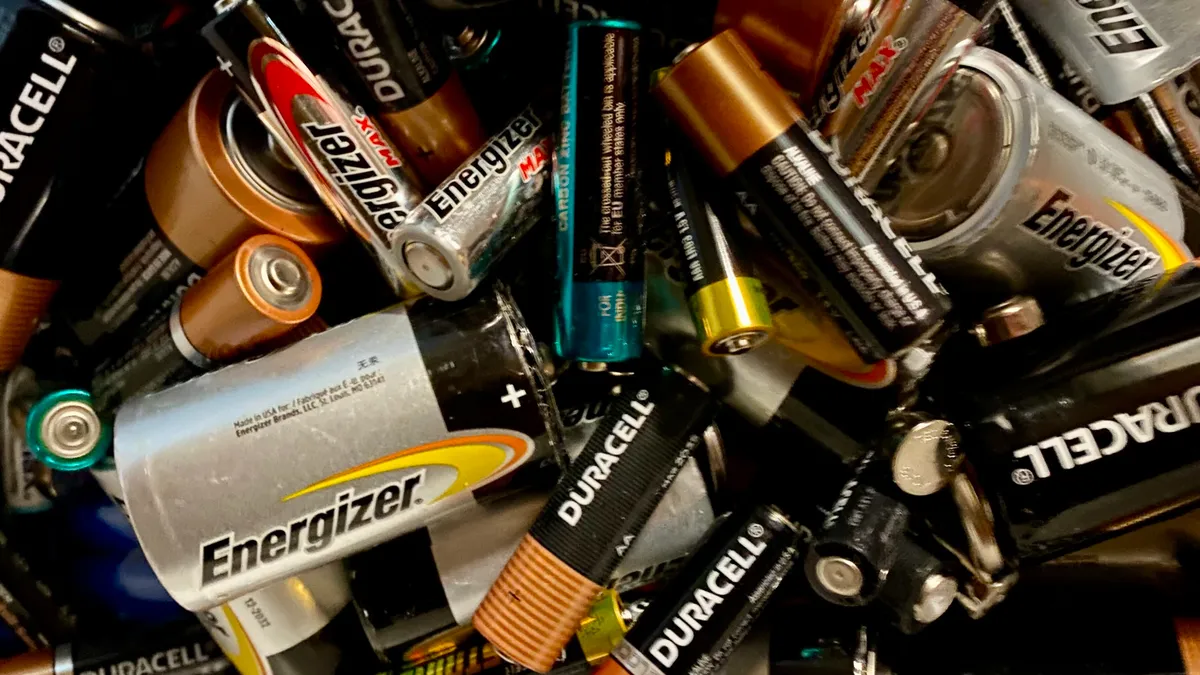
The EPA does not track nationwide recycling rates for all batteries, but notes that the U.S. is grappling with low recycling rates for many kinds. Citing a mix of EPA research and data from battery recyclers, the agency estimates alkaline batteries have about a 4% recycling rate.
Meanwhile, “there is no widely accepted U.S. lithium-ion battery recycling rate, but the current rate is assumed to be low,” the report states.
Lead-acid batteries, commonly used in vehicles, have fared far better. These have achieved an industry-reported 99.3% recycling rate, EPA said. That’s because of a range of federal and state solid waste disposal regulations, plus “a well-established, industry-driven national infrastructure for collecting and managing” these batteries. “Most vehicle batteries are handled by auto repair shops, making the collection and return of large amounts of batteries easier than when batteries are replaced by consumers themselves,” the report said.
EPA sees the success of lead-acid battery programs as a potential model for other battery types, but notes that battery recycling faces well-known hurdles such as consumer confusion and a lack of convenient access to safe collection options.
Fire safety, storage and training
Recyclers and waste facility operators also face safety concerns and problems with removing embedded batteries from products, along with cost and space constraints to install needed equipment or safely store batteries before transporting them to another location.
EPA’s best practices document calls for waste and recycling facilities to develop a written inspection and safety plan as well as a protocol for handling damaged batteries. Training all employees on these plans is another key step, the agency said. Developing relationships with local first responders can also help immediately address fire concerns.
EPA also suggests protocols for safely storing batteries, including finding the right kind of sand or vermiculite-filled boxes or drums and storing the containers away from flammable materials.
EPA also recommends facility operators follow the guidance from a lithium-ion battery management document for MRFs, published in 2020 in a joint effort between the Solid Waste Association of North America, the National Waste & Recycling Association and the Recycled Materials Association.
Testing and implementing policy levers
Policy drivers are another method for states and local governments to curb battery disposal, EPA said.
California’s advanced recovery fee is one example. The fee, added to the price consumers pay for certain electronics or batteries, gets reimbursed to recyclers for collecting and recycling the devices. As of January, the state charges a 1.4% fee for products with non-removable batteries, an update to the existing law that charges a flat rate for specific devices with video displays.
Disposal bans for electronics or batteries, which exist in more than 15 states, also aim to address battery fires and encourage recycling, EPA said. New York’s rechargeable battery disposal ban, for example, requires users to drop off the batteries at a household hazardous waste collection site or a business collection box. Connecticut’s disposal ban for rechargeable batteries calls on local governments to provide collection and recycling programs for residents.
EPR policies are another growing option for states. Ten states and D.C. have passed EPR laws specifically for portable and rechargeable batteries, while 24 states and D.C. have EPR laws for e-waste, the EPA says.
Washington, D.C.’s battery EPR law includes specific collection site requirements meant to make the program accessible by public transportation and represent locations across all eight of the city’s wards. D.C. worked with The Battery Network to develop the producer-funded system, which is free for residents.
Building successful collection programs
EPA also highlighted the less-common practice of curbside recycling for certain batteries, noting that most cities in the U.S. do not offer this service, yet a few select pockets of Oregon have been providing this service for more than 25 years.
Marion County, Oregon, allows residents to recycle some small-format and rechargeable batteries and battery packs by placing them in zip-sealed bags on top of their recycling carts. The county also educates the public on battery recycling practices through “multiple media sources,” EPA added. Clackamas County, Washington County, and the city of Gresham also offer curbside battery collection for recycling.
In Washington, Recology offers a curbside battery recycling option for a $5 per collection pickup fee that residents schedule in advance. Elsewhere in the country, EPA notes that companies like WM and Ridwell also offer pickup services for specific batteries, though options may vary across the country.
Mail-back options are also growing, EPA says. The Battery Network and TerraCycle are two examples of services where consumers can purchase kits for shipping used rechargeable batteries, cell phones and other devices.
Permanent drop-off sites can also help residents looking for reliable options, EPA said. Several tribal governments have had success with permanent sites for small-format batteries, such as the Morongo Band of Mission Indians, which chose a popular tribal-owned bowling alley as a convenient location for its program.
Retail partnerships are another popular way to offer convenience while providing a safe place to collect batteries. The Battery Network has launched this kind of service for medium-format batteries like ones found in power tools, and the EPA says there’s an “increased demand” for both products that use medium-format batteries as well as demand for safe recycling methods for such batteries.
Nonprofit partnerships are another aspect to explore, EPA said. To capture more e-bike batteries, for example, the nonprofit People for Bikes worked with The Battery Network to develop Hungry for Batteries, a program to safely collect and recycle e-bike batteries.
In each case, EPA also underscores the importance of communicating with the public in a clear and concise way — both about the programs themselves and about the dangers of disposing of batteries incorrectly. State and local governments can use a range of different tools such as fact sheets, flyers, videos and social media posts, it said.