As other family-owned companies exit the market, one long-running hauler in New Hampshire is growing through acquisitions and expansions.
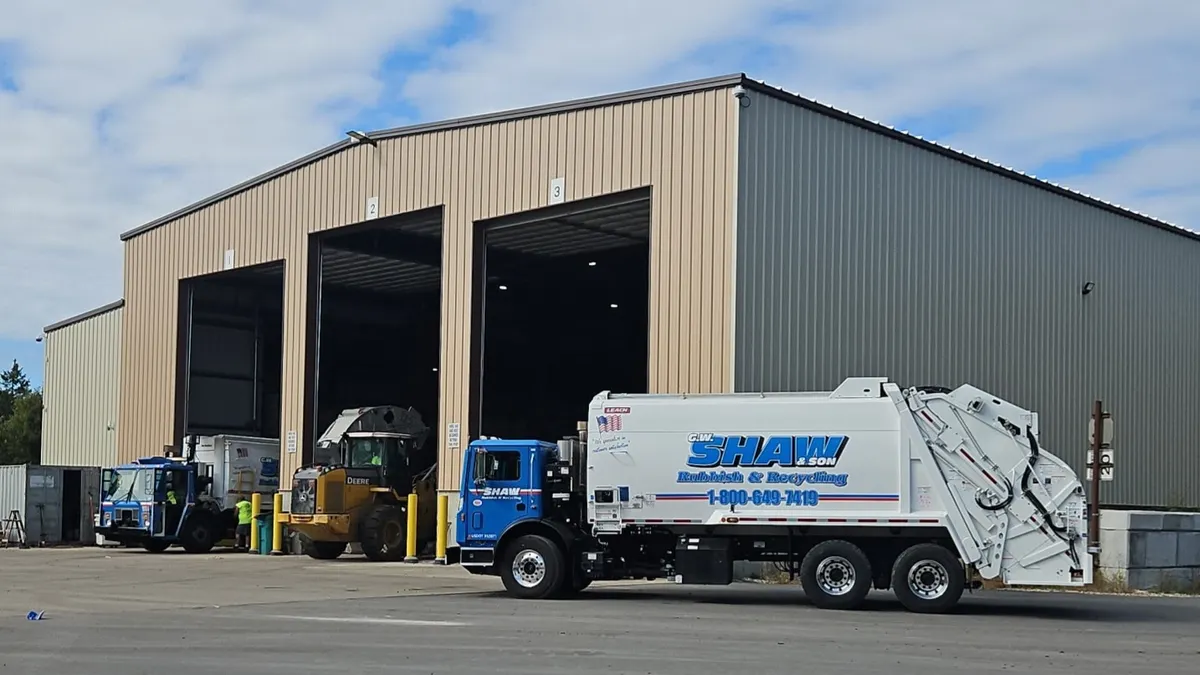
Greenville-based G.W. Shaw & Son provides residential and commercial waste and recycling collection services throughout southern New Hampshire, as well as parts of north and central Massachusetts. The company also provides septic service. Federal records indicate the company operates nearly 70 vehicles, including at least 30 collection vehicles.
“It's hard to compete with the bigger guys price-wise, so we try to make sure we beat their service,” said Ben Shaw, senior operations manager, in an interview. “We try to respond right away. We try to make customers feel like they're not just a number to us, they're more a part of the company.”
His grandfather, Glen Shaw, founded the company in 1968. It’s now run by his parents, Julie and Glen Shaw Jr. Acquisitions have helped the company grow over the years.
This includes the recent purchase of select residential collection work from Sullivan and Son Disposal in the the Massachusetts municipalities of Stow and Boxborough, as well as commercial frontload accounts in Fitchburg, Leominster, and Lunenburg.
Shaw said it was “a bigger reach just because we're not in that area, but they had enough customers where it made sense.”
The company also recently purchased Cane Waste, a small residential hauler operating out of Amherst, New Hampshire, as well as Greenville Recycling, which runs a concrete recycling facility.
Crushed material from the Greenville Recycling facility is sold to local construction companies. G.W. Shaw also recently received approval to accept stumps, clean wood and brush at that facility. The company then turns that material into sawdust or wood chips to use as animal bedding at the family’s farm.
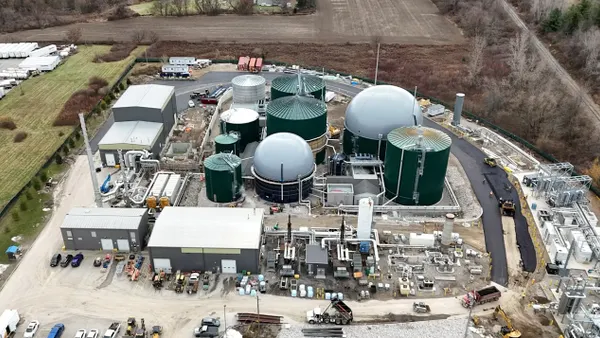
The recycling facility’s proximity to G.W. Shaw’s transfer station in Greenville, New Hampshire, also provides an outlet for clean wood and other materials. The transfer station, operating as Greater Waste Solutions, opened in late 2024. It is permitted to handle approximately 600 tons per day of waste and currently takes about 300. About one-third of that material is exported via rail by another company, with the rest going to area disposal facilities. Some material is also taken to a third-party MRF for recycling, and the site accepts scrap metal.
While G.W. Shaw is based in New Hampshire, it also tracks policies in neighboring Massachusetts. The Bay State’s minimum diversion performance for C&D recycling facilities is a factor that affects regional markets, including for wood. The company is also watching the potential for Massachusetts to institute a ban on residential food waste disposal, following a current policy affecting certain commercial generators.
This has prompted the company to learn more about composting and start selling loam via its farm. Additionally, G.W. Shaw provides commercial organics collection service. A key customer is the Market Basket grocery chain, which has stores from Rhode Island to Maine. Some of the collected material is used for animal feed on the farm.
Another newer growth area is commercial grease and septic tanks, building on the company’s existing residential septic business.
In terms of technology, Shaw said the company is starting to use tablets in trucks for commercial — and some residential — collection accounts. The company has also implemented automated sideload collection for some residential contracts, but not across the board.
“We have a couple contracts where we can use an ASL, but on a residential portion we feel like that's one of our niche markets,” he said, noting that rearload collection can be a differentiator as many other companies push for ASL collection and customers don’t always prefer it.
Asked what he likes about the business, Shaw described a sense of autonomy and pride in “having something with your last name on it,” as well as ongoing variety.
“You're always doing different things. I've picked on the back of a truck, I've driven a truck, I work on trucks in the garage ... I don't sit in the office all day. I'm hardly ever in there,” he said, speaking from along one of the company’s new collection routes in Massachusetts. “So it's very hands on” and “just always something new, always something fun.”