Dive Brief:
- New Hampshire’s new disposal surcharge generated more than $1.2 million during Q1, according to the state’s Department of Environmental Services. The $3.50-per-ton fee was designed in part to disincentivize out-of-state waste imports.
- Local municipalities and solid waste districts can request quarterly reimbursements. Remaining funds will go toward staffing and grant funding costs.
- The agency plans to offer grant funding for organics reduction and recycling projects in 2027 to support a recently enacted food waste disposal ban.
Dive Insight:
The Granite State’s waste and recycling landscape is evolving more than it has in years, thanks to a confluence of state policy and local activism.
New Hampshire also has a new extended producer responsibility program for batteries and may soon have an updated policy for landfill siting.
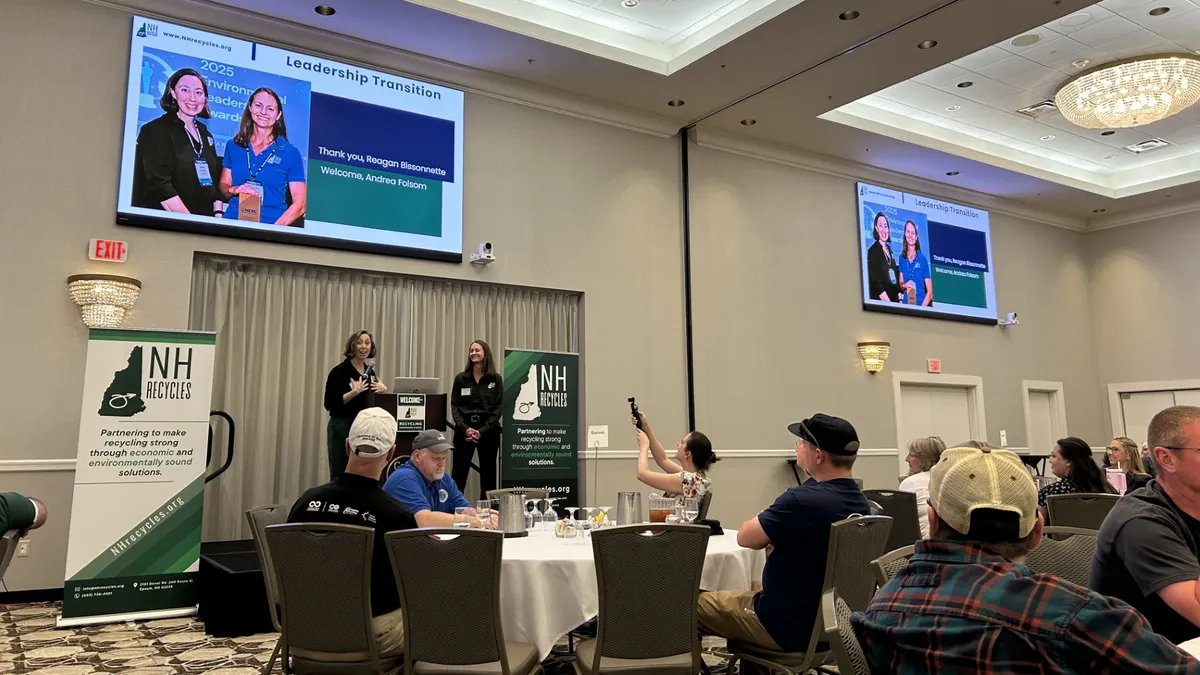
These themes were recently discussed at NH Recycle’s annual conference in Concord, New Hampshire. The May 18 event drew hundreds of attendees, including many local facility operators.
NH Recycles, the oldest cooperative recycling nonprofit in the country, acts as a broker for hundreds of municipalities looking to sell their material. It’s also been working on rural recycling education and safety training via U.S. EPA and Department of Agriculture grants, among other initiatives.
The event also marked the official handoff of the group’s leadership from Reagan Bissonette to new Executive Director Andrea Folsom.
Bissonette also served on the state’s Solid Waste Working Group which was formed in 2021 following a prior legislative study committee. The working group advises on a range of issues, including a 2022 solid waste management plan by DES, at a time when policy continues to change in New Hampshire.
This included the state’s new organics disposal ban, which covers commercial and institutional generators of more than 1 ton per week. The policy excludes any generators located more than 20 miles from an “alternative management facility.”
Jenny Mitchell, a food waste diversion specialist with the agency, said the goal is to start building a reliable feedstock of material that in turn could support more facilities and eventually help reduce costs, including for local governments.
"Basically, more facilities mean more capacity and more potential diversion outlets for communities, which would make it more economically feasible,” she said at the conference.
The agency used its own EPA grant in part to fund the state’s first waste characterization study, which found that organics account for nearly 27% of all MSW. Additional grant funding went to consultant RRS to conduct a food waste generation and infrastructure study, which is expected this month.
Mitchell estimated the state has five processing facilities, largely in its more populated southern area.
Next, DES plans to write regulations and expand education. Mitchell said the upcoming disposal surcharge-funded grants could be used to fund refrigerated trucks for food recovery, equipment for composting facilities and much more. Public and private sector applications will be accepted.
Currently, she said, “we’re not really focusing on enforcement” because the agency wants to let generators adjust. "We know that people are going to need some time, and we're here to help.”
The agency is contracted with consultant CET to provide education and technical assistance with funding from a separate USDA grant.
Despite not being enforced yet, the policy may have already attracted investment. Private equity-backed PurposeEnergy has proposed building an anaerobic digester and depackaging facility in Londonderry.
Andrew Brousseau, a partner and compost manager at Black Earth Compost, proposed an alternate idea during a presentation: He envisions the state someday having nearly a dozen composting facilities. This is based on an estimated 50% participation rate across all New Hampshire households, with each potentially generating about eight pounds of food waste per week.
The approach is based on Black Earth’s current model in neighboring states, such as Massachusetts and Connecticut, which involves various types of operating contracts and land agreements with local governments.
The company currently offers residential service in Keene, New Hampshire, and collects from certain other commercial accounts in the southern part of the state. It doesn’t yet have facilities in the state, but hopes to change that.
“There's about 20,000 acres of vegetable farmland in New Hampshire, and there's about 500,000 acres of farmland in general in New Hampshire, which includes forestry land. So there's plenty of place for that compost to go,” he said.
While there’s clear momentum on some state waste and recycling topics, others have faced political headwinds. Gov. Kelly Ayotte recently vetoed a paint EPR bill, and other landfill-related legislation has hit roadblocks for years.
State. Rep. Nicholas Germana said the paint veto effectively stalled a separate battery EPR bill, HB 1602. But he advised taking a long view on waste policy, citing progress on the landfill debate.
“We collectively — citizens and legislators, Democrats and Republicans — elevated the landfill issue,” he said, citing how it became an issue in the 2024 gubernatorial election. “Sometimes you've got to take two, three, four years of building up a grassroots movement to elevate an issue to put on political pressure.”
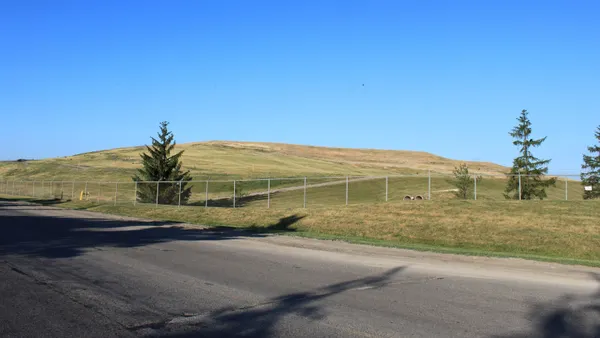
An estimated 40% of the state’s disposal-bound waste comes from out of state, according to DES data. Some sites have received expansion approval, such as WM’s Turnkey Landfill in Rochester, but other projects backed by Casella Waste Systems have struggled to gain support. With a Bethlehem site closing next year, the company pitched a greenfield project in Dalton that’s been contentious.
Last month, legislators passed a bill, HB 707, that will establish a landfill siting committee and require a wider range of factors to be considered in the permit review process. Ayotte, who opposed the Dalton project during her campaign, recently said she will sign HB 707.