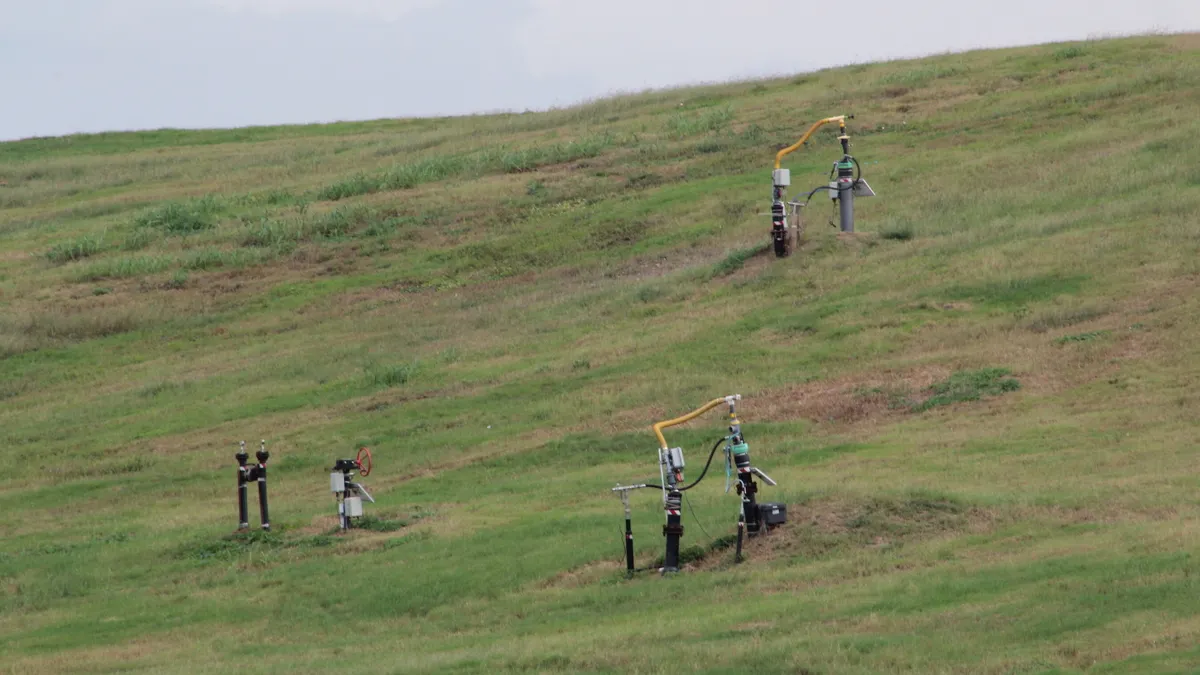
Loci Controls, an automated wellhead tuning vendor that helps landfill operators maximize their gas collection and control systems, is sitting on a decade's worth of operational data. It's turning to artificial intelligence to help operators gain actionable insights from their wells.
The project is an outgrowth of the company's existing WellWatcher platform, where clients have previously had access to large tables of data showing the gas flow rate, pressure and composition for dozens of wells across their landfills.
At the start of their shift, an operator may be scanning those tables to identify possible wells in need of service, but quickly identifying areas of greatest need can be a challenge in a sea of data, said Melinda Sims, Loci's co-founder and director of product development.
Sims and her team trained a large language model — she declined to name which — on anonymized data Loci has collected in order to develop a model that could understand what kinds of measurements merit attention.
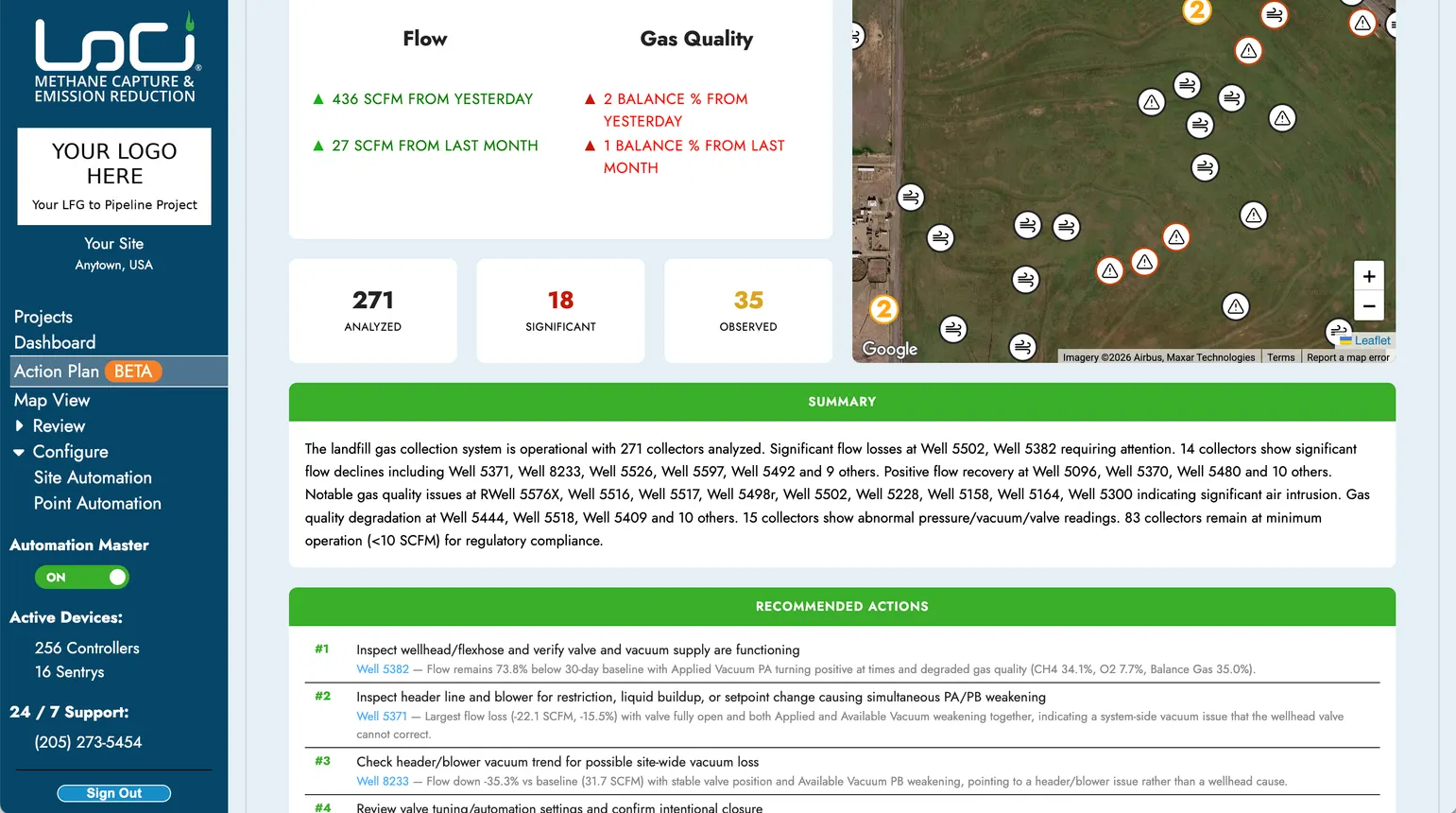
"We have the largest database of real-time measurements of what's happening at a landfill," Sims said. "We're looking to put an extra level of AI smarts on top of that to tease out some things that would have been harder to find otherwise."
The waste and recycling industry has become increasingly open to adoption of AI tools in recent years, as costs to deploy them have come down and use cases become more clear. The largest haulers expect AI routing efficiencies can drive millions of dollars of revenue in annual savings. MRF operators are increasingly adopting machine learning and AI-driven sorting to improve efficiency of their recycling operations in a bid to decrease contamination and boost recovery.
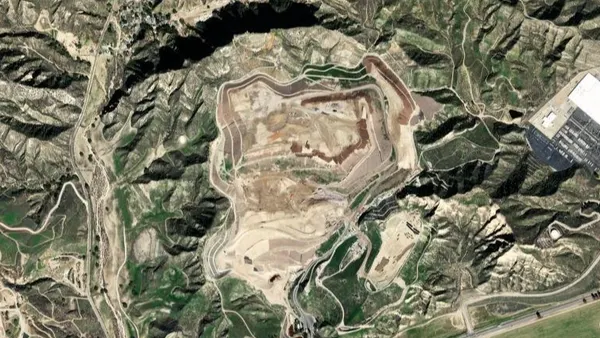
At the same time, there is growing pressure on landfills to get their methane emissions under control. Landfills are among the largest sources of methane emissions in the United States, according to U.S. EPA and external accounts, representing a substantial climate impact. That methane can be captured for use as fuel to limit its negative impact and drive revenue for landfill operators, leading to a growing interest in technology that can maximize the capture of landfill gas for reuse.
While adoption of cutting-edge technology can come with costs, Sims said that's so far been minimal for Loci. The company rolled out its AI-driven features earlier this month on the WellWatcher platform to all of its clients with Loci wellhead monitors and controllers installed. In the future, Sims hopes to expand access to those with just monitors installed.
Sims said the company is also exploring the possibility of a chat agent that can help further troubleshoot systems based on their wellhead data. That could get more expensive, she said.
Loci began piloting its AI-assisted capabilities at a few sites several months ago. Sims said early feedback indicated the features were particularly useful for site operators looking to identify individual inputs that are contributing to an aggregate trend in the overall gas collection system. Operators with renewable natural gas plants in particular are also prime targets for the data, given the particular gas composition constraints they work with to develop a pipeline-quality fuel.
"If you come in and you're an RNG plant operator and you're about to go out of spec and get kicked off your pipeline, then you're highly motivated to figure out where in my well field do I need to pay attention and go check" for issues, Sims said.
Prior to the AI-assisted features' rollout, Loci had touted a 15% increase in methane capture for landfills that use the company's wellhead technology. Sims said the success of the AI features will be measured in plant uptime, as landfills are able to withstand changes in operating conditions due to weather or other variables more effectively.