Dive Brief:
- Mill, which sells data-enabled food waste dehydrators, is ramping up its commercial partnerships through a deal with Compass Group. Beginning in 2027, Compass plans to roll out Mill's new line of commercial-scale machines in dining facilities at corporate campuses, hospitals, universities, stadiums and elsewhere.
- Founded in 2020, Mill began by selling its machines to consumers to handle food waste in home kitchens. But the company has long seen commercial partnerships as key to its growth, and announced its first such deal with Amazon and Whole Foods in December. That deal also included an investment from Amazon’s Climate Pledge Fund.
- The company plans to continue striking similar partnerships in the future, said Harry Tannenbaum, Mill’s president and co-founder. It also entered Google’s AI Futures Fund last month, enabling it to access advanced artificial intelligence capabilities to better characterize and analyze the food that’s processed by the company’s machines.
Dive Insight:
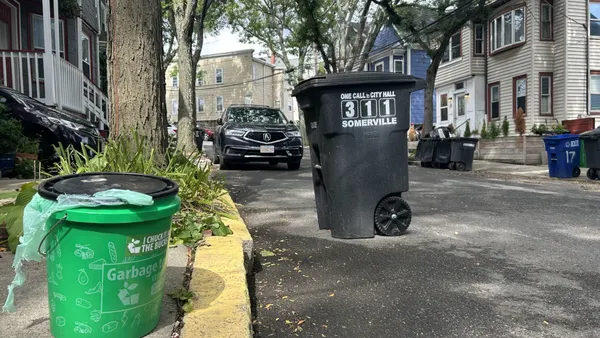
Mill has made several moves to expand the reach of its devices beyond consumers who can afford to spend hundreds of dollars for an at-home food waste processor. The company has struck partnerships with local haulers in Arizona and Washington, D.C., and ran a pilot with a sanitation district and a multifamily building in California to test the use of its devices when they were offered for free to tenants.
But commercial kitchens are another significant piece of the food waste puzzle. Food waste solutions nonprofit Refed estimates about 12.5 million tons or 18% of total wasted food in the United States came from the food service industry in 2024, while another 4 million tons came from grocers and other food retailers. Refed is among several partners that have long tried to capture and redirect that waste, including through regional and national pacts with grocers and other stakeholders along the food supply chain.
Tannenbaum said Mill brings a value proposition to its new commercial partners beyond waste reduction. Through its partnership with Google, it's developing a sophisticated real-time waste characterization system within the Mill Commercial units that can offer chefs and managers insight into where exactly their waste is coming from and whether it could have been saved. That can help them make decisions about portion sizing, production planning and procurement, Tannenbaum said.
“Keeping food out of the landfill and getting to the highest and best use of the material can be an incredibly powerful and impactful thing, both economically and environmentally,” Tannenbaum said. “But even better is not wasting the food in the first place.”
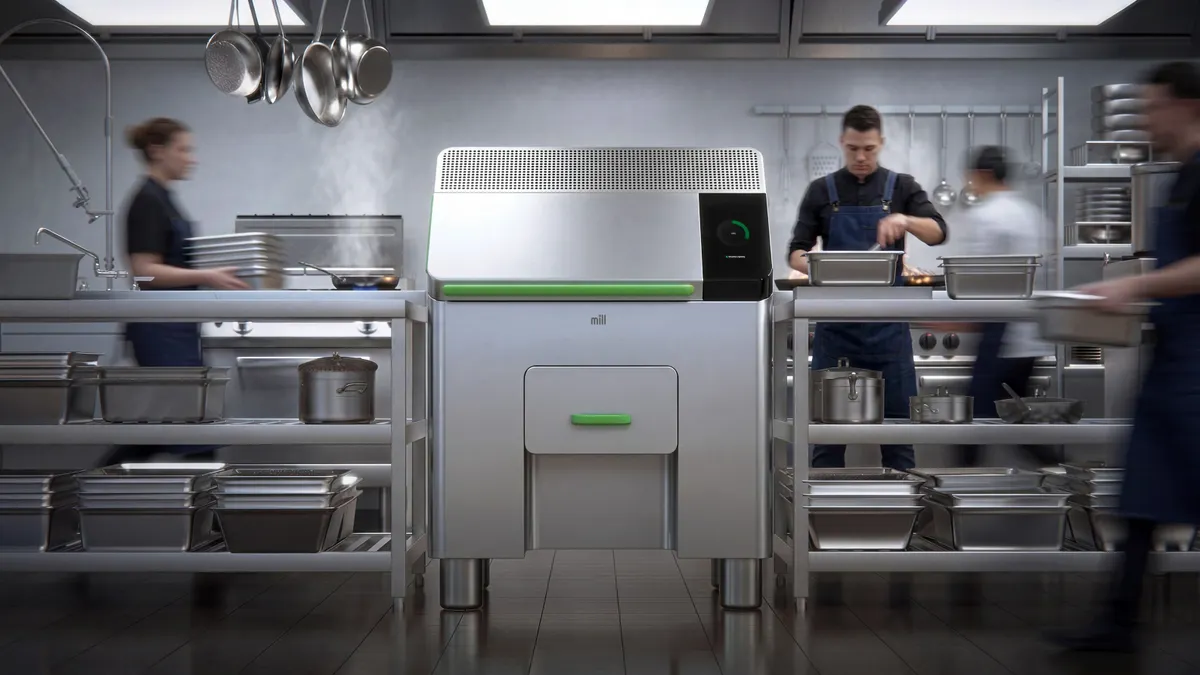
The commercial units can process roughly 200 to 250 pounds of organic material per day and are about the size of a commercial dishwasher. Tannenbaum said the company intentionally designed the units to be able to fit inside a kitchen rather than on a loading dock to allow it to fit into workflows more seamlessly. He also said in some locations partners may deploy multiple machines if there are multiple kitchens.
Mill declined to share the exact number of machines it plans to deploy in 2027 or the tonnage it hopes to process. But Tannenbaum said Compass serves roughly 14 million meals per day across universities, museums, schools, corporate campuses and hospitals, and the operator has committed to reducing food waste 50% by 2030.
“We feel incredibly proud to be working with a partner like Compass, and for their trust in us, and also for our shared commitment towards marching towards really ambitious goals,” Tannenbaum said.
Tannenbaum said the destination of the processed organic material produced in Compass kitchens will depend on location and Compass’s own hauling decisions. Mill has operated a facility in Washington that produces chicken feed from the organic material its machines produce for several years, though its customers also send the material to composters in certain markets. When Mill announced its partnership with Whole Foods in December, it noted plans to use the processed fruit and vegetable scraps generated in back-of-house operations at the grocer to produce chicken feed, which in turn would go toward Whole Foods’ private-label egg suppliers.
Tannenbaum said there’s plenty of new insights the company hopes to glean on food waste generation patterns through its commercial partnerships, and the company is actively looking for additional partners.
“Every day we crack open the inbox, and there's an interesting new partner that’s come in from a totally different part of the economy and food system than we might have thought about previously,” Tannenbaum said. “There’s a lot of value to be tapped in figuring out how we can keep food in the food system, and that really continues to be something that we just obsess over.”