Recycling systems are at yet another crossroads due to commodity market shifts and emerging policy. The Recycling Partnership is trying to evolve with them.
The nonprofit was formed in 2014, via backing from major CPG brands and others, with an initial focus on voluntary investments such as collection carts, education and other infrastructure. CEO Keefe Harrison estimates the group has helped support $650 million in recycling system improvements since then, but said the task has gotten harder lately.
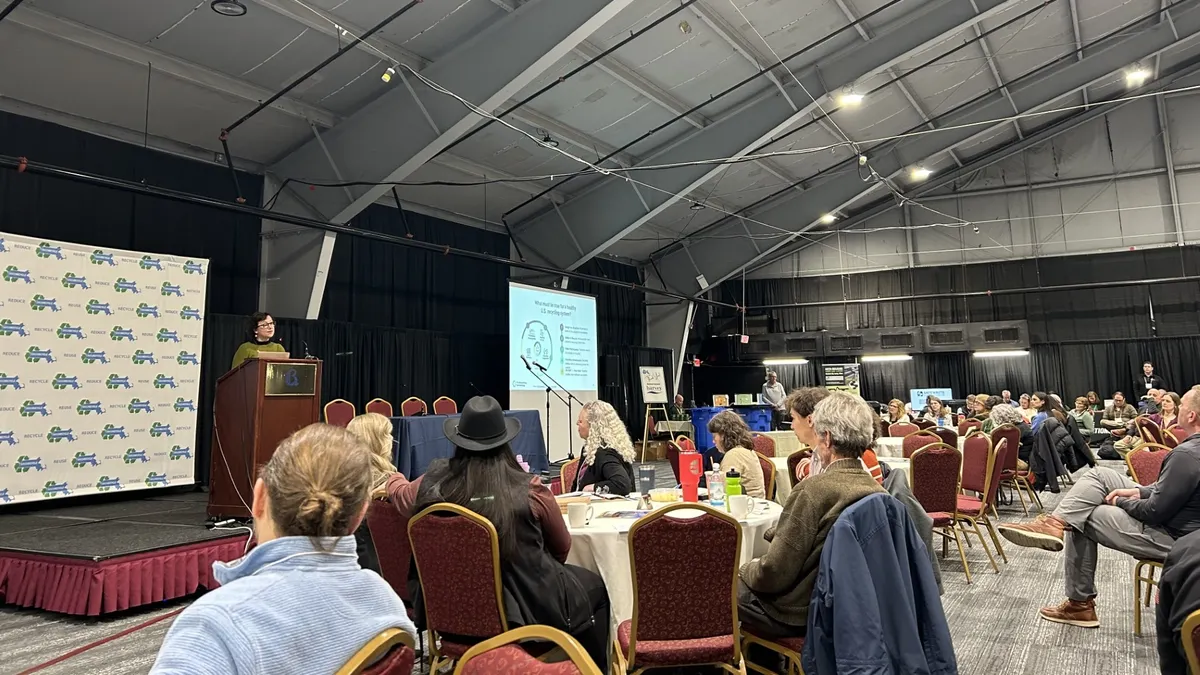
“It’s been an amazing journey, but it’s also lately been really tough,” said Harrison during MassRecycle’s annual conference on March 24 in Boxborough, Massachusetts.
“Since January of last year, we have lost all of our DE&I funding, which brought grants and programs to communities. We have lost our line on federal funding, which targeted work around sustainable packaging and design to meet EPR standards, and it's made an impact on how many grants we can give to communities.”
At the same time, the U.S. has lost an estimated 25% to 30% of its PET recycling capacity. Harrison said that could rise to 40% by the summer without interventions. This comes amid ongoing work by the nonprofit and others to raise awareness at the federal level. This includes advocating for the bipartisan Circle Act, which would add recycling investment credits to the federal tax code, as well as talking about recycling in the context of critical minerals recovery and supply chains.
Meanwhile, extended producer responsibility implementation is playing out at the state level and raising new questions about which materials have viable markets, how to strengthen brand commitments and more. Still, Harrison encouraged the room of local recycling professionals to remain optimistic and keep pushing for their programs.
Waste Dive caught up with Harrison after her keynote for a quick discussion about these topics and more.
The following interview has been edited for brevity and clarity.
WASTE DIVE: A lot has changed since your group launched 12 years ago. What is different about what funders are looking for now versus when you started, given all of the policy changes?
KEEFE HARRISON: So when we started, policy wasn't anything that we could talk about at all.
We worked really hard, and it was like the four- or five-year mark where we were celebrating all our wins, and we were explaining that we'd rolled out all these carts and everybody's patting themselves on the back. And I said, “if we keep it up, we will make sure that every person in this country can recycle in no less than 150 years.” And everybody was like, “oh, okay, so policy.”
So we worked really hard for the EPR policy, knowing that it would change us. We started in a voluntary landscape. So what happens when policy passes?
In that time, we've also worked to help stand up [Circular Action Alliance] and to be their partner in how they're designing their work. And so we see an evolution. Where we are right now is companies are definitely looking at the price of EPR — it's a big one for many of them — and wondering what happens outside of that.
We're trying to keep up the momentum to make sure that non-EPR states aren't forgotten and lost. But it's really hard in this economy right now. We do not have the same commitment to ESG. We do not have the same federal push. We do not have the [United Nations] global plastics treaty. We don't have the momentum. So it's a hard time to be a nonprofit.
What does that look like in the non-EPR states at the local level? New Orleans comes to mind, where the city may not accept a recycling grant due to overall program costs, and budget challenges are happening everywhere. Does that help the argument to say we need more funding in these voluntary states, or does that complicate the picture if cities say they can’t even accept it right now?
There's no one answer. But when I testified in front of Congress last year, what I heard were red and blue states that were really interested in what recycling means. Because they were concerned about plastics and human health. They were concerned about domestic supply chains and supply chain resiliency, competitiveness against China. And then they were really concerned about, how is my community going to pay for this?
I was heartened to hear that. What we spend a lot of time talking about is EPR is critical to helping communities pay for their recycling program, but EPR is a supply mechanism. It gets the recyclables into the system. It doesn't ensure that old stuff turns to new stuff. So we need the parallel demand ones, which means requirements around recycled content usage.
Thinking about the supply chain and the PCR issue, recyclers have been saying for years they could sell more material but brands aren’t taking it. What more do you think converters and their CPG customers could and should be doing right now?
From a packaging point of view, we need to make sure that the PET markets and recyclability in this country stay solvent and healthy. I think that companies should be very concerned around supply chain resiliency. The CEOs that I have talked to are concerned about supply chain resiliency. That's a pressure for cost. We are flooded with Asian imported material that has a higher carbon footprint.
So companies that are still measuring their carbon intake are concerned about that, but it's not as simple as just cost.
The message that I'm bringing back to packaging companies and consumer goods companies is around long-term supply chain resiliency. If we lose our U.S. recyclers, what does that mean for the future of how we will be able to produce our goods? I think that's at odds with the challenges that many companies are feeling around the economy, pressure that the consumer is feeling and concern about making prices that they can afford.
So there's a tension here. I think from a recycler point of view there's also a quality issue. We need to make sure that the recycled content meets the quality specs that the packaging companies need. The technology to do that is there. It's a cost issue. If we've already got a price disparity between virgin or imported material and North American-sourced recycled content there's not a margin to really adjust the quality.
We've got some work to do, but the best thing we could do to drive that forward is to see long-term purchase supply agreements from companies so that the investment in that technology and in that supply chain can really deliver.
We’ve seen some of the state PCR laws haven't necessarily had the desired effect of boosting domestic markets. Is it a matter of rethinking some of these laws, or hoping the market corrects itself?
We're thinking about it in the short term and long term. If we look to Europe, their EPR alone did not solve for the whole solution. [It was] missing a design for recycling and a PCR content component to make sure that the demand pull was there.
So I think looking at how EPR and recycled content use are married together is a viable solution, but that is years away. What we need are corporate commitments around use of material. Many of the companies that I look to are still working on measuring their carbon use and their climate impacts. They may not be talking about it right now, but they're still concerned about it. And so I think that's important for us to understand that isn't all gone.
EPR funding will start to help scale a lot of collection and processing infrastructure in the coming years. What opportunities do you see to capture new packaging formats that aren’t widely recycled versus increasing volumes of existing formats?
It’s going to be a lot easier for the existing formats.
A year ago, I wouldn't have believed that we would be talking about PET markets in this country. That is mind-blowing to me. So right now, I want to make sure that PET markets hold. Because that PET is critical for a MRF, for how they make their economics work. Because if PET bottles — one of the most iconically recycled things — are not recycled, what does that do for public trust? Then from a marketplace perspective, PET recycling is critical to the way that other materials get recycled too.
What we're seeing in EPR states is that there is a lot of work to expand film and flexible recycling, as an example. We have an exercise called CalFFlex and it has mapped out what must be true to deliver the standards in SB 54 and then do a plan to see what must happen.
The biggest challenge is the end markets. There's not enough buyers of that material, and the specs on quality are not there. So I think people who are working hard — and we're one of them — to make film and flex more recyclable have an uphill battle because of the end market piece. So before we can just say, “don't worry, there will be a new market for this someday,” I think we have to look at the realities of how challenging it is for existing materials, like PET bottles.
If EPR is successful in getting more film and flexibles collected, but there's not an end market to make sure that old stuff turns to new stuff, then we've just got a glut of material that sits around in bunkers waiting for some home. That's not really recycled, that's just collected.
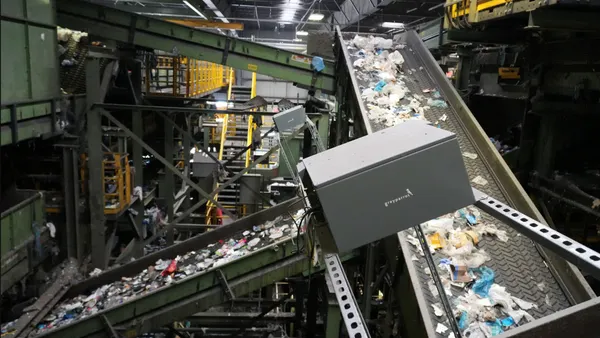
The Partnership was initially known for supporting “oops” tags and manual cart checks to help reduce recycling contamination. AI-enabled technology has changed a lot since then, including cameras inside trucks. What opportunity do you see for that to replace manual sorting and improve education?
We've been doing capture rate studies for more than 10 years now, which means we measure all the stuff in a trash can and all the stuff in the recycling can, and then that gives us a really clear profile of the shift of packaging types.
AI technology can help us reduce the human labor and improve the safety, but it has its challenges too.
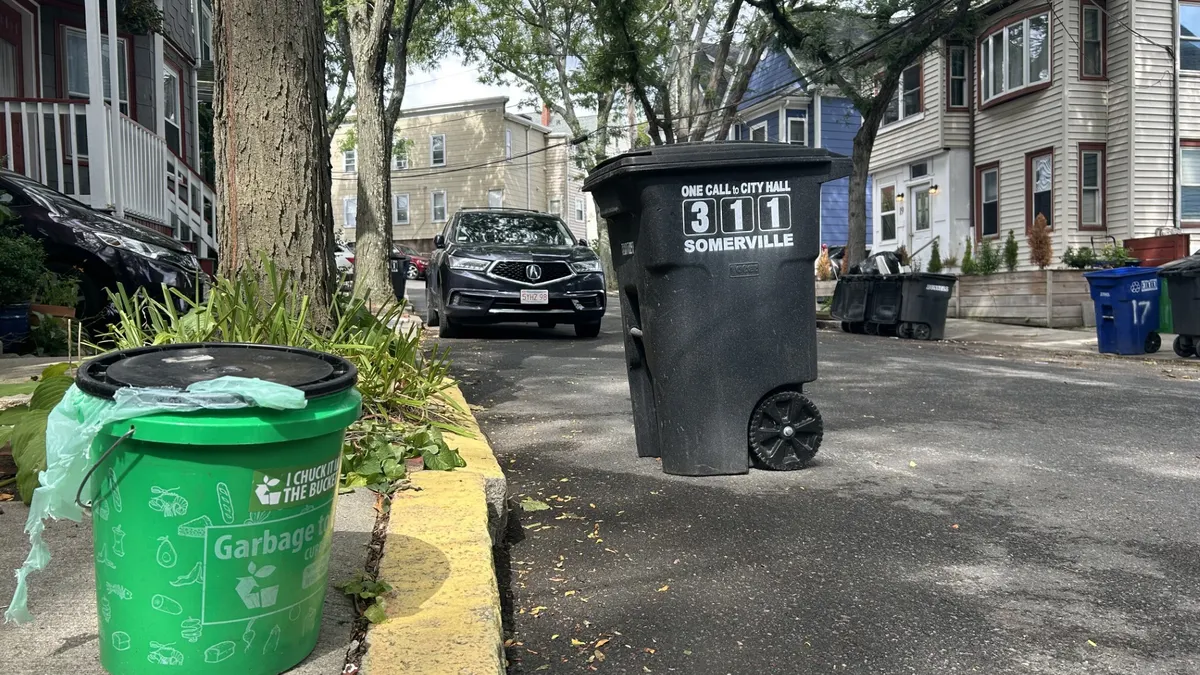
Here's a way that I love its application. We’re helping Providence, Rhode Island — my hometown — roll out a new recycling program. In it we will be able to use cameras in the trucks to identify households that are doing a great job recycling versus the ones that are having a harder time, and then target those oops tags for the ones that are having the harder time.
So that means that the city workers don't have to go house to house. They can use a technology to identify the ones who are having the harder challenge and direct their energy to those households. I think that's a really good use of effort.