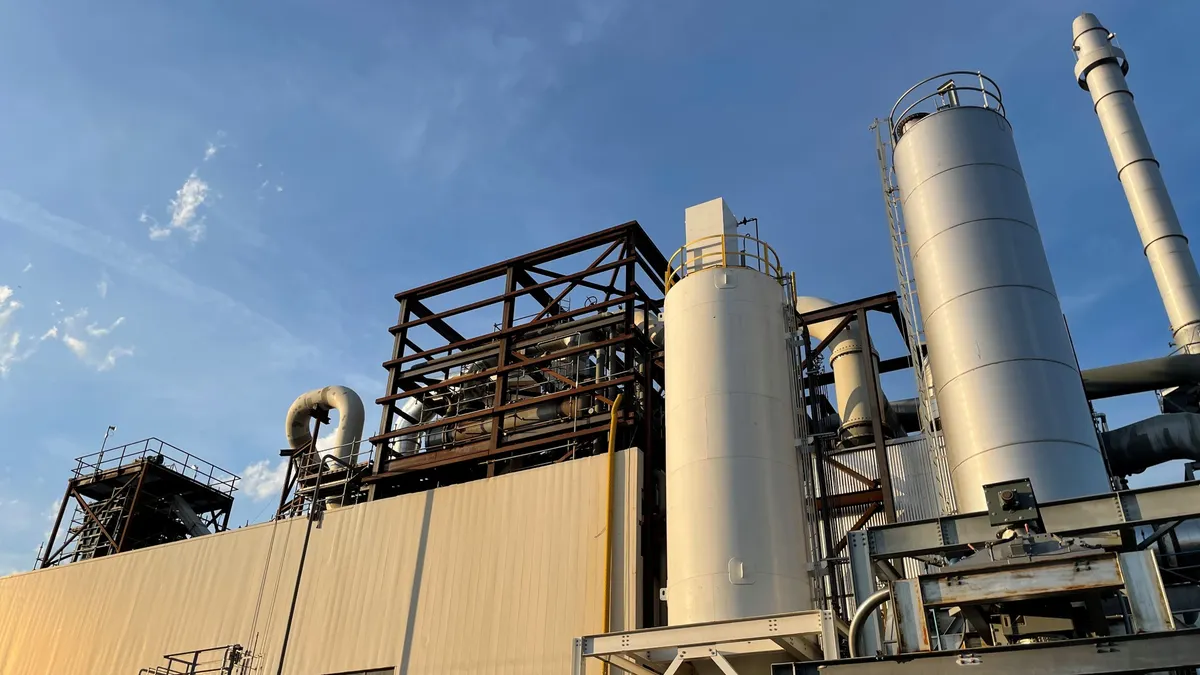
Aries Clean Technologies is looking for a fresh start thanks to a new infusion of capital.
Last month, lead investor Spring Lane Capital announced it would purchase two bond series issued by Aries. The announcement gave Aries sufficient runway to resume payments on two newer bond series and move ahead with a restart of the company's first facility.
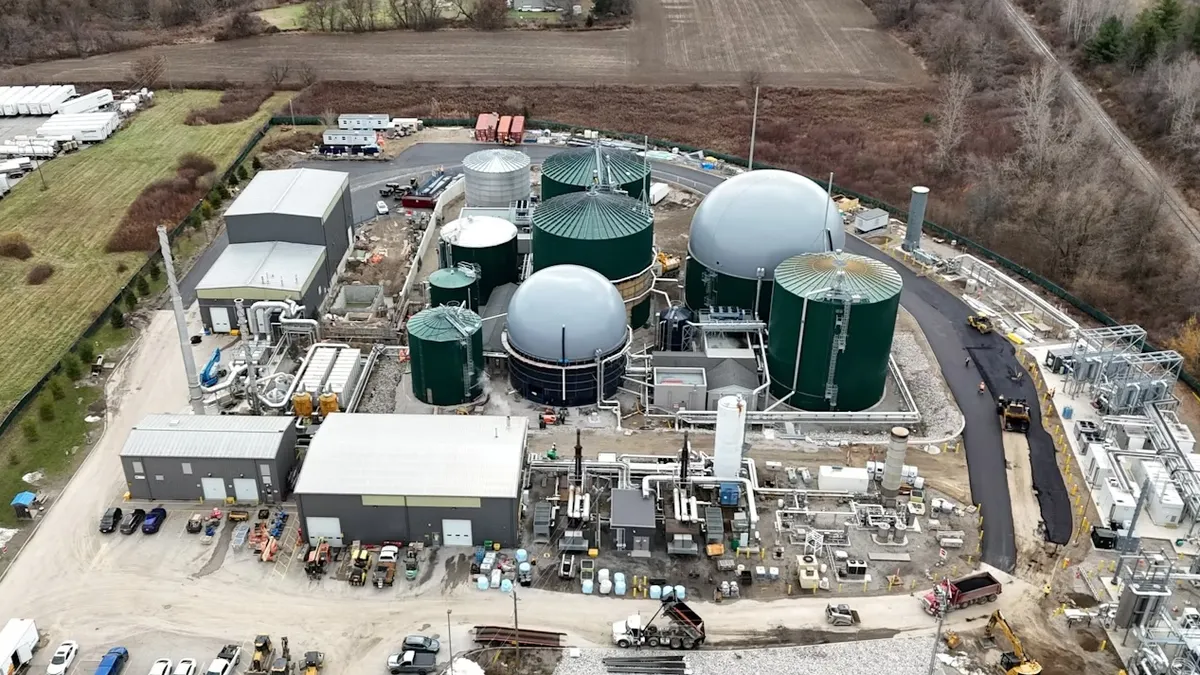
Aries, which built its first biosolids gasification facility in Linden, New Jersey and plans to build a second in Maine, has gone through a transition since last year. It idled its only plant in November after failing to keep it operating consistently since it first began operations in 2024.
And last month, former CEO Jon Cozens transitioned to a role as strategic advisor, with senior vice president of operations Kari Mueller stepping in to take the top position. She now plans to lead the company as it moves toward construction on its new plant in Sanford, Maine.
"These facilities take a while to build, and you have to be very, very attention-to-detail focused,” Mueller said. "This whole job is to execute."
Lessons from New Jersey
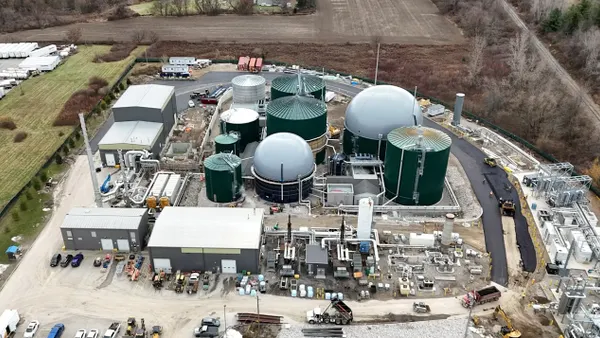
Aries began construction on its Linden plant in 2019. The project was designed to process 130,000 tons of biosolids annually from the region. It was designed to run with two biosolids dryers and a gasification system, producing biochar as an output.
The system began operating five years later, but the company repeatedly ran into issues with equipment that needed to come offline, according to executives. The trouble centered mostly on the facility's dryers — if one unit needed to come offline for maintenance, the entire facility had to shut down, said Jason Dana, Aries' vice president of technology.
He said the Linden plant worked well as a demonstration of Aries' process. But moving forward, the company plans to install a third dryer at Linden and all future facilities, plus intermediate storage after the biosolids drying process to ensure redundancy and minimize downtime.
"When it came to commercial operation and profitability, it just wasn't where it needed to be," Dana said. "The dryer is the primary area that we're looking to improve upon."
The company also faced local pushback in 2022 when it attempted to build a second facility in Newark. It eventually abandoned those plans, which was celebrated by local advocates who were fearful of added air emissions from the facility and trucks bringing in feedstock.
Aries executives said the decision to move on from that site was motivated mostly by size constraints. Once the company realized it needed at least three dryers to run its plants efficiently, the site it had been looking at in Newark no longer seemed big enough. Aries explored another site in Taunton, Massachusetts, but later abandoned it for similar reasons.
Second facility in Maine
Aries landed on Sanford as the best location for the second facility for multiple reasons, according to company executives. It was big enough to accommodate the new expanded facility design, but it also served a state looking for solutions for its biosolids.
Maine has some of the most restrictive biosolids disposal rules in the nation. The state banned land application of the material in 2022 after concerns grew about contamination from per- and polyfluoroalkyl substances on farmland where biosolids were used as fertilizer. That led to significant increases in disposal costs as more biosolids were routed to landfills both in the state and in other states and Canada.
Mark Lyons, Aries’ senior director of business development, said Sanford currently sends its biosolids up to 150 miles away. While the company has faced tough questions from nearby residents, community leaders have been broadly supportive of Aries' project, Lyons said. He also noted the proposed site has several advantages for Aries, including underlying water, sewer and power infrastructure and good truck access.
"The city is aware of the biosolids disposal problem. They're very encouraged by our PFAS destruction capabilities, and they're ... looking for a new technology that can safely manage biosolids, reduce volume, create value-added products, and destroy PFAS," Lyons said.
Aries hopes to bring the site online by the end of 2028, though it still has permitting hurdles to get through. Mueller said the company began the process two years ago, before the issues at Linden became apparent. But it's always been the company's goal to expand, and it now sees a clear path to move forward.
“We expect Linden to come online shortly after Sanford. We're still working on that schedule with our engineering to understand it,” Mueller said. “Did we set out to do it this way? No. Has it worked out to be this way? Yes.”