Dive Brief:
- Battery recycling initiatives from Princeton NuEnergy and Nth Cycle are among seven projects receiving grants from the U.S. Department of Energy. The department announced up to $500 million for projects meant to boost critical mineral processing and recycling capacity last week.
- Princeton NuEnergy, a lithium-ion battery recycling and cathode manufacturing company, will receive up to $50 million to help build a demonstration facility in Georgia to “recover and rejuvenate” nickel from cathode material in battery manufacturing scrap.
- Nth Cycle, a critical minerals refining company, was awarded up to $100 million. It plans to build a commercial-scale facility to refine up to 24,000 metric tons of black mass a year from end‑of‑life lithium‑ion batteries and manufacturing scrap.
Dive Insight:
The federal government continues to dial up attempts to build domestic supply chains for critical materials, mostly to reduce reliance on overseas sources and strengthen manufacturing for energy infrastructure.
The Trump Administration further accelerated that effort when it announced a one-year ban on the export of black mass, which is created from shredding spent lithium-ion batteries and contains a mix of critical minerals such as lithium, cobalt, nickel and others. That ban goes into effect August 27.
The DOE has been a notable source of battery recycling funding for lithium and other critical minerals projects in the last few years. Its Battery Manufacturing and Recycling Grants Program is funded by the Infrastructure Investment and Jobs Act passed during the Biden Administration, with the first funding round announced in 2022. The latest grant announcement is the third round.
Yet the DOE canceled more than $700 million in program grant awards last year, saying certain projects had missed milestones or wouldn't advance the nation’s energy needs. American Battery Technology Co.’s $57 million grant to build a lithium refinery in Nevada, awarded in 2022, was among those canceled. In June, the DOE reinstated that five-year grant.
The new round of DOE funding focuses on infrastructure such as demonstration projects, retrofits and construction of commercial-scale facilities.
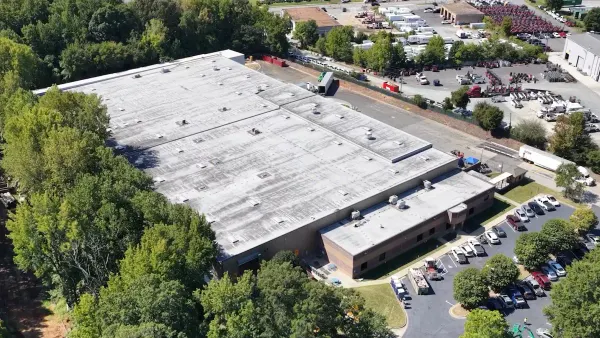
Princeton NuEnergy plans to use the DOE grant to support construction of a $110 million facility in Commerce, Georgia. The closed-loop facility will process lithium-ion battery scrap to recover cathode active material, which can reduce the cost of manufacturing new batteries by about 45% compared to using virgin material, the company said in a news release. The facility is expected to be built alongside battery manufacturing operations.
"Direct recycling allows us to retain more of the value already engineered into cathode materials rather than breaking them down and rebuilding them from their constituent elements," said Stephen Snyder, chief strategy officer, in a statement.
The company also has an advanced black mass recycling production facility in South Carolina, which became operational last year with support in part from a previous $12 million DOE grant in 2022.
Nth Cycle envisions its planned black mass refinery will produce high‑purity metals and battery‑grade materials for end uses like artificial intelligence data centers and electric grid storage, along with transportation and military uses. It uses what it describes as an “electroextraction platform” to refine the material.
The company says the facility will open somewhere in the Southeast by 2029 but has not announced an exact location. It also has a facility in Fairfield, Ohio, which began operations in 2024.
Nth Cycle sees its planned facility as a way to address bottlenecks for domestic critical minerals refining capacity, especially in the wake of the upcoming black mass export ban.
“The Trump Administration has recognized that keeping recoverable critical minerals in the United States is a matter of national security. But without refining capacity, those resources can’t be used for new manufacturing,” said Megan O’Connor, Nth Cycle’s co-founder and CEO, in a statement. “Being selected by the DOE to fill this gap validates the role we play to onshore one of the most consequential supply chains of our time.”
Other recipients of this round of DOE grants include Arcanum Ventures, Elevated Materials and Coreshell Technologies Incorporated, Jervois and Lilac Solutions.