Dive Brief:
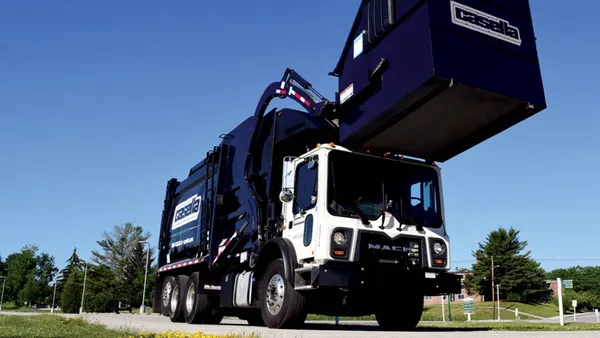
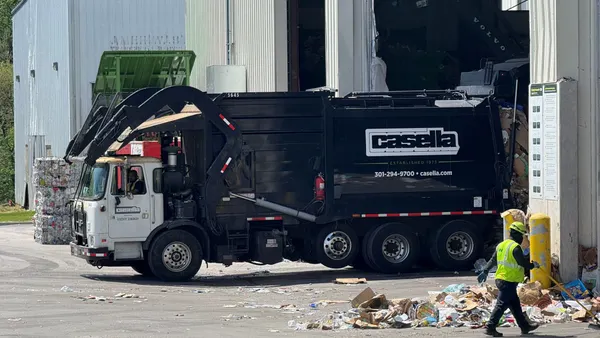
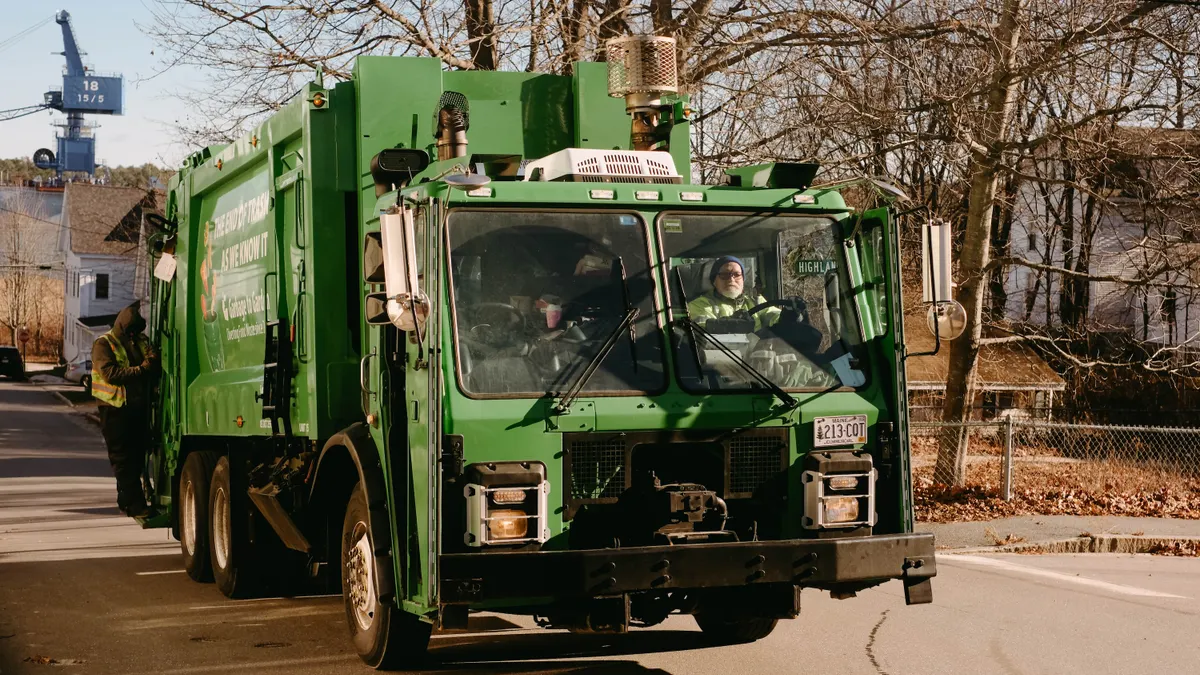
- Garbage to Garden recently won its second residential waste and recycling contract over Casella Waste Systems, marking a shift in its initial strategy as a dedicated organics recycler.
- Garbage to Garden will begin servicing the town of Scarborough, Maine, on July 1. Existing waste and recycling collection service will continue via automated sideloaders, with material going to nonprofit Ecomaine in Portland.
- Residents can now also opt in for organics collection service, which will go to Garbage to Garden’s compost site in Windham. This is also the case in Bath, where the company started its first full-service hauling contract last year.
Dive Insight:
Portland-based Garbage to Garden was founded in 2012. It has since grown to service nearly 50,000 households in Maine and Massachusetts, including organics collection contracts in the Boston area.
“Garbage to Garden was founded to make composting the way of life, to make composting accessible, easy, rewarding, and to really be a municipal-scale solution,” said President Tyler Frank, the company’s founder, in an interview. “We're as much a behavior change company as a hauling company, so that's how I view our strategic shift into trash and recycling. Organics is the next big move to improve recycling rates.”
While Garbage to Garden offers subscription organics service in multiple Maine communities, Frank said the pace of adoption has been slower than he’d like in the state.
“We're really ready to scale up a lot in this regard in Maine. I think we wish it looked more like Massachusetts, like there was already this push to make municipal food waste programs happen. But it will get there.”
Maine’s organics disposal ban for large generators is newer and enforcement won’t kick in until 2030. Massachusetts’ organics disposal ban has been in effect for years and the state is now considering a potential residential requirement.
Garbage to Garden helped launch Boston’s organics program in 2022, which has now grown to more than 25,000 households. This was initially a joint venture with Save That Stuff until it exited the contract upon selling to Casella in 2025. Garbage to Garden has also expanded in the Boston metro area with other programs, and views Massachusetts as a growth area, but Frank said new opportunities are “just not happening fast enough for us” in the area.
The company had already been considering an expansion of services in Maine prior to the Bath contract, in part to stay competitive if municipalities put out combined bids for waste, recycling and organics collection.
The Bath opportunity came as some local officials were resistant to Casella’s regional move to automated sideload service. Garbage to Garden already offered subscription organics service in the town and agreed to put in a bid to continue rearload service.
Frank said it’s too early to have full data about improved diversion for outcomes for Bath, but reported a 40% overall recycling rate for May.
The company had already been considering offering organics service in Scarborough, but had limited bandwidth due in part to expansions in Massachusetts. Now, it can send mailers out to residents about the new contract and organics all at once.
According to the company, Scarborough’s recycling rate was 25% in 2025. It sees potential to increase that to more than 50% with organics service and “more direct feedback to residents.” This could include targeted household education using cameras in trucks and other methods.
“Garbage to Garden has established itself in Northern New England through its compost collection programs, and after extensive due diligence, the town was confident in the company’s ability to innovate and scale its operations,” said Tom Hall, Scarborough town manager, in a statement. “We expect other municipalities will be watching closely.”
While WM is also in the market, Casella is the predominant player for municipal collection contracts in southern Maine.
“Southern Maine continues to be an important market for Casella, and we remain focused on providing reliable service and the most comprehensive resource management solutions available to our customers and communities throughout the region,” said Jeff Weld, Casella’s vice president of communications, via email.
Ecomaine currently services more than 70 municipalities in the region, which levels the playing field for post-collection. Frank said he aims to compete on pricing and intentionally skipped the inclusion of a fuel surcharge on the Scarborough bid.
The company is purchasing three automated sideloaders and bringing in new drivers for Scarborough. It also has a CDL training program and plans to begin training internal candidates for ASL work. Service is run from the company’s Portland location, which it may outgrow if more contracts are won in the future. Garbage to Garden hasn’t needed outside investment yet, but that may change.
“The way that I built the business was really low and slow. I think that we have been underleveraged, our debt to EBITDA is very low, so we're also established well enough that lending is a lot easier from an underwriting standpoint,” said Frank, adding that “we're anticipating raising money at some point.”