The Maryland Senate voted 42-0 on Monday to pass Senate Bill 599, the On-Farm Organics Diversion and Recycling Grant Program.
The Maryland House passed its own version of the bill on March 13. The chambers are both expected to take a final vote and send the bill to Gov. Wes Moore's desk before the state's legislative session adjourns on April 13.
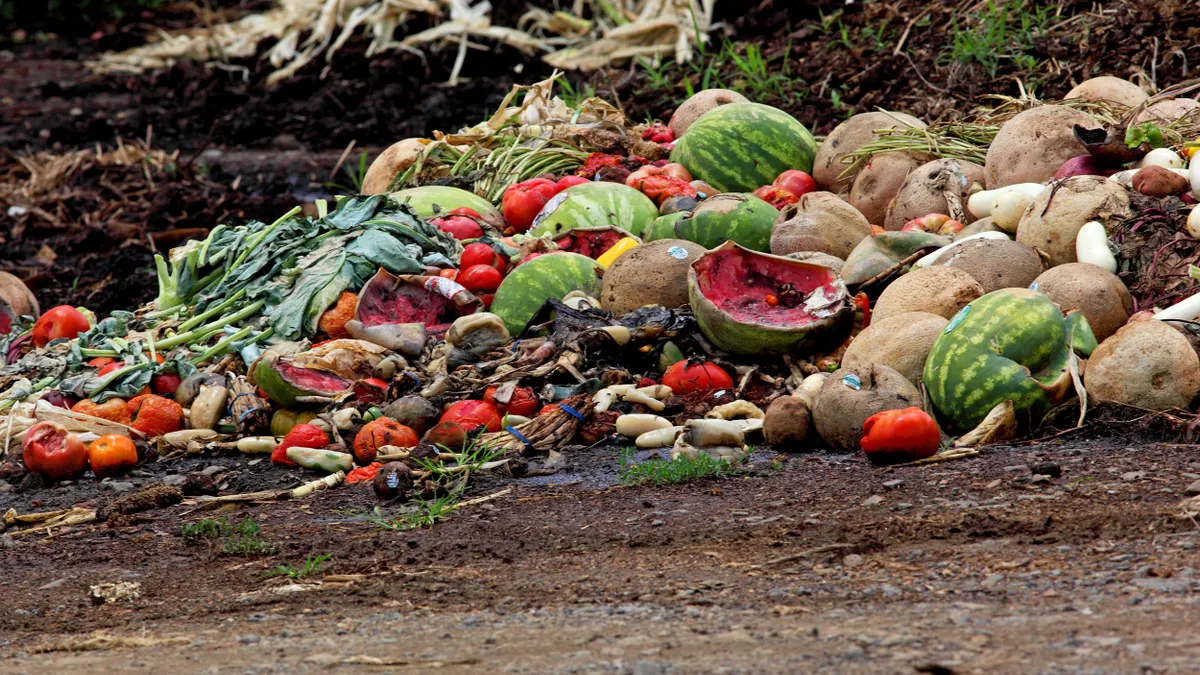
The bills create a $250,000 annual grant program to promote “on-farm organics recycling and compost use, wasted food prevention, and food rescue,” per the bill text. The On-Farm Organics Diversion and Recycling Grant Program would begin operating July 1, 2028.
Eligible grant recipients would include farmers, nonprofits, higher education institutions and soil conservation districts. The bill instructs Maryland's Department of the Environment to prioritize projects that plan to produce minimally contaminated compost, specifically by processing source-separated organic waste and not using depackagers.
Prior versions of the bill included a Wasted Food Reduction and Diversion Grant Program, which would have supported a broader range of food waste reduction and diversion strategies, as well as projects that transitioned from single-use to reusable food service ware.
The bills received broadly favorable testimony during committee hearings, including from environmental groups like the Maryland Sierra Club as well as from the Maryland Association of Counties and Maryland Retailers Alliance.
Sophia Jones, associate director for policy and advocacy at the Institute for Local Self-Reliance, released a statement on Monday praising the Senate for passing the bill. She also urged lawmakers to consider making schools and local governments eligible for the grants.
“Maryland is home to more than 12,000 farms, including urban farms, representing a clear opportunity to scale up solutions that keep wasted food out of landfills,” Jones said. “This grant program will help make wasted food reduction and composting more affordable and accessible to farmers, resulting in greater local food security, sustainable green jobs, and climate resiliency."
Proponents of food waste reduction continue to push legislation at the state level to enhance grant programs and other supportive policies. The Maryland bills build on previous efforts: In 2023, the state eased restrictions for on-farm composting. Maryland also enacted a food waste diversion requirement in 2021 that applies to businesses that generate at least one ton of food residuals per week.
Food waste reduction advocates across the country have shifted their language over the last year to emphasize the economic benefits of reuse in response to shifting public priorities.
Proponents have also long noted that wasted food and organics are a significant contributor to greenhouse gas emissions, especially once the material winds up in a landfill. Maryland's landfills emitted more than 3 million metric tons of carbon dioxide equivalent in 2023, according to advocacy group Full Circle Future.
“Burying food waste in landfills is bad for people, our planet, and our wallets,” Lee Helfend, director of campaign strategy at Full Circle Future, said in a statement. “The Maryland legislature has taken an important step toward breaking a harmful and inefficient cycle and building a waste management system that works for everyone.”