Dive Brief:
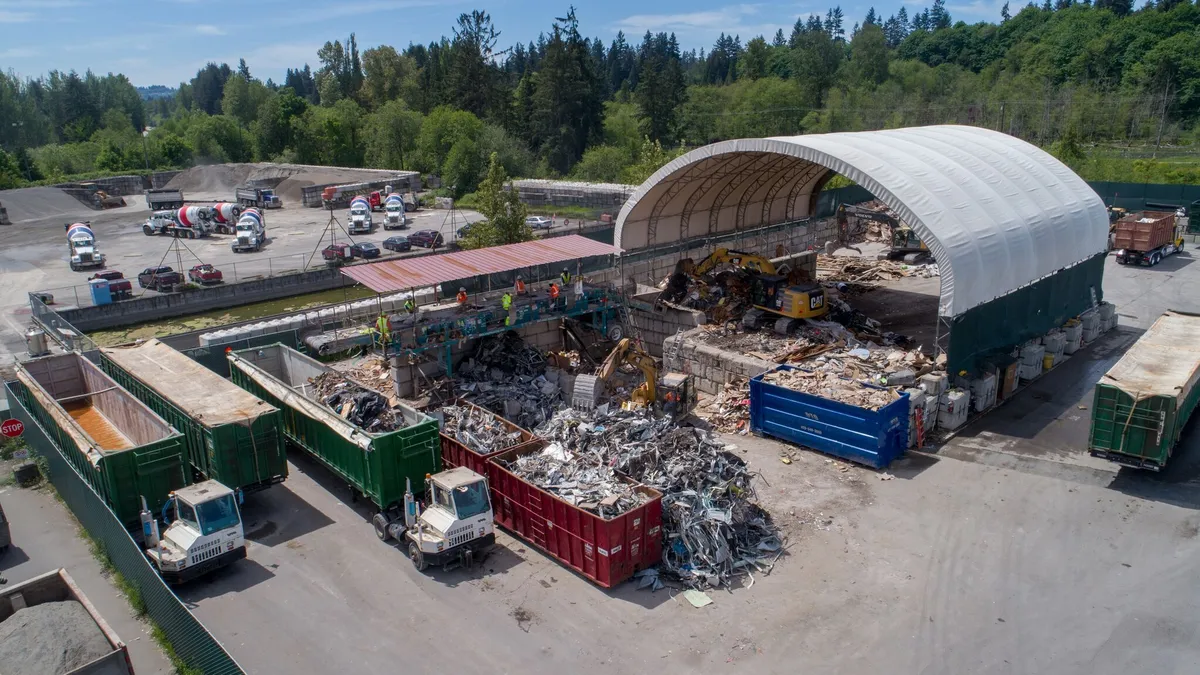
- The Washington Utilities and Transportation Commission could change how it regulates the transport and disposal of MRF residuals in the state, as well as permitting considerations for such operations. Possible updates could change who can handle the material and who might be exempt under these regulations.
- WM, Waste Connections, the Washington Refuse & Recycling Association, Lautenbach Recycling and other waste industry groups weighed in on the proposed regulatory update. MRF residuals are not specifically exempted from UTC hauling regulations, and the industry is calling for changes that would make that exemption explicit.
- The rulemaking process comes as part of a settlement agreement between UTC and waste company DTG Enterprises over allegations that it transported waste without a proper certificate.
Dive Insight:
UTC is the state agency that regulates solid waste haulers. Its rulemaking comes as the Washington Department of Ecology is starting a parallel rulemaking process involving certain organics management, source separation contamination and MRF operations requirements as part of recently passed state laws.
UTC’s proposed rule refresh aims to better define how MRF residuals should be treated under its scope of regulations, a move both UTC and DTG agreed would benefit the broader waste industry in the state, according to the settlement agreement. UTC was required to start the rulemaking process as part of the settlement.
The process included a public comment period that closed August 7 and included comments from major waste players in the state. UTC will hold a rulemaking workshop later in October.
Several legal grey areas were sticking points in UTC’s complaint. UTC originally alleged the company transferred 3,389 loads of “residual solid waste” from its MRF to Snohomish County solid waste facilities during a period when it lacked a proper certificate for doing so. Washington requires a solid waste certificate to haul waste.
DTG originally faced a proposed $3.4 million penalty, which is no longer under consideration. DTG said UTC’s proposed penalty was unfair because there was “reasonable disagreement about the appropriate interpretation of the law.”
DTG has maintained that the rules for transporting residual waste from its own MRFs were not clearly covered under those existing regulations, which it says are meant for companies that haul waste as a revenue stream. In rulemaking comments, the company says it views the disposal of MRF residuals as a byproduct of its main job as a recycler and not a way to make additional revenue.
The regulation allows for exemptions when a company transports solid waste “purely as an incidental adjunct to some other established private business.” DTG says it’s not clear what “incidental” transporting really means.
DTG, along with Waste Connections and WM, said in comments that UTC should specifically recognize transportation of residuals from MRFs as exempt from the regulation. WRRA, which represents other major waste companies like Republic and Recology, also called for MRF residuals to be explicitly exempt. WRRA points out that MRFs were not as common when the regulations were first enacted, and “this history should correct any notion that the legislature intentionally omitted MRFs from the statute.”
WRRA, Waste Connections and WM said in comments that this small update would align with an existing exemption for transfer stations.
WRRA further noted that MRFs are already subject to new requirements for reporting and tracking residuals and their disposal location under the state’s new extended producer responsibility for packaging law passed in 2025. “This significant new legislation should be the primary means for regulators to bring greater transparency to waste processing,” the association stated.
“Residuals are an unavoidable byproduct of legitimate recycling and recovery operations….The existence of residuals does not indicate that a load was improperly transported as recyclable material,” Waste Connections said in comments.
Certain collection and hauling operations are not currently regulated by UTC, including those that “occasionally transports to a disposal site, but whose primary business is not the collection of solid waste,” according to regulations. DTG says the word "occasionally" is also vague and needs more definition. A clarification would help DTG determine whether or if it’s beholden to certain UTC regulations, it said in comments.
DTG has undergone several business changes in recent months. Macquarie Asset Management sold DTG back to its founder, Dan Guimont, in February. DTG then announced multiple sales of other assets. It no longer operates any MRFs.
UTC has since opened a new document investigation into DTG’s business, which also questions whether DTG is transporting waste with the proper certificate. UTC is asking for data on DTG’s recent asset sales, operations and other details.