Dive Brief:
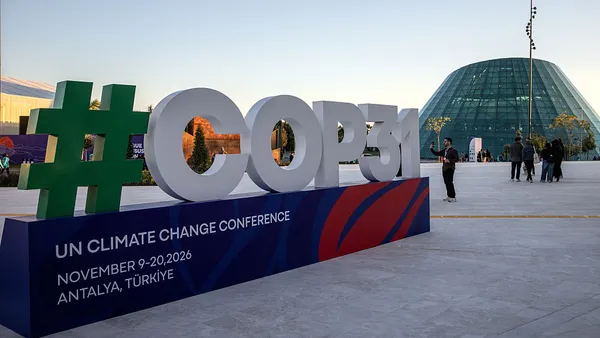
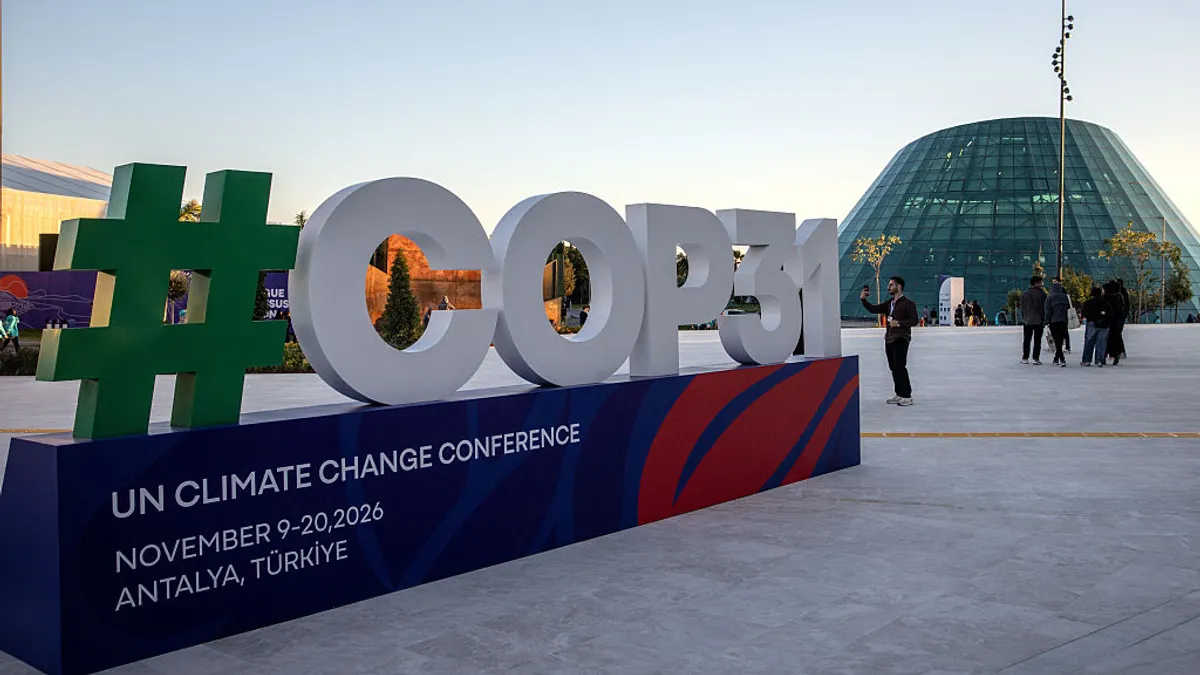
- COP31, the annual United Nations climate conference held this year in Turkey, ended on Sunday without a major commitment to update climate commitments or wind down fossil fuel usage. But the conference did play host to new funding and commitments to reduce methane pollution from waste and other sectors.
- Philanthropic partners pledged $480 million for methane reduction measures, building on efforts from previous years’ conferences to reduce methane.
- The event also spotlighted zero waste initiatives, with the host country ranking “rapid reduction of waste-derived methane emissions” as its top priority ahead of the conference.
Dive Insight:
Updated methane reduction commitments have become a fixture at the annual climate conference in recent years. Last year, the Global Methane Hub revealed a plan to cut methane emissions by 2030, following up on the Global Methane Pledge advanced at a previous COP.
The host country also took some criticism for its championing of methane reductions. The Global Alliance for Incinerator Alternatives noted prior to the conference that the country is not a signatory to the Global Methane Pledge, in which countries committed to cutting global methane emissions by 30% by 2030 from a 2020 baseline.
The United States joined the European Union to champion the Global Methane Pledge under President Joe Biden, but has largely withdrawn from international climate commitments under President Donald Trump. The United States did not send a formal contingent to the international conference due to its withdrawal from the United Nations Framework Convention on Climate Change earlier this year.
The organization highlighted goals of “translating the proposed waste target into national plans and NDCs, reducing landfill methane at scale, and getting climate finance to the projects that need it.”
About $530 million in funding has been committed to methane reduction efforts since the Global Methane Pledge was signed in 2021. The funding is expected to support efforts across energy, agriculture and waste, per a release from the Climate and Clean Air Coalition. This year, organizers also committed $25 million for the Super Pollutant Country Action Accelerator program, which will fund work in seven countries to implement reduction strategies.
During a meeting to discuss zero waste commitments, UN Secretary-General António Guterres noted that food loss and waste generates 8-10% of global greenhouse gas emissions.
He also highlighted the UN Environment Programme’s Methane Alert and Response System, a global satellite detection and notification system monitoring a variety of sources, including landfills, that launched in 2023. Since launch, the system has issued more than 5,000 alerts to polluters but received a response from just one in eight, he said.
Guterres, whose term ends at the end of this year, also noted that member countries at the event needed to move beyond pledges into action to achieve waste reduction goals.
“Let us move from managing waste to preventing it, shift to a circular economy – and end the age of unchecked methane pollution,” he said.