Rhode Island is seeing increased organics recycling activity, despite recent federal grant funding cuts and relatively limited traction on state legislative efforts.
The nation’s smallest state is considered ripe for reducing food waste, and boosting recovery and recycling, given its proximity to other likeminded states in the Northeast and its motivation to preserve space at its primary landfill. The Rhode Island Resource Recovery Corp., which operates the Central Landfill, estimates it receives 80,000 tons of food waste per year.
While the state enacted an organics disposal ban for large generators in 2016, that policy didn’t come with an enforcement mechanism. ReFed’s food waste policy finder tool, based in part on research by the Harvard Law School Food Law and Policy Clinic, rates Rhode Island’s disposal ban as “weak” given distance exemptions for generators and a lack of enforcement.
Advocates have been pushing for a host of potential bills, including ones to codify ban enforcement power for the state’s Department of Environmental Management, establish a fund for food recovery and waste processing infrastructure based on disposal tip fees, require diversion plans at catered events, establish a food donation tax credit and enhance recovery efforts at schools. But just one made it through before the session ended earlier this month.
Gov. Dan McKee signed H7342 on June 18. The law adds multiple definitions to what types of food can be recovered and shared at schools, requests waste audits be submitted to the state’s Department of Education every three years and updates procurement language for vendors.
It also updates current language that allows exemptions for diverting food waste if no composting or anerobic digestion facility is within 15 miles. As of January 2029, educational entities will be expected to divert their food regardless.
The Rhode Island Food Policy Council, or RIFPC, was a key proponent for this year’s food waste bills. The group was excited to see the school legislation pass but had hoped to get more through this year. The school issue has seen particular momentum in recent years thanks in part to the Rhode Island School Recycling Project, which received a grant last year from the Rhode Island Foundation and 11th Hour Racing to expand its work.
RIFPC, which is part of a network of 300 related food policy councils around the country, started more actively following waste issues in 2017 when the state published its first food strategy.
That work further ramped up when Isaac Bearg, the group’s food, climate and environment program director, joined in 2024 and brought experience from the New Jersey Composting Council. Many of the priorities targeted in this year’s legislative session were laid out in a 2025 report from the group.
“We have some really model programs happening here when it comes to wasted food, but just not enough of them,” Bearg said. “Part of the reason for that is a lack of infrastructure and a lack of funding.”
Funding and technical assistance
A mix of federal and foundation grant funding has driven more activity in recent years, including technical assistance for commercial generators and in some cases subsidized costs for residential programs. Yet cost remains a barrier for municipalities, as highlighted in a 2022 report commissioned by RIRRC.
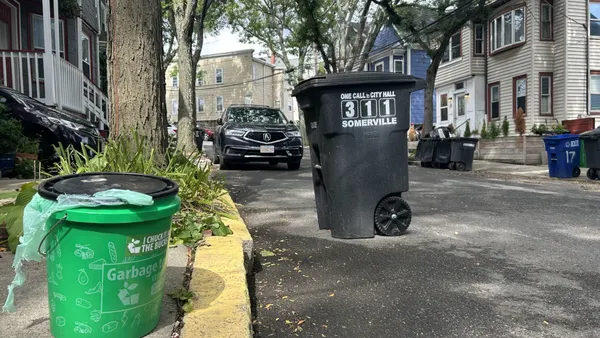
Providence has used funding from a U.S. EPA Solid Waste Infrastructure and Recycling grant to support backyard composting and small-scale community sites for residential use. Funded in part by a grant from 11th Hour Racing, three subsidized residential curbside pilots are underway in Barrington, Bristol and Newport serviced by Black Earth Compost.
CET, a nonprofit, also has funding from multiple grant sources to support technical assistance for commercial generators setting up programs. Lorenzo Macaluso, the group’s chief growth officer, said he’s seen advancements in each sector being mutually beneficial.
“Providence has a growing landscape of food scrap opportunities, both from a collection perspective and a processing perspective. There are community garden level and small to medium scale composting popping up,” he said, noting in some cases material is also processed in neighboring states. “There's a lot going on, and a lot of the infrastructure on both the collection and processing side is shared between commercial and residential.”
Rhode Island was initially primed for an even bigger infusion of money, via an $18.7 million EPA grant funded by the Inflation Reduction Act. This would have funded food waste reduction and recycling work by the RIFPC and multiple other groups, but it was pulled by the Trump administration last year.
Earlier this year, as reported by ecoRI News, the groups announced the Rhode Island Foundation had granted them $750,000 to conduct a scaled down version of the broader work they’d hope to accomplish with the bigger grant. This three-year program is led by RIFPC, CET and FoodRecovery.org.
Nessa Richman, executive director at RIFPC, said her group has many active volunteers that can help spread the word about the value of food waste reduction, edible food recovery and organics recycling.
“By activating the network, we're hoping that we're going to be able to recruit businesses through that personal outreach and have it then be celebrated on the website, in social media, and call out the folks in the businesses that are participating in a way that brings them benefit,” she said.
CET is providing technical assistance to help interested businesses in the communities of Central Falls, Middletown, Newport, Pawtucket and Providence set up food waste reduction and recycling systems.
The group is also contracted to provide technical assistance in other areas or specific cases, funded in part by 11th Hour Racing, and EPA grants awarded to Providence and a separate Rhode Island DEM grant. Those grants came from EPA’s SWIFR program.
Some of this work also involves direct assistance to composters with recipe mix, site design and operations.
Looking ahead
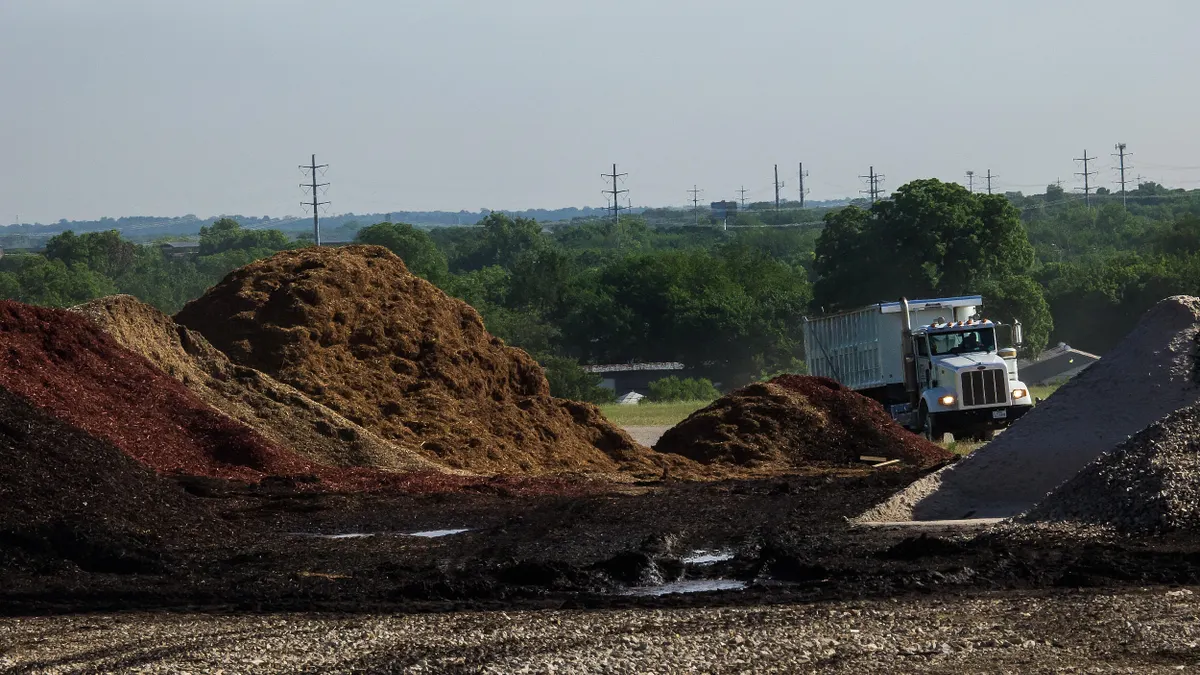
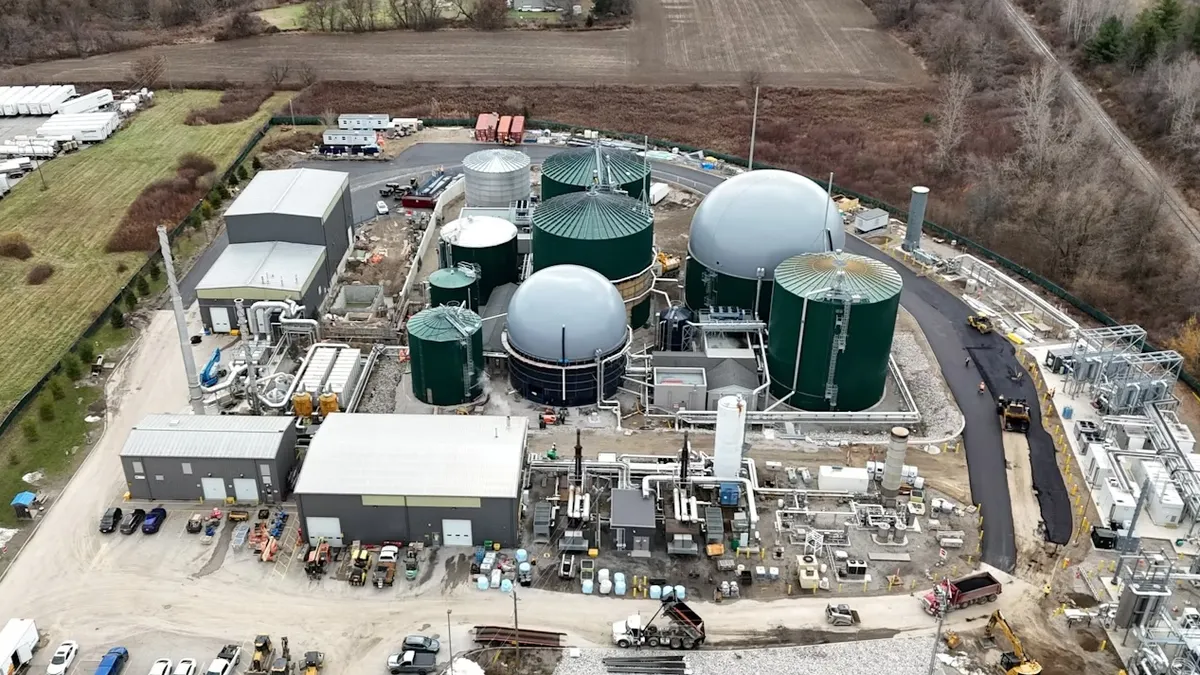
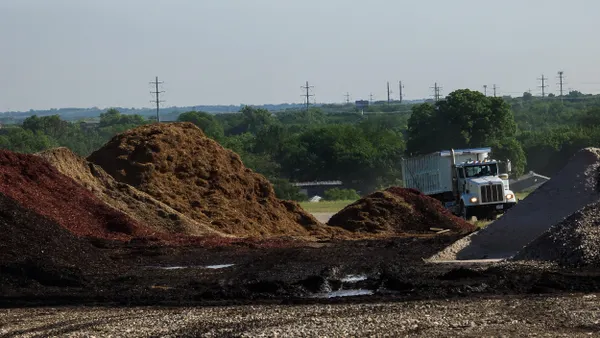
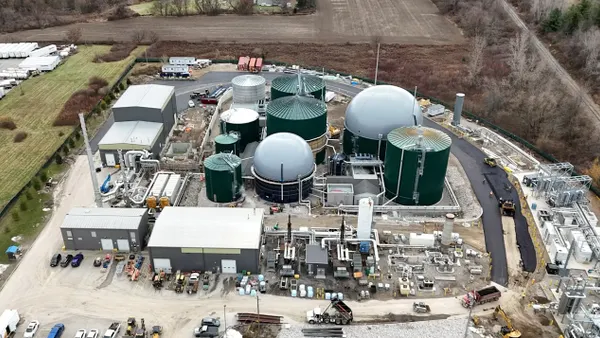
Currently the state has one anaerobic digester and one large-scale compost facility, along with a growing network of smaller community-scale sites.
“It's very clear that Rhode Island does need more processing infrastructure,” said Macaluso.
RIFPC’s 2025 report called for increased investment in both categories of facilities as part of a broader goal to expand access in the area.
“As with many good things in the world, everybody wants them, but often not in their backyard,” said Bearg. “And so we're trying to find the right opportunities for that at all scales, whether that's at a community garden, or whether that's something larger.”
Proponents had hoped a bill proposing a $2 per ton surcharge on landfill tip fees could be a way to spur more investment. New Hampshire recently enacted a similar policy that generated $1.2 million in its first quarter, some of which will go toward grants supporting projects to comply with the state’s own organics disposal ban.
Speaking at the NH Recycles conference in May, one composter outlined a proposal for both states to scale decentralized, small to medium facilities.
“It’s less distance from the generator and the compost site. There’s less traffic and less dependence on one large facility,” said Andrew Brousseau, a partner and compost manager at Black Earth Compost. “I think Rhode Island needs 10 facilities to handle all the residential food waste.”
Bearg is hopeful the compost fund legislation and other bills will gain traction next year.
And as neighboring states continue advancing their own organics policies, with haulers and businesses also learning from work across the region, they could help Rhode Island along the way.
“There's great momentum that's happening,” said Macaluso. “I don't think it's been a lack of desire ... A serious level of investment over years I think would really help Rhode Island achieve the benefits and the goals of the policies that they have in place.”