The U.S. EPA has announced $28 million in grant funding for tribes to build recycling and composting improvement projects across the country.
EPA selected 23 projects as part of the Solid Waste Infrastructure for Recycling Grants program. This year’s funding will go toward recycling infrastructure for a relocated tribe in Alaska, a new MRF project in Florida, and a composting program for a fishing community in Michigan. Grant funding will also support a curbside recycling data collection program in California, among other projects.
It’s the second round of SWIFR funding for tribes and intertribal consortia. In the first round, announced in 2023, EPA awarded 58 grants totalling about $83 million.
“These grants further energize our American economy by improving recycling, cutting disposal costs, reducing waste in landfills, and extending landfill life, and creating good paying local jobs,” Thomas Croci, acting assistant administrator for land and emergency management, said in a statement.
SWIFR was created by the Save Our Seas 2.0 Act a bipartisan bill passed in 2020 and funded by the Infrastructure Investment and Jobs Act signed by President Joe Biden in 2021. The legislation originally allocated $55 million per year from fiscal years 2022 through 2026, and Congress has occasionally supplemented that total.
This latest round of SWIFR grants for tribes is the first to be disbursed under President Donald Trump’s administration. Federal grant applicants went through periods of uncertainty in the months after Trump took office in 2025. The administration paused or canceled numerous grant programs, particularly those funded by the Inflation Reduction Act, other climate-related laws, or programs connected to environmental justice efforts or diversity, equity and inclusion.
But the EPA said last year that it was still committed to disbursing SWIFR grants, including its tranche of funding specifically for tribes. EPA previously announced a separate round of $58 million in SWIFR funding for local governments in December.
Here’s a snapshot of a few of the 23 grant awardees and their upcoming projects. They were selected from a list of 151 applications.
Miccosukee Tribe in Florida plans major recycling upgrades
$1.5 million
Project highlights: The Miccosukee Tribe in the Miami region plans major upgrades at the Miccosukee Waste Facility, including building new recycling infrastructure on site.
The project calls for building a new, centrally located recycling pad and installing designated sorting stations. Part of that vision is providing 11 roll-away dumpster bays, which will give the facility more flexibility “to accommodate future materials management needs,” according to a fact sheet about the project. The updates will also help traffic flow and safety, it said.
The tribe previously received a $100,000 EPA Solid Waste Grant in 2022, which helped the community develop an integrated waste management plan, EPA said. That plan identified “large amounts” of recyclable materials that were going to landfills, in part because there was not enough recycling bin space and sorting areas were unclear, the fact sheet said.
Keweenaw Bay Indian Community to turn fish waste into compost in Michigan
$1.5 million
Project highlights: The group will repair and upgrade their recycling facility and establish a new composting program on the L'Anse Indian Reservation in Michigan. It will also provide curbside recycling services to about 850 households.
One part of the project will tackle upgrades such as paving the facility’s dirt floors and roads, repairing doors and lights and adding a fire suppression system. New heavy equipment and machinery is also on the list, according to the fact sheet. The Keweenaw Bay Indian Community is also creating a new composting program to divert fish waste to community gardens, and the grant funding will help purchase new composting equipment meant to divert about 49,000 pounds of fish waste annually.
Overall, the program is expected to divert another 4,000 tons of waste a year, according to the EPA. The community also plans to hire a full-time sustainability specialist and some additional part-time seasonal positions.
Recycling infrastructure aims to help resettlement efforts in Mertarvik, Alaska
$939,629
Project highlights: Newtok Village will establish its first recycling infrastructure in the new town of Mertarvik. The community is in the process of relocating to Mertarvik because of ongoing coastal erosion and thawing permafrost, which is flooding Newtok Village.
The SWIFR funding will help the community establish a recycling and backhauling program and build a climate-controlled recycling center, according to a fact sheet. Funding will also help the community purchase equipment and materials such as balers, trucks and hazardous waste storage. In addition, funding will help hire five people and provide community job training.
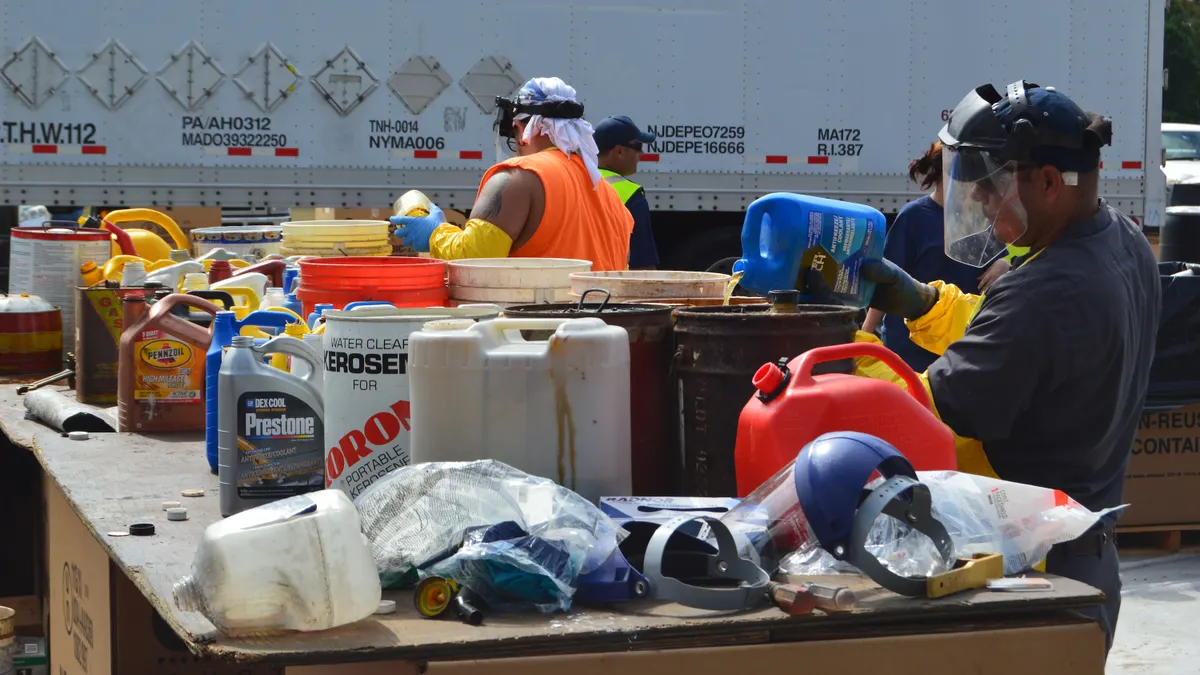
The goal is to protect the region’s subsistence resources by diverting hazardous waste from the nearby landfill, which is unlined, according to the EPA. The project should divert 90% of household hazardous waste like batteries, lightbulbs, used oil and e-waste, it said.
Shinnecock Indian Nation plans curbside recycling on Long Island, New York
$765,299
Project highlights: The community aims to reduce recycling stream contamination and make collections more efficient by expanding on-site recycling and composting capacity for tribal households and offices. The group will also supply each home in the community with recycling bins, with plans to pick up recyclables on a weekly basis, EPA said in a news release. The goal is to establish new end markets for the materials it collects.
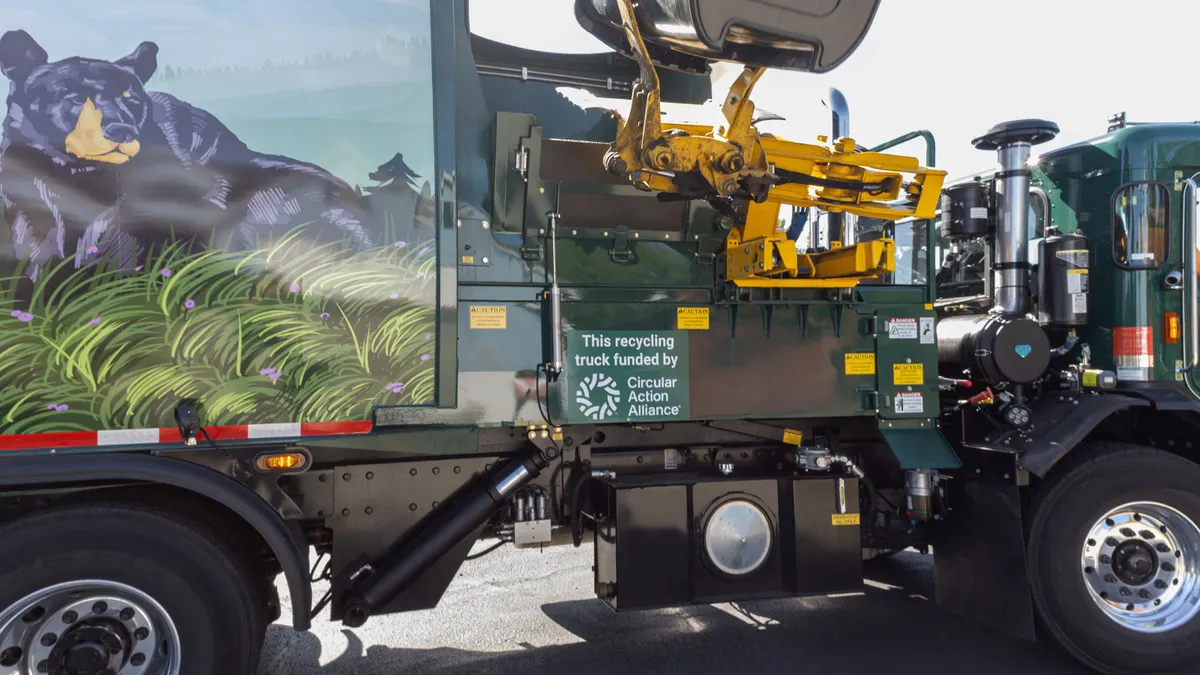
Funding will go toward the purchase of a collection truck, a pre-fab sorting and storage shed, and composting equipment. It will also fund safety and operations training for staff and hire three new employees.
Pala Band of Mission Indians focus on data collection and education in San Diego County, California
$395,410
Project highlights: The Pala Band of Mission Indians aims to improve its curbside recycling programs through new data collection efforts and a long-term strategic plan. The community will conduct public outreach and education to encourage more recycling participation, and they will weigh and measure curbside recycling materials to track how effective the program is, according to the fact sheet.
The goal is to decrease landfill-bound waste by up to 20%, which the tribe says will help save money spent on tipping fees.
Project funding will also be used to upgrade curbside recycling bins and purchase a larger collection bin for the recycling truck. They will also add a bin-lifter to make operations safer for collection workers, according to the fact sheet.