CompostNow, a company founded in North Carolina but growing throughout the Southeast, is set to take over a curbside organics collection program for Decatur, Georgia, next week. The partnership is the latest opportunity for the regional composter to expand through municipal partnerships.
CompostNow began collecting food scraps in the Atlanta market in 2012, and the company has taken a lead position advocating for composting in Georgia as it has grown. David Paull, chief impact officer for CompostNow, helped launch the Georgia Composting Council chapter as its president in 2024. Since then, the group, backed by the Georgia Recycling Coalition, has worked to educate communities about the benefits of composting and advocate for supportive policy.
That work has occurred alongside a growing awareness of the benefits of composting for municipalities looking to increase their sustainability efforts. That interest, in turn, has led to increased opportunities for composters with an established presence in their market to collaborate with city programs, Paull said.
"There's, I think, a lot of momentum right now around municipalities starting to offer more programs," Paull said. "A lot of the haulers that started at a similar time as us, or look similar to us ... [are] now becoming more involved with entire city programs. That's true for others. It's true for us. I think it's a great sign for the industry.”
Decatur's foray into composting began with a Recycling and Waste Diversion Grant awarded by the state's Environmental Protection Division in 2023. The $170,000 grant funded a pilot study to evaluate the feasibility of a residential curbside organics collection service.
The six-month pilot initially included about 100 households, and the collection service was run by the city with a truck and bins it acquired. The city hauled the material about 45 miles to CompostNow's existing compost facility for processing. Paull said the pilot showed promise, but was also a challenge for the city to execute.
“They quickly learned that it was pretty difficult,” Paull said. “It requires more connection through the entire supply chain in terms of getting it to a composting facility and making sure that it's clean, it's free of contamination, [and] that there's good education to your residents.”
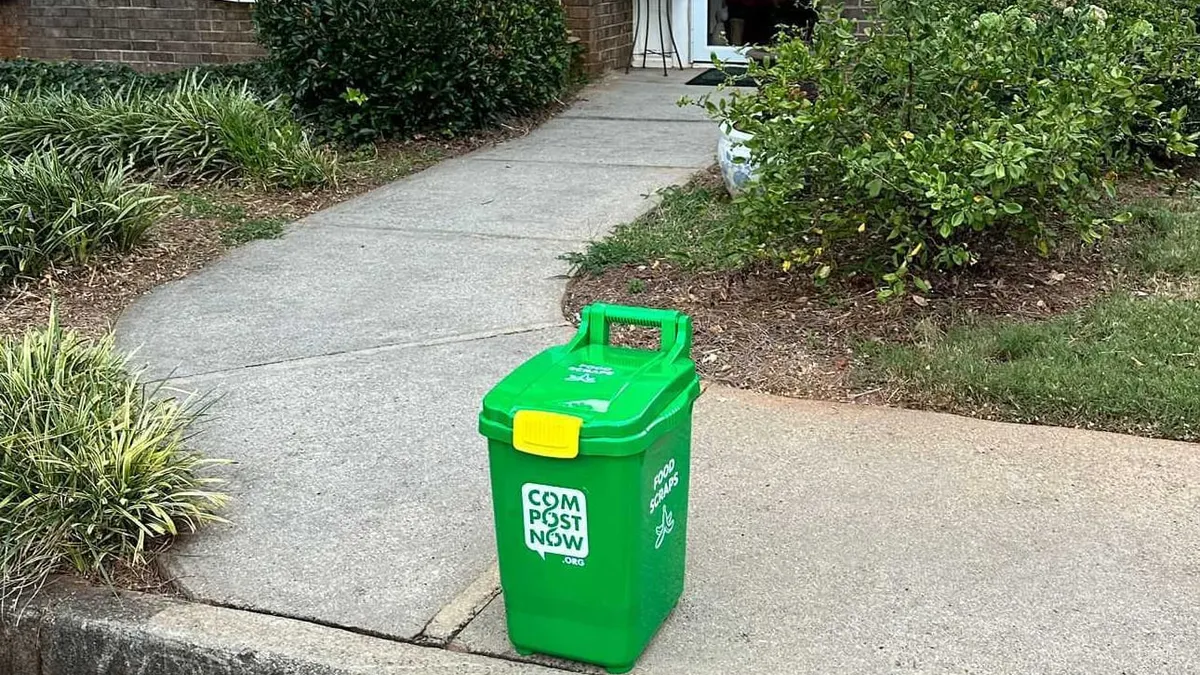
CompostNow already offered its bucket-swap collection model to residents in Decatur, and as the pilot continued city leaders communicated with the company about taking over the program. Paull said the city's last collection day was Monday, and the company will take over collections next week.
This is CompostNow's second city collection program, as it ran a similar pilot program in Avondale Estates, another Atlanta suburb, that ended last year. Paull said one of the key lessons learned from that program was the importance of stakeholder buy-in across local government to ensure a compost program has enough support to succeed.
Another program run by Atlanta and backed by a Composting and Food Waste Reduction grant issued by the U.S. Department of Agriculture remains in process. The program would pilot 10 drop-off sites for organic waste, which would be serviced by CompostNow. Paull said that program is tied up in a legal review, but said it could launch "any day."
While CompostNow continues to deepen its relationships with public partners, it's also looked to expand through acquisitions. To date, the company has acquired five local haulers: Tilthy Rich, Food FWD, Food Waste Disposal, Better Bin and Compost Rangers. Paull said the company wants to be vertically integrated in the areas it serves, and while its acquisitions to date haven't come with existing composting facilities, the company would be open to acquiring one in the future.
Within the Atlanta metropolitan region, Paull said awareness is growing about the benefits of composting. He also said the Georgia Composting Council has worked to advocate for the technology when counties and regional authorities begin developing their long-range solid waste management plans, with some success. He expects that work to continue in the coming years.
"We are to the point now where I don't have to go in that first meeting and tell someone what composting is," Paull said. "We've come a long, long way."