Federal lawmakers are promoting a set of bipartisan bills meant to bolster the country’s domestic supply chain for critical minerals through permitting updates and a national strategy around critical minerals recycling.
The environment subcommittee of the House Committee on Energy and Commerce on Tuesday approved the Battery Recycling for America’s Competitive Economy Act, or BRACE, meant to update certain battery recycling permitting requirements. It also approved the Coordinating and Harnessing America’s Recovery of Minerals Act, or CHARM. That bill is meant to prompt the U.S. EPA to develop a national strategy to support critical mineral recovery within two years. These bills will go to the full committee for consideration.
The move continues the Trump administration’s focus on framing domestic critical mineral supply chains as a national security issue.
“Rather than continuing to rely on adversaries such as China that dominate the critical minerals supply chain, we are taking the commonsense steps needed to safeguard our national security,” said Alabama Rep. Gary Palmer, chair of the committee, in a statement.
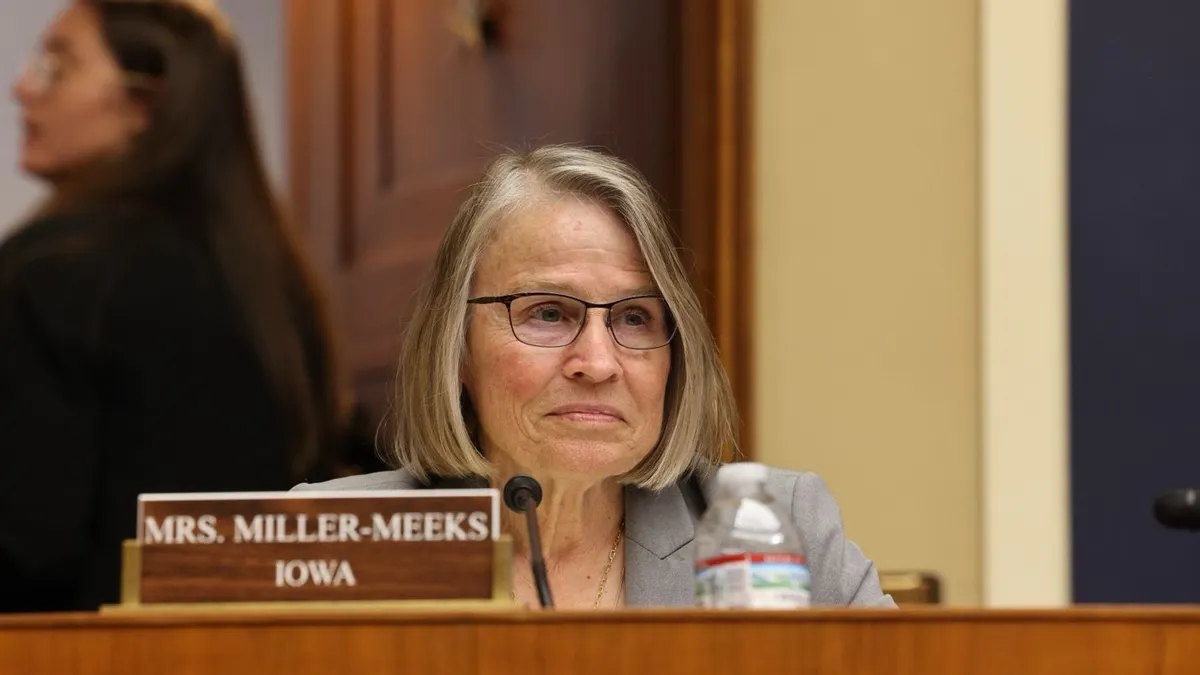
Rep. Mariannette Miller-Meeks, R-Iowa, said streamlined recycling rules and more involvement from the EPA are necessary as demand for rechargeable and lithium-ion batteries in the United States continues to grow. That will be fueled in the coming years by energy storage systems, electric vehicles, communication devices and other consumer goods, she said during the hearing.
“As more lithium-ion batteries reach the end of their life, the recycling and recovery of critical minerals from these batteries provides a tremendous opportunity for the United States to boost its supply chains for certain critical minerals,” she said.
Miller-Meeks hopes to tackle certain longtime battery recycling regulations under her proposed BRACE Act.
The bipartisan bill aims to update certain recycled battery storage requirements, a move bill sponsors say would help alleviate permitting burdens for certain recyclers. That could make it easier to keep battery-derived critical minerals in the U.S. instead of being shipped overseas.
At issue is how lithium-ion batteries are regulated under the Resource Conservation and Recovery Act. The EPA says the batteries’ wide variety of chemistries can make it difficult for battery recyclers and generators to determine whether they should be regulated as hazardous waste or under federal “universal waste” regulations.
During the committee bill markup hearing on Tuesday, Palmer said the current battery handling rules under RCRA are outdated because they were written in 1995, before lithium-ion batteries were common. This issue could “potentially inhibit the growth of the domestic battery recycling industry,” he said.
Current rules for “destination facilities,” such as those where batteries are recycled, are imposing handling and storage hurdles for lithium-ion battery recyclers, Miller-Meeks added.
Under a provision of RCRA, some recycling facilities must go through a hazardous waste permitting process before being allowed to store certain batteries on site prior to the recycling process. Recyclers who don’t want to obtain that permit must store batteries at a separate site before recycling them, “incurring unnecessary costs,” she said.
EPA announced its intention to develop a separate category of universal waste for lithium-ion batteries in 2023, but no rule has been finalized, Miller-Meeks said. Battery handlers have since faced “lingering uncertainty resulting from the drifting deadline for specific lithium-ion battery universal waste rules.”
The BRACE Act also calls for the EPA to finalize rulemaking on lithium-ion batteries as a category of universal waste no later than 18 months after the bill is passed, saying too much time has passed since the agency announced it would consider an update. “This finalized rule should provide much needed certainty for the lithium-ion battery recycling industry, which has wrestled with a lack of clarity and confusion surrounding current regulations,” Miller-Meeks said during the hearing.
The bill would also direct the EPA to consider whether other regulatory changes are necessary to better support lithium-ion battery recycling, including whether additional safety requirements should be put in place.
Lawmakers also want the EPA to play a larger role in directing the U.S.’ strategy for managing and recycling critical minerals. Palmer and ranking member Paul Tonka of New York are leading the CHARM Act, which would require the EPA to identify numerous opportunities to recover domestic sources of critical minerals.
“EPA has significant expertise to lead the national strategy effort. The agency has already done considerable work to develop a framework for end-of-life management of batteries to result in the responsible collection, reuse, and recycling of these mineral-rich technologies,” Tonka said in his prepared remarks.
“Our critical mineral supply chain challenges are significant, and recovery must play an important role in meeting our national demands,” he said.