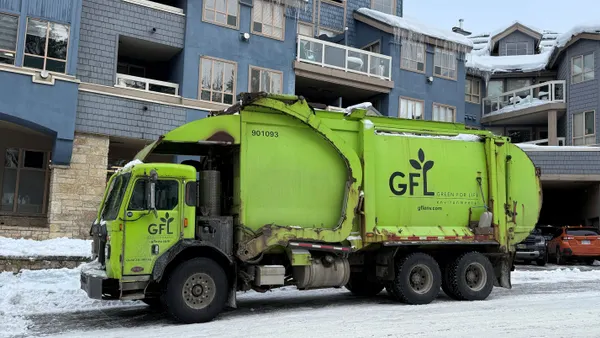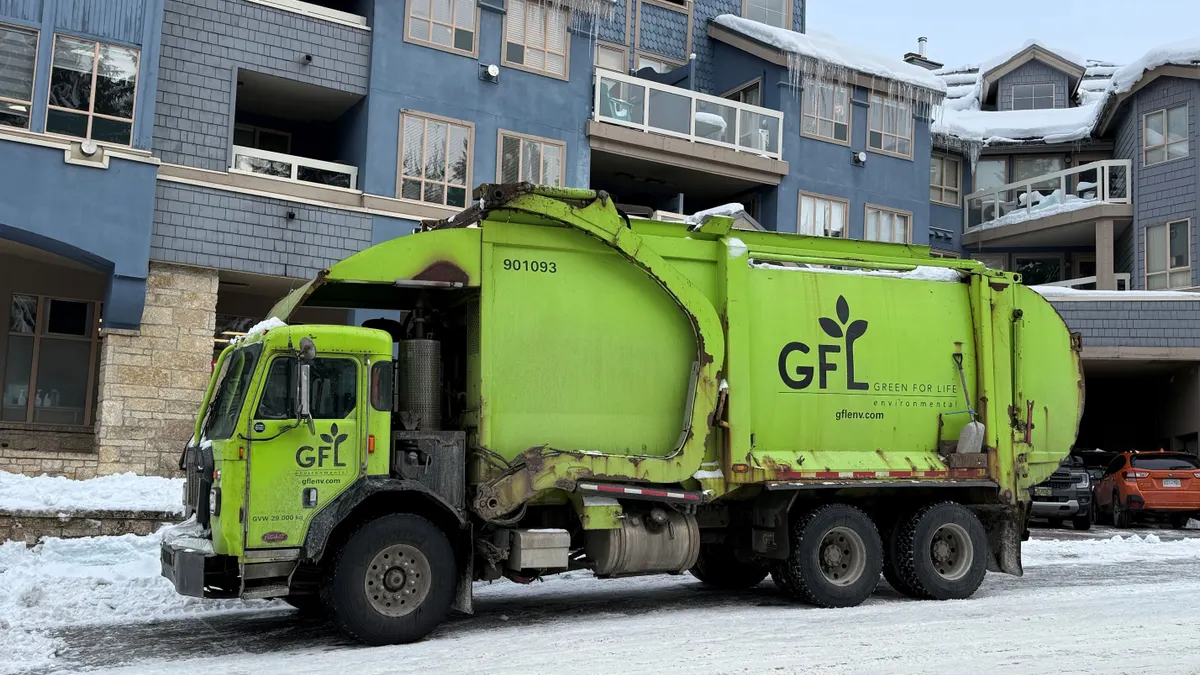
Bidders looking to take publicly traded GFL Environmental private have until Nov. 9 to submit their final offers, the company revealed in its earnings release late Wednesday. The company has entertained offers as it closed its acquisition of Secure Waste Infrastructure this summer, which provided a boost to earnings in the third quarter.
The deadline comes several months after executives confirmed the offers. A special committee advised by CIBC is running the evaluation process for potential buyouts, CTFN first reported. That committee is expected to review final offers and recommend next steps following the deadline.
GFL CEO Patrick Dovigi expressed eagerness to move the process forward during the company's earnings call on Thursday, while noting he would accept any outcome.
"Ultimately we want to keep winning and having fun, whether that's publicly or privately," Dovigi said.
All financial information is in Canadian dollars.
GFL spent its first 14 years as a private company backed by a series of firms. Prior to its IPO, BC Partners acquired a large stake in the company, which it continues to hold.
Any potential deal to go private must be approved by shareholders. Dovigi owns a large stake in the company which he plans to roll over into any take-private deal. He also expects to remain on as CEO in the event GFL returns to private hands.
During the earnings call, Dovigi expounded on the benefits and drawbacks of a deal. He noted the company would be able to spend more on capital expenditures or mergers and acquisitions. Conversely, he said sizable deals like this year's acquisition of Secure would be difficult to accomplish with the liquidity available to a private company.
The Secure deal has driven much of the narrative around the acquisition this year. Dovigi and CFO Luke Pelosi said the company has provided material benefits to GFL's balance sheet since the deal closed on Sept. 1. That includes added cash flow, which the company is interested in reinvesting into M&A and other growth opportunities in Western Canada where Secure was based.
Other benefits of the Secure deal were not anticipated when the purchase process began, Dovigi said. He noted high fuel costs due to the war in Iran and Canadian Prime Minister Mark Carney's plans "to make Canada an energy superpower" have boosted the upside of Secure's energy waste portfolio.
"Sometimes in order to be good you need to be lucky, and we were lucky with the Secure acquisition," Dovigi said.
GFL announced that Allen Gransch, Secure’s president and CEO prior to the acquisition, became GFL’s COO on Oct. 1. Joseph Lenz, a former Secure board member and partner at TPG, is joining GFL’s board as a result of the acquisition, the company announced in its earnings release.
Dovigi has publicly chastised investors for discounting GFL's stock price as they ingested news of the Secure deal. But he expressed a desire not to burn bridges with the public market in the event that GFL goes private and returns with a second IPO several years down the road.
To avoid that, he said the company would need to receive a favorable terms in a buyout. He also noted that GFL would need to keep its debt leverage ratio in mind during its hypothetical stint as a private company, ensuring that a second IPO could bring debt down to a level that's tolerable to public investors.
"What you don't want is to have a bunch of scorched earth public investors today that think they were slighted, and then the business comes back to the market at 2x the value," Dovigi said.
GFL's executives continue to see short- and long-term cause for optimism about the company's growth. They revised up guidance for the year, and now project more than $8 billion in revenue, versus a prior projection of about $7.5 billion. Executives also reiterated expectations that free cash flow per share could double in the next five years.
Pelosi noted GFL had largely achieved its most recent three-year growth targets, and is now looking at future goals. He expects opportunities to come from aggressive pricing and demographic growth from the geographic areas where GFL has concentrated its activities.
"The industry has a very sound and stable topline organic growth algorithm, and we believe we have an idiosyncratic opportunity to do better than that very attractive industry algorithm as we benefit from the self-help that's available to us," Pelosi said.