Across the five largest publicly traded solid waste companies, total transaction value was mostly down or steady compared to the second quarter. But a major transaction from GFL Environmental lifted the overall spend in the third quarter.
In recent weeks, M&A discussions have been defined by the deal that wasn’t — GFL entertained leveraged buyout offers, but ultimately disclosed that it would not move forward with such a deal. Alongside that, the company still closed its major acquisition of Secure Waste Infrastructure in Q3, the largest deal of the quarter.
Executives at publicly traded companies continued to express confidence in their M&A pipelines during earnings calls in recent weeks.
Below are spending totals reported by WM, Republic Services, Waste Connections, GFL and Casella Waste Systems.
| Q3 Acquisition Spend | |
|---|---|
| WM | $89M |
| Republic Services | $252M |
| Waste Connections | $59M |
| GFL Environmental* | $762.1M |
| Casella Waste Systems | $39.2M |
Spending totals are net of cash acquired, with some variation in methodology among companies.
*GFL figures converted from Canadian to U.S. dollars for comparison purposes, based on Nov. 11 exchange rate.
Waste M&A recaps and outlooks
WM
WM continues to execute on a string of tuck-in acquisitions, but during the company’s third quarter earnings call President John Morris also previewed a $250 million deal that’s expected to close early next year. Through the first nine months of 2026, WM has spent $239 million on M&A, and it expects to spend another $140 million in the final quarter of the year.
Morris, who is set to take over as CEO in January, said the company’s 2024 Stericycle acquisition has “turned a corner,” and as a result WM can return to a focus on spending capital on solid waste M&A. The company is also open to acquisitions on the hazardous or industrial waste side if it integrates well with WM’s existing solid waste assets, Morris added.
“We've got the ability to be a little more aggressive in terms of what we do on the core solid waste side, and we see that as a strategic priority,” he said.
Republic Services
Republic was nearing the upper end of its projected M&A spend in 2026 as it exited the third quarter. So far, it’s spent $1.1 billion of the $1.2 billion executives expect to spend. The company anticipates closing about 25 acquisitions this year, most of them tuck-ins, CEO Jon Vander Ark said on Republic’s Q3 earnings call.
He acknowledged the company has completed some medium-sized deals this year, and said he expects more next year. He also noted that while Republic would be open to looking at larger deals, “I wouldn't anticipate something in that stage or that size to happen to be in our wheelhouse here in the short to medium term.”
Waste Connections
Waste Connections remained active on the M&A front in Q3, closing three total deals including two solid waste deals on the West Coast. One of them, Southern Oregon Sanitation, was founded in 1948 and was the last family owned garbage company in two counties, according to the Illinois Valley News. The company owned a transfer station, and the deal reportedly went into effect on Aug. 1.
So far, the acquisitions Waste Connections has closed are expected to contribute $130 million in annualized revenue. The company is eyeing additional transactions that are expected to close in the fourth quarter or the start of 2027, Ron Mittelstaedt, Waste Connections’ CEO, said on the company’s earnings call.
He also noted that Waste Connections’ average annual M&A pace has picked up in recent years. While $200 million of annualized revenue from deals was previously the upper end of the company’s yearly projections, it’s now the lower end, he said.
“We have stepped that up as the size of the company and the geography has changed,” Mittelstaedt said.
Nevertheless, he emphasized that the company’s M&A strategy has not significantly changed. And while year-to-date deals in 2026 are smaller than the previous year, that’s in part because of what Mittelstaedt has previously described as an “above average” 2025.
“When we do less M&A, the market should be happy because that means we were disciplined in that period when others were not,” Mittelstaedt said.
GFL Environmental
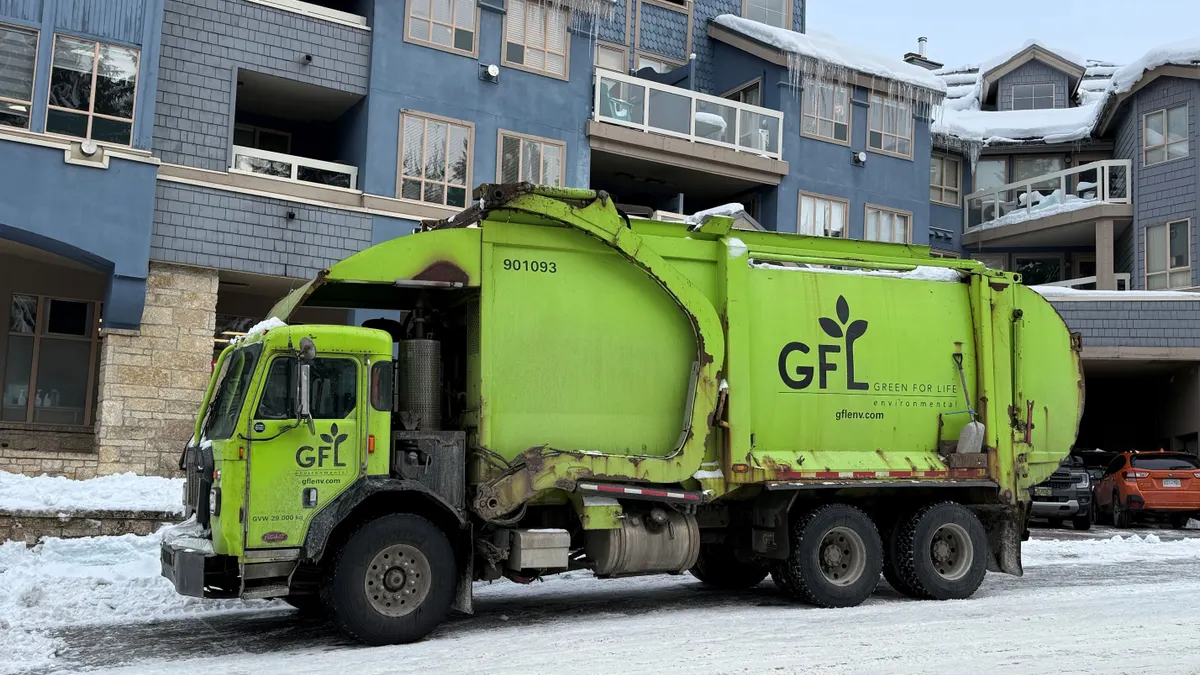
GFL continues to set the pace with the highest acquisition activity of the largest public solid waste companies. It’s closed 13 deals so far this year, three of which were in the third quarter.
In the third quarter, it also closed its 6.4-billion-Canadian-dollar acquisition of Secure Waste Infrastructure, which was financed 80% through stock compensation and 20% through cash. The deal has several consequences for GFL’s M&A strategy.
Due to the acquired business’s free cash flow generation and relatively low debt profile, executives expect to be able to spend more cash on M&A and share buybacks. Between capital expenditures, share buybacks and M&A, the company could spend up to $1.4 billion annually, GFL founder and CEO Patrick Dovigi said on the company’s earnings call. That number could rise to $2 billion in the next three to four years, he added.
GFL could also target more tuck-in acquisitions in western Canada, where Secure’s services were concentrated. Overall, GFL expects to deploy $1 billion in a normalized M&A year.
“If we look at the M&A and the organic opportunities that we'll have in sort in Western Canada, we will have materially more capital to deploy with the free cash flow profile now of the added Secure business into the sort of portfolio,” Dovigi said.
Casella Waste Systems
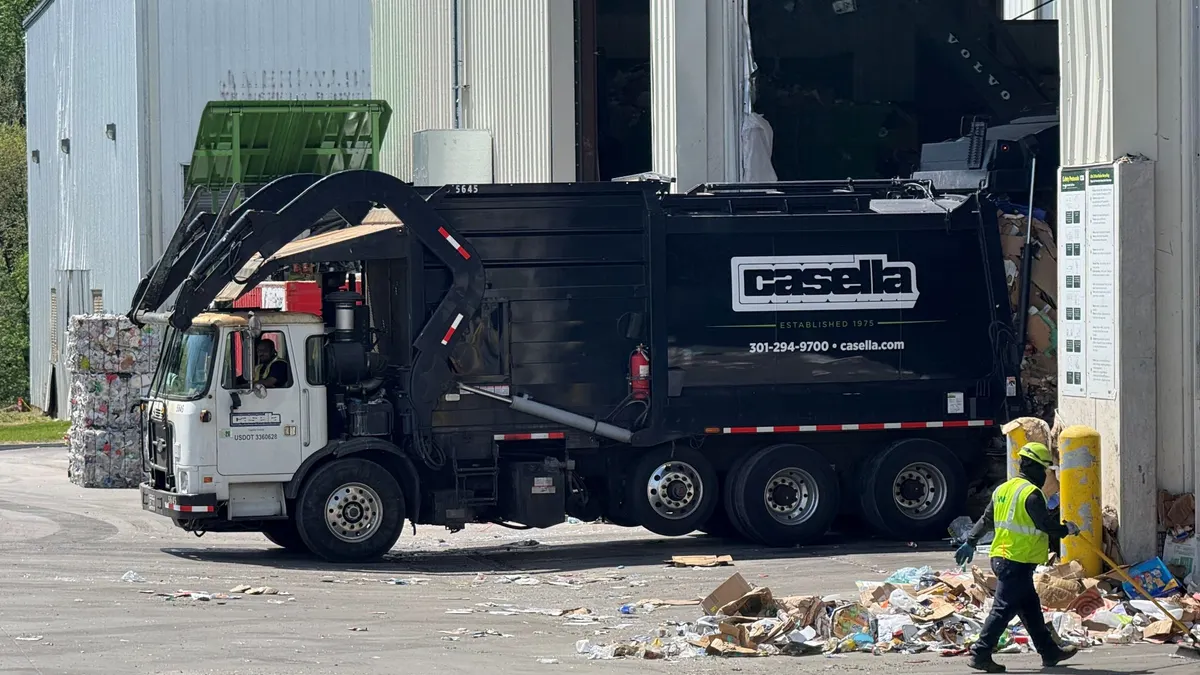
Casella has closed six acquisitions so far this year totaling $170 million in annualized revenue. That includes Waste Reduction, Recycling & Transfer, a Pennsylvania hauler with transfer operations, CEO Ned Coletta noted on the company’s earnings call. He reiterated the company’s strategy is to build density and add transfer stations and recycling facilities within its existing footprint in the Northeast.
Executives also highlighted on the earnings call a new strategy to boost its margins in the coming years. CFO Brad Helgeson noted that while acquisitions typically have little impact on margins, the company may look at deals “a little bit differently” going forward to rebalance margin trade offs with other strategic benefits like free cash flow growth.