Dive Brief:
- SPR, a North Carolina-based utility-scale solar recycler, is expanding into the Western U.S. with a new facility in Porterville, California. The move aims to serve a state with unique regulatory requirements and high volumes of solar panels reaching end of life.
- The 42,000-square-foot facility aims to process about 1.05 million solar panels a year when it first opens, but SPR plans to triple that capacity within two years.
- The Porterville location, SPR’s fifth facility in the U.S., will bring total processing capacity to 6.5 million solar panels per year, the company said in a news release. Its other locations are in North Carolina, Texas and Georgia.
Dive Insight:
California is the top state for total installed solar capacity, and SPR’s expansion there aims to add recycling capacity as more utility-scale solar projects reach end-of-life in coming years.
The new location also aims to bring recycling services closer to where the panels are decommissioned so transportation costs and emissions are lower, said SPR CEO Brett Henderson in a statement. Henderson described Porterville as the “epicenter” for some of the largest utility-scale solar installations in the country.
California’s recycling regulations allow for solar panels to be handled as universal waste under the state’s hazardous waste rule, but recyclers must meet specific requirements for handling, tracking and treating solar panels. Hawai’i is the other state that regulates solar panels as universal waste. The U.S. EPA is considering updating the Resource Conservation and Recovery Act to establish specific federal universal waste rules for solar panels in an effort to streamline collection, storage and processing.
“California sets the highest bar in the country for how end-of-life solar is managed, and operating here is a major milestone for SPR and the industry,” Henderson said.
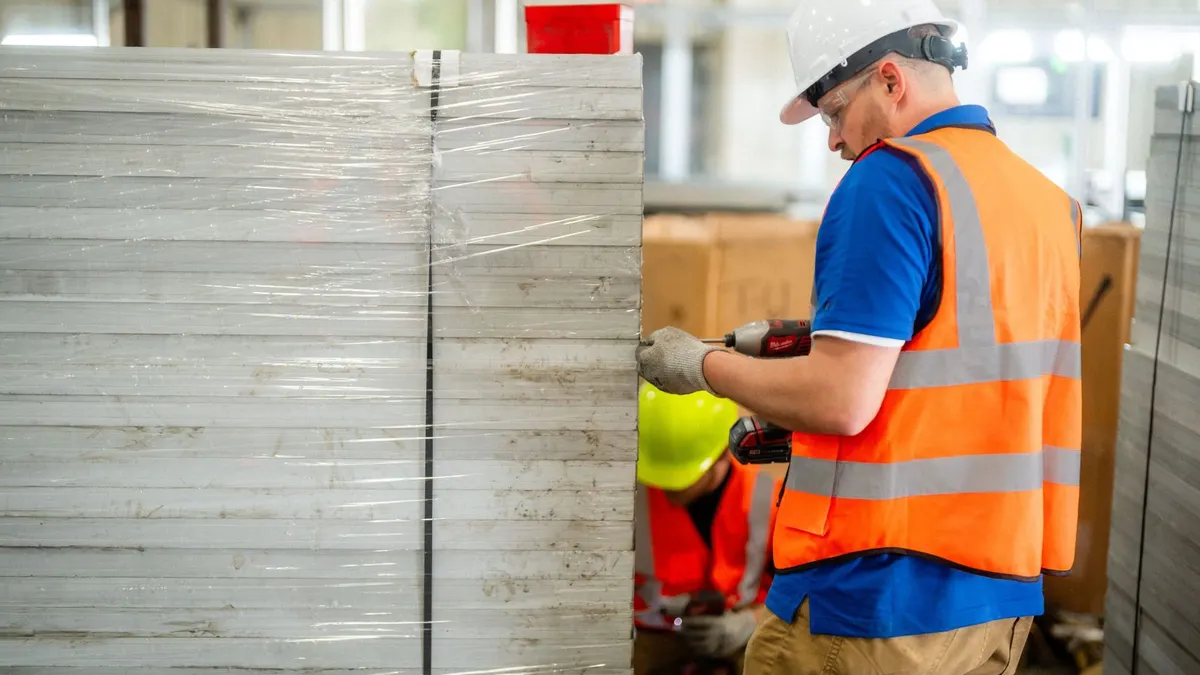
SPR’s recycling process separates each commodity in a panel “one by one” instead of shredding the entire panel, making it easier to find end markets for the distinct commodities, Henderson said. Glass makes up about 80% of a solar panel by weight, he said, and SPR estimates it recovers more than 99% of that material.
It also separates aluminum, silicon, silver, copper and other trace metals. SPR says almost all of those commodities go back into domestic supply chains.
“Through established domestic offtaker partnerships, those materials go back into U.S. manufacturing rather than to landfills or overseas,” he said.
The California project follows SPR’s 2025 expansion at its North Carolina headquarters campus. That project added a 50,000-square-foot processing plant to its 250,000-square-foot facility there, which SPR says tripled its capacity from 500,000 to 1.5 million panels annually.
SPR rebranded from SolarPanelRecycling.com in 2025.