
Dive Brief:
- Sen. Adam Schiff, D-Calif., has introduced the Tracking Plastic Act, a bill intended to work toward standardizing the process of tracking recycled plastics in products “to address mislabeling and fraud by companies, reduce errors, and verify origins of recycled plastic content,” according to an announcement Thursday.
- The legislation would establish a federal working group for traceability, with representatives from the U.S. EPA, Federal Trade Commission and Department of Agriculture, among other agencies and institutions. The group would make recommendations and share annual reports.
- Bill supporters include the Association of Plastic Recyclers and The Recycling Partnership, as well as World Wildlife Fund and the Ocean Conservancy, according to the press release.
Dive Insight:
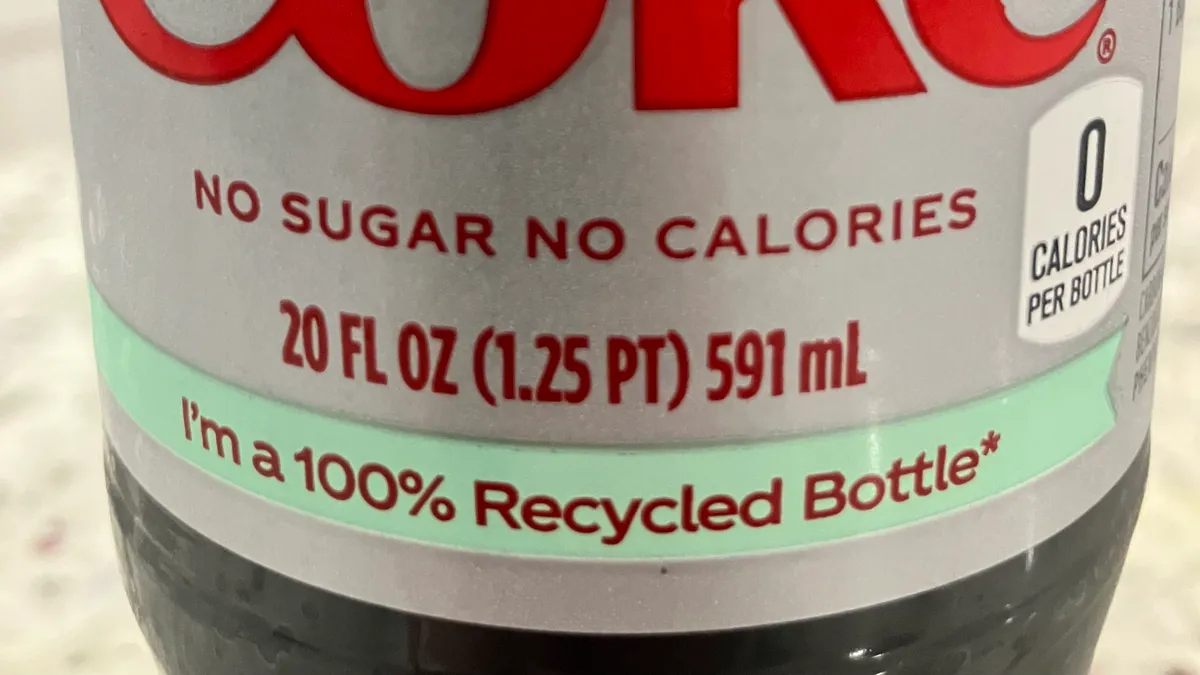
There has been frustration throughout packaging value chains about a patchwork of state legislation seeking to govern recycled content requirements and claims, and a lack of updated federal guidance on how to handle those claims. More broadly, California’s state-level approach to regulating recycling labels was recently temporarily blocked by a federal judge.
The Tracking Plastic Act authors seek harmonization with other standards and trading partners, specifically naming ones in Australia and North America. The bill text also notes how a federal recycled plastic content tracking system could help harmonize state recycled plastic content requirements.
Sen. Jeff Merkley, D-Ore., a co-sponsor, said the legislation is meant to help consumers better understand the products they’re buying and hold manufacturers accountable for their claims. Merkley has been active in promoting plastics-related legislation in recent years, including the Reuse Act and Break Free From Plastic Pollution Act.
The working group would develop recommendations for increasing the use of PCR, guided by the National Recycling Strategy, a road map to 2030 that the EPA released in 2021. Bill authors want those recommendations to consider necessary improvements to domestic markets, economic benefits and ways to monitor toxic chemicals in PCR.
Additionally, the National Institute of Standards and Technology would lead recommendations for better measurement, traceability and reporting of recycled plastic, namely in the packaging, construction, infrastructure and automotive sectors.
The working group would exist for a maximum of 10 years, according to the bill.
Other Senate co-sponsors of the Tracking Plastic Act include Ron Wyden, D-Ore., and Cory Booker, D-N.J.
The bill was referred to the Senate Committee on Commerce, Science, and Transportation.
The bill introduction comes amid ongoing debate about what counts as recycled content in packaging and how it should be labeled. In February, the Recycled Materials Attribution Act was introduced in the U.S. House of Representatives, aiming to establish federal standards for recycling and recycled content marketing claims — including accepting mass balance accounting. The RMAA, along with the labeling-focused Pack Act, were recently spotlighted at a hearing held by the House Energy & Commerce Committee’s Subcommittee on Commerce, Manufacturing, and Trade. Both bills have yet to move forward.